
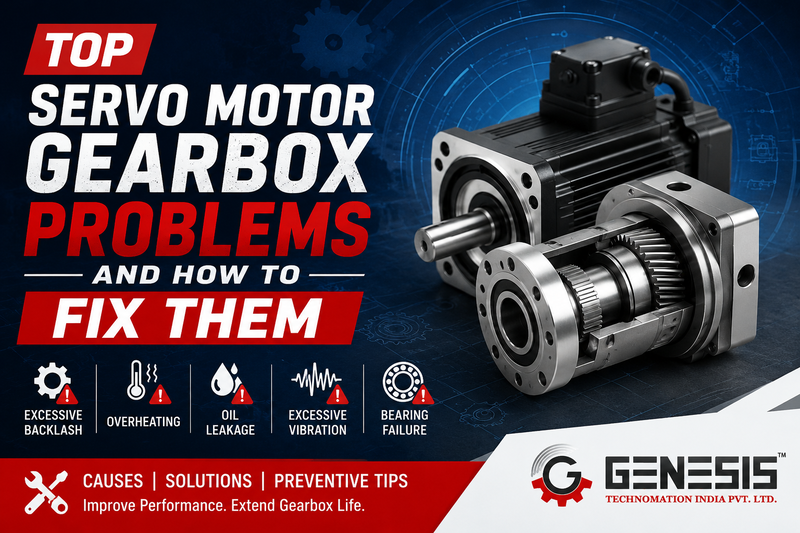
Modern manufacturing depends on precision, speed, and reliability. Whether it is a CNC machining center, robotic arm, automated packaging line, or pharmaceutical production equipment, every movement must be accurate and repeatable. At the heart of many of these systems is the Gearbox for Servo Motor, a critical mechanical component that converts servo motor power into controlled torque and precise motion. However, even the highest-quality gearbox can experience wear or operational issues if it is incorrectly selected, poorly maintained, or exposed to demanding operating conditions.
Understanding Servo Motor Gearbox Problems is essential for engineers, maintenance professionals, OEM machine builders, and plant managers who want to reduce unexpected downtime and improve equipment reliability. A minor increase in backlash or an unusual vibration may seem insignificant at first, but if ignored, it can eventually result in gearbox failure, production losses, and expensive repairs.
Today’s industrial automation systems demand more than just power. They require exceptional positioning accuracy, high torque density, minimal backlash, and long service life. This is why Planetary Gearbox for Servo Motor applications have become increasingly popular across industries. Their compact construction, high efficiency, and superior load distribution make them the preferred choice for modern motion control systems.
Despite their robust design, Servo Gearbox Problems can arise from several factors, including incorrect installation, poor lubrication, shaft misalignment, overload conditions, contamination, excessive heat, and natural component wear. Identifying these issues early allows maintenance teams to implement corrective actions before serious damage occurs.
This comprehensive guide explores the most common Servo Motor Gearbox Problems, explains why they occur, and provides practical troubleshooting methods and preventive maintenance strategies. Whether you are installing a new Gearbox for Servo Motors, replacing an aging Planetary Gear Reducer, or optimizing an existing Industrial Servo Gearbox, this article will help you improve reliability and maximize equipment performance.
Throughout this guide, you’ll also discover why Genesis Technomation India Pvt. Ltd. has become one of India’s trusted suppliers of Servo Planetary Gearboxes, Planetary Gear Reducers, Servo Motors, Motion Control Products, and a wide range of Industrial Automation Components. Their engineering expertise helps machine builders and manufacturers select the right solutions for demanding industrial applications.
What Is a Servo Motor Gearbox?
A Servo Motor Gearbox is a precision mechanical transmission designed to work seamlessly with a servo motor. Its primary function is to reduce output speed while increasing torque, enabling highly accurate positioning and smooth motion control.
Unlike conventional gearboxes used for general-purpose power transmission, a servo gearbox is engineered specifically for applications requiring minimal backlash, rapid acceleration, and consistent positioning accuracy. These characteristics are critical in industries where even a fraction of a millimeter can influence product quality.
A well-designed Servo Gearbox allows the motor to operate within its optimal speed range while delivering the required output torque to the driven machine. As a result, the overall Motion Control System becomes more efficient, responsive, and reliable.
Industrial applications commonly using servo gearboxes include:
- CNC machining centers
- Robotics and robotic arms
- Packaging machinery
- Pharmaceutical equipment
- Printing presses
- Textile machinery
- Laser cutting systems
- Food processing lines
- Material handling systems
- Electronics manufacturing
Companies such as Genesis Technomation India Pvt. Ltd. supply premium-quality servo gearboxes suitable for these demanding environments, helping manufacturers improve machine efficiency and precision while reducing maintenance requirements.
How Does a Servo Motor Gearbox Work?
A servo motor naturally operates at high rotational speeds but produces comparatively lower torque than many industrial machines require. The gearbox modifies this output by reducing rotational speed and proportionally increasing torque.
This process occurs through precision-machined gears that transmit rotational energy while maintaining synchronization with the servo motor’s feedback system.
The gearbox performs several critical functions:
- Reduces output speed
- Increases available torque
- Improves positioning accuracy
- Minimizes backlash
- Enhances motion smoothness
- Protects the motor from excessive load
- Optimizes system efficiency
Because servo systems operate using continuous encoder feedback, every mechanical component must maintain exceptional precision. Excessive backlash or gear wear can negatively affect positioning accuracy and overall machine performance.
Main Components of a Servo Motor Gearbox
Understanding the internal construction helps maintenance teams diagnose Servo Motor Gearbox Problems more effectively.
1. Input Shaft
The input shaft connects directly to the servo motor. It transfers rotational energy into the gearbox while maintaining accurate alignment.
Any installation error at this stage may introduce vibration, premature bearing wear, or coupling damage.
2. Planetary Gear Set
The Planetary Gearbox is the most widely used gearbox configuration for servo applications because of its compact size and outstanding performance.
A planetary gear system consists of:
- Sun gear
- Planet gears
- Planet carrier
- Ring gear
This arrangement distributes load across multiple gears simultaneously, resulting in:
- Higher torque capacity
- Better efficiency
- Lower vibration
- Reduced backlash
- Longer service life
3. Bearings
Precision bearings support rotating shafts and gears while reducing friction.
High-quality bearings contribute to:
- Smooth operation
- Lower heat generation
- Improved positioning accuracy
- Reduced vibration
- Extended gearbox lifespan
Bearing wear remains one of the leading causes of Gearbox Failure, making regular inspection essential.
4. Gear Teeth
Precision-ground gear teeth ensure smooth torque transmission.
Their design directly affects:
- Efficiency
- Noise level
- Heat generation
- Load distribution
- Backlash
- Service life
Proper lubrication significantly extends gear tooth life.
5. Housing
The gearbox housing protects internal components from:
- Dust
- Moisture
- Chemicals
- Mechanical damage
Industrial housings are typically manufactured from aluminum or high-strength steel to provide rigidity while minimizing weight.
6. Seals
Oil seals prevent lubricant leakage while blocking contaminants from entering the gearbox.
Damaged seals often lead to lubrication loss, overheating, and accelerated component wear.
Why Planetary Gearboxes Are Preferred for Servo Motors
Among various gearbox designs, the Planetary Gearbox for Servo Motor has become the industry standard due to its excellent combination of precision, efficiency, and durability.
Advantages of Planetary Gearboxes
| Feature | Benefit |
| Low Backlash | Highly accurate positioning |
| High Torque Density | More torque in a compact size |
| Compact Design | Saves installation space |
| High Efficiency | Lower energy losses |
| Balanced Load Distribution | Longer gear life |
| High Torsional Rigidity | Better dynamic response |
| Quiet Operation | Reduced operating noise |
| Long Service Life | Lower maintenance costs |
Because the load is shared among multiple planet gears, these gearboxes experience less localized stress than conventional gear arrangements.
This makes them ideal for:
- Robotics
- CNC Servo Gearbox applications
- Pick-and-place systems
- Packaging machinery
- Semiconductor manufacturing
- High-speed automation
Role of Low Backlash in Precision Motion Control
Backlash refers to the small amount of rotational play between mating gears.
Although some backlash is unavoidable, excessive backlash creates serious positioning errors.
A Low Backlash Gearbox minimizes this clearance, allowing highly accurate motion control.
Benefits include:
- Better repeatability
- Improved CNC accuracy
- Smooth robotic movements
- Higher machining quality
- Reduced vibration
- Improved servo response
This is why precision industries almost always specify a High Precision Servo Gearbox rather than a standard industrial gearbox.
Why Servo Motor Gearboxes Fail
Although modern gearboxes are engineered for durability, failures rarely occur without warning. Most Servo Motor Gearbox Problems develop gradually due to improper operating conditions, neglected maintenance, or installation mistakes.
Understanding these root causes allows maintenance teams to take corrective action before expensive failures occur.
1. Incorrect Gearbox Selection
One of the most common causes of gearbox failure begins before installation.
Selecting the wrong gear ratio, torque rating, or backlash specification can overload the gearbox during normal operation.
Typical consequences include:
- Excessive heat
- Poor positioning accuracy
- Reduced efficiency
- Premature bearing wear
- Broken gear teeth
Proper gearbox sizing should always consider:
- Load inertia
- Duty cycle
- Maximum torque
- Peak torque
- Speed requirements
- Application environment
Genesis Technomation India Pvt. Ltd. assists customers in selecting the right Gearbox for Servo Motors, ensuring long-term reliability and optimal performance for industrial automation applications.
2. Poor Installation Practices
Even premium gearboxes can fail early if installation procedures are ignored.
Common installation mistakes include:
- Improper bolt tightening
- Shaft misalignment
- Coupling errors
- Incorrect mounting orientation
- Loose foundation
Poor installation often results in:
- Vibration
- Noise
- Bearing damage
- Seal leakage
- Reduced gearbox life
Following manufacturer-recommended installation procedures significantly reduces these risks.
3. Incorrect Shaft Alignment
Servo systems require extremely accurate shaft alignment.
Even slight angular or parallel misalignment increases radial and axial loads on bearings.
Symptoms include:
- Increased vibration
- Bearing overheating
- Coupling wear
- Higher power consumption
Laser alignment tools are recommended for high-precision machinery.
4. Insufficient Lubrication
Lubrication plays a critical role in preventing direct metal-to-metal contact between gears and bearings.
Poor lubrication causes:
- Excessive friction
- Increased temperature
- Gear tooth scoring
- Bearing failure
- Oil oxidation
Maintenance personnel should always use manufacturer-approved lubricants and follow recommended lubrication intervals.
5. Overloading
Every gearbox has a maximum rated torque.
Operating beyond this limit places enormous stress on gears and bearings.
Common overload situations include:
- Machine jams
- Oversized payloads
- Sudden acceleration
- Frequent emergency stops
- Incorrect motor sizing
Repeated overload conditions eventually result in Gearbox Failure.
6. Continuous Shock Loads
Unlike steady loads, shock loads produce sudden torque spikes that exceed normal operating limits.
Industries such as:
- Mining
- Material handling
- Press machines
- Heavy packaging
Often expose gearboxes to repeated impacts.
Over time, shock loading can cause:
- Cracked gear teeth
- Bearing deformation
- Shaft damage
- Increased backlash
Selecting an appropriately rated Planetary Gear Reducer helps absorb these stresses more effectively.
7. Dust and Contamination
Industrial environments are rarely clean.
Dust, metal particles, chemicals, and moisture can enter damaged seals and contaminate lubricant.
Contamination accelerates:
- Bearing wear
- Gear wear
- Seal damage
- Corrosion
- Lubricant degradation
Regular inspection of seals and scheduled oil replacement significantly improve gearbox longevity.
8. Excessive Heat
Heat is one of the biggest enemies of precision gearboxes.
High operating temperatures reduce lubricant viscosity, accelerate oxidation, and weaken bearing performance.
Common causes include:
- Overloading
- Poor lubrication
- Inadequate ventilation
- Continuous high-speed operation
- High ambient temperatures
Temperature monitoring is an effective predictive maintenance practice that helps detect issues before they become critical.
9. Moisture Ingress
Water contamination can be extremely damaging to an Industrial Servo Gearbox.
Moisture causes:
- Rust
- Lubricant emulsification
- Bearing corrosion
- Seal deterioration
Applications exposed to washdowns or outdoor environments should use gearboxes with suitable IP protection and proper sealing.
10. Normal Wear Over Time
Even under ideal operating conditions, gears and bearings eventually wear.
Signs of natural wear include:
- Slight increase in backlash
- Reduced efficiency
- Higher operating noise
- Minor vibration
Routine inspections allow maintenance teams to replace worn components before catastrophic failures occur.
Common Causes of Servo Motor Gearbox Problems
| Cause | Typical Result | Preventive Action |
| Incorrect gearbox sizing | Premature failure | Proper engineering calculations |
| Poor installation | Noise and vibration | Follow installation guidelines |
| Shaft misalignment | Bearing wear | Laser alignment |
| Poor lubrication | Gear damage | Scheduled lubrication |
| Overloading | Broken gears | Correct gearbox selection |
| Shock loading | Cracked gear teeth | Use appropriate torque ratings |
| Dust contamination | Accelerated wear | Regular seal inspection |
| Moisture ingress | Corrosion | Proper sealing and storage |
| High operating temperature | Lubricant breakdown | Temperature monitoring |
| Lack of maintenance | Unexpected downtime | Preventive maintenance program |
By understanding these root causes, engineers can significantly reduce the risk of unexpected failures and extend the operational life of their Servo Gearbox. In the next part of this guide, we will examine the Top 15 Servo Motor Gearbox Problems, covering each issue in detail with symptoms, causes, diagnostic methods, corrective actions, and preventive maintenance tips to help keep industrial automation systems running at peak performance.
Top 15 Servo Motor Gearbox Problems and How to Fix Them
Even the most advanced Servo Motor Gearbox can develop operational issues over time. The good news is that most failures don’t happen overnight. Gearboxes usually provide early warning signs such as increased noise, vibration, heat, or reduced positioning accuracy. Recognizing these symptoms early can prevent costly breakdowns and unplanned production downtime.
Whether you are responsible for a Motion Control System in a CNC machine, robotic cell, packaging line, or automated production facility, understanding these common Servo Motor Gearbox Problems will help you diagnose issues faster and implement the right corrective actions.
Problem 1: Excessive Backlash
Excessive backlash is one of the most common and critical Servo Gearbox Problems. It refers to the unwanted rotational play between the gearbox input and output shafts. Even a small increase in backlash can significantly affect machine accuracy.
Machines that require micron-level positioning, such as CNC equipment and robotics, are especially sensitive to backlash.
Symptoms
- Poor positioning accuracy
- Reduced repeatability
- Delayed machine response
- Irregular cutting quality
- Robotic arm positioning errors
- Increased vibration during direction changes
Possible Causes
- Gear tooth wear
- Bearing wear
- Continuous overload
- Improper gearbox selection
- Loose mounting hardware
- Poor installation
How to Diagnose
Maintenance engineers should:
- Measure backlash using a dial indicator.
- Compare measured values with manufacturer specifications.
- Inspect bearings for looseness.
- Examine gear teeth for visible wear.
- Verify coupling tightness.
How to Fix
- Replace worn gears.
- Replace damaged bearings.
- Tighten mounting bolts.
- Realign the gearbox.
- Replace severely worn Low Backlash Gearbox assemblies.
Preventive Maintenance Tips
- Avoid sudden shock loads.
- Perform routine backlash measurements.
- Use correctly sized gearboxes.
- Lubricate according to manufacturer recommendations.
- Monitor machine accuracy over time.
Maintenance Tip: If backlash increases steadily over several months, schedule repairs before positioning errors affect production quality.
Problem 2: Excessive Gear Noise
A properly functioning Servo Gearbox operates quietly. New or increasing noise usually indicates that something inside the gearbox requires attention.
Grinding, whining, knocking, or rattling sounds should never be ignored.
Symptoms
- High-pitched whining
- Grinding sounds
- Clicking during acceleration
- Metallic knocking
- Noise increasing with speed
Possible Causes
- Low lubricant level
- Worn gear teeth
- Bearing damage
- Gear misalignment
- Incorrect installation
- Contaminated lubricant
How to Diagnose
Inspect the gearbox by:
- Listening during different operating speeds.
- Measuring vibration levels.
- Checking lubricant condition.
- Inspecting gear teeth with an endoscope if available.
- Reviewing maintenance history.
How to Fix
- Replace contaminated lubricant.
- Replace worn bearings.
- Correct shaft alignment.
- Replace damaged gears.
- Tighten loose mounting hardware.
Preventive Maintenance Tips
- Monitor gearbox noise weekly.
- Change lubricant on schedule.
- Keep contaminants out of the housing.
- Inspect bearings during planned shutdowns.
Common Gearbox Sounds and Their Meaning
| Noise Type | Likely Cause | Recommended Action |
| Whining | Gear mesh wear | Inspect gears |
| Grinding | Bearing damage | Replace bearings |
| Clicking | Loose coupling | Tighten coupling |
| Knocking | Broken gear tooth | Immediate inspection |
| Humming | Misalignment | Realign shafts |
Problem 3: Overheating
Heat is one of the biggest contributors to Gearbox Failure. Continuous overheating reduces lubricant performance and accelerates wear on bearings, seals, and gears.
A gearbox running consistently above its recommended operating temperature should be inspected immediately.
Symptoms
- Hot gearbox housing
- Burnt lubricant smell
- Reduced gearbox efficiency
- Thermal alarms
- Increased power consumption
- Lubricant discoloration
Possible Causes
- Overloading
- Poor lubrication
- Blocked ventilation
- High ambient temperature
- Excessive friction
- Incorrect gear ratio
How to Diagnose
- Measure housing temperature using an infrared thermometer.
- Check lubricant viscosity.
- Verify motor current.
- Inspect cooling airflow.
- Review operating load.
How to Fix
- Replace degraded lubricant.
- Improve ventilation.
- Reduce operating load.
- Verify gearbox sizing.
- Repair damaged bearings.
Preventive Maintenance Tips
- Install temperature sensors.
- Monitor operating trends.
- Keep cooling passages clean.
- Use recommended lubricants.
Problem 4: Oil Leakage
Oil leakage may appear minor initially, but it often leads to severe gearbox damage if left unresolved.
Lubrication loss increases internal friction, resulting in accelerated wear.
Symptoms
- Oil around shaft seals
- Low oil level
- Dirty gearbox exterior
- Increased operating temperature
- Frequent lubricant refilling
Possible Causes
- Damaged oil seals
- Overfilled gearbox
- Worn shaft surfaces
- Loose housing bolts
- Excessive internal pressure
How to Diagnose
Inspect:
- Shaft seals
- Housing joints
- Drain plugs
- Breather vents
- Input and output shafts
How to Fix
- Replace damaged seals.
- Tighten housing bolts.
- Replace worn shafts.
- Correct lubricant level.
- Clean breather vents.
Preventive Maintenance Tips
- Inspect seals monthly.
- Replace aging seals proactively.
- Use correct lubricant quantity.
- Avoid excessive pressure washing around seals.
Problem 5: Bearing Failure
Bearings support every rotating component inside an Industrial Servo Gearbox. Once bearings begin to fail, gear alignment deteriorates rapidly.
Bearing failure often results in secondary gear damage if repairs are delayed.
Symptoms
- Loud rumbling noise
- High vibration
- Increased operating temperature
- Shaft movement
- Reduced positioning accuracy
Possible Causes
- Lubrication failure
- Contamination
- Excessive radial load
- Misalignment
- Fatigue
- Moisture ingress
How to Diagnose
Maintenance technicians should:
- Measure vibration.
- Listen using an electronic stethoscope.
- Inspect lubricant for metal particles.
- Measure shaft play.
- Review operating hours.
How to Fix
- Replace bearings.
- Flush contaminated lubricant.
- Correct shaft alignment.
- Replace damaged seals.
- Inspect gears for secondary damage.
Preventive Maintenance Tips
- Use clean lubricants.
- Monitor vibration monthly.
- Replace bearings before end-of-life.
- Maintain seal integrity.
Bearing Inspection Checklist
| Inspection Item | Acceptable Condition |
| Bearing Noise | Smooth |
| Shaft Play | Within specification |
| Lubricant | Clean |
| Temperature | Stable |
| Vibration | Low |
Problem 6: Gear Tooth Wear
Gear teeth continuously transmit torque. Over thousands of operating hours, wear naturally occurs.
However, accelerated wear indicates an underlying problem that should be corrected.
Symptoms
- Increased backlash
- Metallic particles in lubricant
- Reduced efficiency
- Gear noise
- Poor motion accuracy
Possible Causes
- Poor lubrication
- Abrasive contamination
- Overloading
- Incorrect gear mesh
- Shock loading
How to Diagnose
Inspect for:
- Pitting
- Scoring
- Tooth deformation
- Surface fatigue
- Uneven wear
Oil analysis can also detect excessive metal particles before visible damage occurs.
How to Fix
- Replace damaged gears.
- Flush gearbox.
- Improve filtration.
- Correct alignment.
- Replace contaminated lubricant.
Preventive Maintenance Tips
- Monitor oil quality.
- Avoid overload conditions.
- Schedule visual inspections.
- Use OEM replacement gears.
Problem 7: Excessive Vibration
Vibration is often one of the earliest indicators of developing Servo Motor Gearbox Problems.
Ignoring vibration allows minor defects to evolve into major mechanical failures.
Symptoms
- Machine shaking
- Increased noise
- Loose fasteners
- Poor machining quality
- Servo instability
Possible Causes
- Shaft misalignment
- Bearing damage
- Gear wear
- Unbalanced load
- Loose foundation
- Coupling problems
How to Diagnose
Use:
- Vibration analyzer
- Laser alignment equipment
- Dial indicator
- Thermal inspection
- Fastener inspection
Trend analysis helps identify gradual deterioration.
How to Fix
- Realign shafts.
- Replace bearings.
- Tighten fasteners.
- Balance rotating components.
- Repair worn gears.
Preventive Maintenance Tips
- Record vibration trends.
- Inspect mounting bolts.
- Perform annual alignment checks.
- Replace damaged couplings.
Typical Vibration Levels
| Condition | Vibration Status |
| Smooth Operation | Normal |
| Slight Increase | Monitor |
| Moderate Increase | Schedule Maintenance |
| High Vibration | Immediate Inspection |
| Severe Vibration | Shut Down Equipment |
Problem 8: Shaft Misalignment
Misalignment places continuous stress on gearbox bearings, gears, and couplings. Even a small alignment error can dramatically shorten gearbox life.
In high-speed Servo Motor Gearbox applications, precision alignment is essential.
Symptoms
- Coupling wear
- Bearing overheating
- Increased vibration
- Shaft seal leakage
- Reduced gearbox life
- Higher energy consumption
Possible Causes
- Poor installation
- Machine foundation movement
- Improper motor mounting
- Thermal expansion
- Loose mounting bolts
How to Diagnose
Engineers should:
- Use laser alignment systems.
- Measure angular alignment.
- Measure parallel offset.
- Inspect couplings.
- Check machine base flatness.
How to Fix
- Realign motor and gearbox.
- Tighten mounting hardware.
- Replace damaged couplings.
- Correct machine base distortion.
- Verify shaft runout.
Preventive Maintenance Tips
- Perform alignment after installation.
- Recheck alignment after maintenance.
- Monitor coupling wear.
- Inspect machine foundations periodically.
Comparison of the First Eight Servo Motor Gearbox Problems
| Problem | Primary Symptoms | Most Common Cause | Recommended Solution | Inspection Frequency |
| Excessive Backlash | Poor positioning accuracy | Gear wear | Replace worn gears/bearings | Quarterly |
| Gear Noise | Grinding, whining | Bearing or gear wear | Inspect and replace damaged parts | Monthly |
| Overheating | High temperature | Poor lubrication or overload | Improve lubrication and cooling | Weekly |
| Oil Leakage | Oil around seals | Damaged seals | Replace seals | Monthly |
| Bearing Failure | Vibration and rumbling | Lubrication failure | Replace bearings | Quarterly |
| Gear Tooth Wear | Increased backlash | Poor lubrication | Replace worn gears | Quarterly |
| Excessive Vibration | Machine shaking | Misalignment | Laser alignment and balancing | Monthly |
| Shaft Misalignment | Seal wear and vibration | Improper installation | Realign shafts | After installation and annually |
Practical Maintenance Insight
Many maintenance teams focus on fixing a gearbox only after it fails. In reality, successful Servo Motor Gearbox Troubleshooting begins long before a breakdown occurs. Routine inspections, vibration analysis, oil condition monitoring, temperature trending, and alignment checks can detect developing faults weeks or even months in advance. This predictive approach not only extends the service life of the Planetary Gearbox for Servo Motor but also minimizes production interruptions and lowers overall maintenance costs.
As a trusted Servo Gearbox Supplier India, Genesis Technomation India Pvt. Ltd. helps manufacturers select the right Servo Gearbox, Planetary Gear Reducer, and High Precision Servo Gearbox for demanding Industrial Automation applications. Their engineering team supports customers with product selection, installation guidance, and technical assistance to ensure reliable long-term performance.
As industrial automation systems become faster and more precise, even small mechanical issues can lead to significant production losses. While the first eight Servo Motor Gearbox Problems covered common mechanical faults, the remaining issues are often more challenging because they can originate from a combination of mechanical wear, improper maintenance, operating conditions, and system integration errors.
This section explains the remaining seven common Servo Gearbox Problems, including their symptoms, root causes, diagnosis methods, corrective actions, and preventive maintenance practices.
Problem 9: High Operating Temperature
Although occasional temperature increases are normal during heavy-duty operation, a continuously hot Servo Motor Gearbox indicates that the system is working beyond its intended limits. Excessive temperature not only reduces gearbox efficiency but also accelerates lubricant degradation, seal hardening, and bearing wear.
Symptoms
- Gearbox housing too hot to touch
- Frequent temperature alarms
- Reduced machine efficiency
- Burnt lubricant smell
- Increased motor current
- Shortened lubricant life
Possible Causes
- Continuous overloading
- Poor ventilation
- Incorrect lubricant viscosity
- Excessive friction
- High ambient temperature
- Incorrect gearbox sizing
How to Diagnose
- Measure housing temperature with an infrared thermometer.
- Compare operating temperature with manufacturer specifications.
- Check lubricant condition and level.
- Inspect cooling airflow around the gearbox.
- Review machine loading history.
How to Fix
- Reduce operating load.
- Improve cooling and ventilation.
- Replace degraded lubricant.
- Verify gearbox sizing for the application.
- Replace worn bearings if excessive friction is detected.
Preventive Maintenance Tips
- Monitor gearbox temperature weekly.
- Keep ventilation openings free from dust.
- Replace lubricant at recommended intervals.
- Avoid continuous operation beyond rated torque.
Problem 10: Reduced Output Torque
A gearbox that delivers less torque than expected can negatively affect production quality and machine performance. This issue is common in aging Industrial Servo Gearboxes or systems operating under excessive load.
Symptoms
- Difficulty moving heavy loads
- Reduced machine performance
- Slow acceleration
- Frequent overload alarms
- Inconsistent production quality
Possible Causes
- Worn gear teeth
- Internal slippage
- Bearing damage
- Incorrect gear ratio
- Loose couplings
- Servo motor performance issues
How to Diagnose
- Measure output torque.
- Compare motor current with normal operating values.
- Inspect coupling connections.
- Check gear wear.
- Verify gearbox ratio.
How to Fix
- Replace worn gears.
- Repair damaged couplings.
- Replace bearings if required.
- Select the correct gearbox ratio.
- Verify servo motor performance.
Preventive Maintenance Tips
- Avoid repeated overload conditions.
- Inspect couplings during scheduled maintenance.
- Monitor torque trends through the control system.
- Replace worn transmission components promptly.
Problem 11: Servo Positioning Errors
Accurate positioning is one of the primary reasons manufacturers invest in High Precision Servo Gearboxes. If positioning errors begin to increase, both mechanical and electrical causes should be investigated.
Symptoms
- Missed positions
- Inaccurate indexing
- Product quality issues
- Repeated servo alarms
- Poor repeatability
Possible Causes
- Excessive backlash
- Gear wear
- Encoder calibration errors
- Loose couplings
- Shaft misalignment
- Servo tuning problems
How to Diagnose
- Measure gearbox backlash.
- Verify encoder feedback.
- Review servo tuning parameters.
- Inspect couplings.
- Perform positioning accuracy tests.
How to Fix
- Replace worn gearbox components.
- Correct servo tuning.
- Tighten couplings.
- Realign shafts.
- Recalibrate the servo system if necessary.
Preventive Maintenance Tips
- Perform routine positioning accuracy tests.
- Monitor backlash periodically.
- Keep encoder connections secure.
- Schedule preventive calibration.
Problem 12: Gearbox Locking or Seizing
A locked Servo Gearbox is a serious condition that requires immediate shutdown to prevent further damage to the motor and connected machinery.
Symptoms
- Output shaft will not rotate
- Sudden machine stoppage
- Servo overload alarms
- Loud mechanical noise before failure
- Motor unable to start
Possible Causes
- Broken gears
- Bearing seizure
- Severe contamination
- Lubrication failure
- Internal component fracture
How to Diagnose
- Disconnect the motor and rotate the gearbox manually.
- Inspect lubricant for metal particles.
- Examine bearings and gears.
- Check for foreign material inside the housing.
How to Fix
- Replace damaged gears.
- Replace seized bearings.
- Thoroughly clean the gearbox.
- Flush contaminated lubricant.
- Replace the gearbox if internal damage is extensive.
Preventive Maintenance Tips
- Never ignore unusual noises.
- Monitor lubricant condition.
- Replace damaged seals immediately.
- Follow the manufacturer’s maintenance schedule.
Safety Note: Never force a seized gearbox to rotate using excessive torque, as this may damage the servo motor, coupling, or machine components.
Problem 13: Corrosion Inside the Gearbox
Corrosion is a gradual but damaging problem that affects the reliability of a Planetary Gearbox for Servo Motor, particularly in humid, chemical, or outdoor environments.
Symptoms
- Rust particles in lubricant
- Seal deterioration
- Rough gear movement
- Increased operating noise
- Bearing damage
Possible Causes
- Moisture ingress
- Damaged seals
- Long-term storage without protection
- Chemical exposure
- Condensation
How to Diagnose
- Inspect lubricant for water contamination.
- Examine bearings for rust.
- Check housing seals.
- Inspect internal gear surfaces.
How to Fix
- Replace damaged seals.
- Flush contaminated lubricant.
- Replace corroded bearings.
- Clean internal gearbox components.
- Apply appropriate corrosion protection where required.
Preventive Maintenance Tips
- Store spare gearboxes in dry environments.
- Inspect seals regularly.
- Use recommended lubricants.
- Prevent direct water exposure.
Problem 14: Broken Gear Teeth
Broken gear teeth usually result from severe overload, repeated shock loading, or long-term fatigue. This type of damage can rapidly destroy other internal components if the gearbox continues operating.
Symptoms
- Loud knocking sounds
- Sudden vibration increase
- Loss of torque
- Irregular motion
- Gearbox locking
Possible Causes
- Shock loading
- Excessive torque
- Material fatigue
- Manufacturing defects
- Severe gear wear
How to Diagnose
- Inspect gear teeth visually.
- Perform vibration analysis.
- Analyze lubricant for large metal particles.
- Inspect adjacent gears for secondary damage.
How to Fix
- Replace damaged gears.
- Inspect bearings.
- Flush lubricant.
- Investigate overload conditions before restarting.
Preventive Maintenance Tips
- Avoid repeated shock loads.
- Select appropriate gearbox torque ratings.
- Inspect gears during major maintenance shutdowns.
- Replace worn gears before catastrophic failure.
Problem 15: Premature Gearbox Failure
Premature failure is usually the result of multiple contributing factors rather than a single fault. Poor installation, incorrect gearbox selection, inadequate maintenance, and overload conditions often combine to shorten gearbox life.
Symptoms
- Frequent repairs
- Repeated bearing failures
- Excessive backlash
- Persistent overheating
- High vibration
- Unexpected downtime
Possible Causes
- Incorrect gearbox sizing
- Poor installation
- Continuous overload
- Lack of lubrication
- Misalignment
- Contamination
How to Diagnose
- Review maintenance records.
- Inspect failed components.
- Analyze lubricant.
- Evaluate application loading.
- Compare operating conditions with gearbox specifications.
How to Fix
- Replace damaged components.
- Improve maintenance practices.
- Correct gearbox sizing.
- Improve alignment.
- Follow manufacturer installation procedures.
Preventive Maintenance Tips
- Develop a predictive maintenance program.
- Train maintenance personnel.
- Monitor gearbox condition regularly.
- Replace worn components before failure.
Comparison of Problems 9–15
| Problem | Main Symptom | Most Likely Cause | Recommended Solution |
| High Operating Temperature | Excessive heat | Overload or poor lubrication | Improve cooling and lubrication |
| Reduced Output Torque | Low machine performance | Gear wear | Replace worn gears |
| Servo Positioning Errors | Inaccurate positioning | Backlash or tuning | Correct mechanical and servo settings |
| Gearbox Locking | Output shaft seized | Bearing or gear failure | Immediate inspection and repair |
| Corrosion | Rust inside gearbox | Moisture ingress | Replace seals and lubricant |
| Broken Gear Teeth | Knocking noise | Shock loading | Replace gears |
| Premature Gearbox Failure | Frequent breakdowns | Multiple causes | Root cause analysis and preventive maintenance |
Detailed Servo Motor Gearbox Troubleshooting Guide
Effective Servo Motor Gearbox Troubleshooting involves more than replacing damaged parts. The goal is to identify the root cause of the problem, implement corrective actions, and prevent the issue from recurring.
A structured troubleshooting process helps maintenance teams reduce downtime, improve reliability, and extend gearbox service life.
Step 1: Observe the Symptoms
Begin by documenting all abnormal operating conditions, including:
- Unusual noise
- Increased vibration
- Excessive heat
- Oil leakage
- Positioning errors
- Reduced torque
- Servo alarms
Accurate symptom recording helps narrow down potential causes.
Step 2: Review Operating Conditions
Compare current operating conditions with the gearbox’s rated specifications.
Check:
- Load
- Speed
- Duty cycle
- Ambient temperature
- Lubrication schedule
- Installation history
Step 3: Perform a Visual Inspection
Inspect the gearbox for:
- Oil leaks
- Loose bolts
- Damaged couplings
- Seal wear
- Housing cracks
- Corrosion
Many mechanical issues can be identified during a careful visual inspection.
Step 4: Measure Critical Parameters
Use appropriate diagnostic tools to evaluate gearbox health.
Recommended measurements include:
- Housing temperature
- Vibration levels
- Backlash
- Shaft alignment
- Lubricant condition
- Bearing noise
Trend monitoring is often more valuable than a single measurement.
Step 5: Correct the Root Cause
Avoid replacing parts without identifying why they failed.
For example:
- Replacing bearings without correcting shaft misalignment will likely result in another bearing failure.
- Installing new gears without addressing overload conditions may lead to repeated gear damage.
Root cause analysis reduces maintenance costs and improves long-term reliability.
Servo Motor Gearbox Troubleshooting Table
| Problem | Likely Cause | Recommended Solution | Maintenance Frequency |
| Excessive Backlash | Gear wear | Replace gears and bearings | Quarterly |
| Gear Noise | Poor lubrication | Inspect and lubricate | Monthly |
| Overheating | Overload | Reduce load and improve cooling | Weekly |
| Oil Leakage | Damaged seals | Replace seals | Monthly |
| Bearing Failure | Contamination | Replace bearings and lubricant | Quarterly |
| Gear Tooth Wear | Poor lubrication | Replace gears and flush lubricant | Quarterly |
| Excessive Vibration | Misalignment | Laser alignment | Monthly |
| Shaft Misalignment | Installation error | Realign motor and gearbox | After installation |
| High Operating Temperature | High ambient heat | Improve ventilation | Weekly |
| Reduced Output Torque | Internal wear | Inspect transmission components | Monthly |
| Servo Positioning Errors | Backlash or tuning | Mechanical inspection and servo calibration | Monthly |
| Gearbox Locking | Bearing seizure | Replace damaged parts immediately | As required |
| Corrosion | Moisture ingress | Replace seals and lubricant | Quarterly |
| Broken Gear Teeth | Shock loading | Replace gears and review application | As required |
| Premature Gearbox Failure | Poor maintenance | Conduct root cause analysis | Ongoing |
Expert Tip: Prevent Problems Before They Become Failures
Many facilities still rely on reactive maintenance, repairing a Servo Motor Gearbox only after it breaks down. A predictive maintenance strategy delivers better results by continuously monitoring vibration, operating temperature, lubricant condition, backlash, and alignment. Detecting small changes early allows maintenance teams to schedule repairs during planned shutdowns instead of facing costly emergency stoppages.
When selecting a new Gearbox for Servo Motors or replacing an existing Planetary Gear Reducer, choosing a reliable supplier is equally important. Genesis Technomation India Pvt. Ltd. is recognized as a trusted Servo Gearbox Supplier India, offering premium Servo Planetary Gearboxes, Servo Motors, Motion Control Products, and other Industrial Automation Components. Their application engineering support helps OEMs, system integrators, and manufacturers choose the right solution for demanding applications such as CNC machinery, robotics, packaging systems, textile equipment, pharmaceutical machines, and automated production lines.
Preventive Maintenance Checklist for Servo Motor Gearboxes
Preventive maintenance is one of the most effective ways to reduce Servo Motor Gearbox Problems, improve equipment reliability, and extend the operational life of your automation system. Instead of waiting for failures to occur, maintenance teams should adopt a planned inspection schedule that identifies wear, contamination, and alignment issues before they develop into major breakdowns.
A well-maintained Servo Motor Gearbox not only performs more efficiently but also helps maintain positioning accuracy, reduce energy consumption, and minimize costly production downtime.
Weekly Maintenance Checklist
Perform these basic inspections during routine machine checks:
- Listen for unusual grinding, whining, or knocking sounds.
- Check for excessive vibration during operation.
- Inspect the gearbox housing for oil leakage.
- Verify that the operating temperature is within the recommended range.
- Check for loose mounting bolts and fasteners.
- Ensure the surrounding area is clean and free from dust accumulation.
- Monitor servo motor current for unexpected increases.
- Observe machine positioning accuracy and repeatability.
Why it matters: Weekly inspections can detect early signs of wear before they impact machine performance.
Monthly Maintenance Checklist
Monthly inspections should be more detailed and include mechanical condition monitoring.
- Inspect shaft couplings for wear or looseness.
- Verify shaft alignment.
- Check lubricant level and condition.
- Inspect oil seals for leakage.
- Clean gearbox exterior and ventilation passages.
- Inspect mounting hardware for proper torque.
- Measure gearbox vibration using a vibration analyzer.
- Record gearbox operating temperature trends.
Pro Tip: Comparing monthly readings helps identify gradual deterioration that may not be obvious during daily operation.
Quarterly Maintenance Checklist
Every three months, perform a comprehensive mechanical inspection.
- Measure gearbox backlash.
- Analyze lubricant for contamination and metal particles.
- Inspect bearings for excessive noise.
- Check shaft runout.
- Verify gearbox output torque.
- Inspect gear teeth using a borescope where possible.
- Inspect electrical connections associated with the servo system.
Quarterly inspections are particularly important for Industrial Servo Gearbox applications operating in continuous production environments.
Yearly Maintenance Checklist
Annual maintenance should include a complete performance review.
- Replace lubricant according to manufacturer recommendations.
- Replace worn seals if necessary.
- Perform laser shaft alignment.
- Inspect internal gears for wear.
- Replace bearings approaching end-of-life.
- Verify backlash against original specifications.
- Review machine operating history.
- Update preventive maintenance records.
An annual overhaul can significantly increase the service life of a Planetary Gear Reducer operating under heavy industrial loads.
Preventive Maintenance Schedule
| Frequency | Maintenance Activities |
| Weekly | Noise, vibration, temperature, leaks, visual inspection |
| Monthly | Alignment, lubrication, seals, vibration analysis |
| Quarterly | Backlash measurement, oil analysis, bearing inspection |
| Yearly | Complete inspection, lubricant replacement, alignment verification, component replacement |
Best Practices to Increase Servo Gearbox Life
Even the highest-quality Servo Gearbox requires proper care to achieve its expected service life. Following these best practices can significantly reduce maintenance costs and improve machine reliability.
1. Select the Correct Gearbox Size
Undersized gearboxes experience excessive stress, while oversized gearboxes increase unnecessary costs and inertia.
Always consider:
- Continuous torque
- Peak torque
- Load inertia
- Duty cycle
- Operating speed
- Safety factors
Proper sizing is one of the most effective ways to prevent Servo Motor Gearbox Problems.
2. Use the Recommended Lubricant
Lubrication is essential for minimizing friction and protecting gears and bearings.
Always:
- Use manufacturer-approved lubricants.
- Maintain correct oil levels.
- Replace lubricant at recommended intervals.
- Avoid mixing different lubricant grades.
Clean lubricant reduces wear and improves gearbox efficiency.
3. Ensure Accurate Shaft Alignment
Even slight misalignment increases radial loads on bearings and accelerates gear wear.
Use:
- Laser alignment systems
- Precision dial indicators
- Proper mounting procedures
Alignment should always be checked after installation and major maintenance work.
4. Avoid Continuous Overloading
Operating beyond rated torque dramatically shortens gearbox life.
Common causes of overload include:
- Incorrect machine programming
- Oversized payloads
- Frequent emergency stops
- Mechanical jamming
Review application loads periodically to ensure they remain within gearbox specifications.
5. Monitor Vibration Trends
Vibration analysis is one of the most valuable predictive maintenance tools available.
Routine vibration monitoring helps detect:
- Bearing wear
- Gear damage
- Shaft misalignment
- Coupling issues
- Imbalance
Addressing vibration early prevents more serious failures.
6. Monitor Operating Temperature
Heat affects nearly every component inside a Servo Motor Gearbox.
Install temperature monitoring devices where possible and investigate sudden increases immediately.
7. Keep Contaminants Out
Dust, moisture, and metal particles accelerate wear.
Good housekeeping practices include:
- Cleaning around the gearbox.
- Inspecting seals regularly.
- Replacing damaged breathers.
- Avoiding direct water spray on seals.
8. Use Genuine OEM Spare Parts
Using low-quality replacement gears or bearings can reduce accuracy and reliability.
OEM-quality components help maintain:
- Original backlash specifications
- Torque capacity
- Efficiency
- Service life
9. Train Maintenance Personnel
Many gearbox failures occur because maintenance procedures are not followed correctly.
Training technicians in Servo Motor Gearbox Troubleshooting, alignment, lubrication, and inspection techniques improves equipment reliability and reduces unexpected downtime.
How to Select the Right Gearbox for Servo Motors
Choosing the correct Gearbox for Servo Motors is just as important as maintaining it properly. A well-matched gearbox improves efficiency, positioning accuracy, and equipment lifespan, while an incorrectly selected unit can lead to recurring Servo Gearbox Problems, reduced productivity, and premature failure.
Before purchasing a gearbox, evaluate the following factors carefully.
1. Gear Ratio
The gear ratio determines how much the output speed is reduced and how much torque is increased.
Lower ratios provide:
- Higher output speed
- Faster machine response
Higher ratios provide:
- Greater torque
- Improved load-handling capability
The correct ratio depends on the application’s speed and torque requirements.
2. Torque Capacity
The gearbox must safely handle:
- Continuous torque
- Peak torque
- Emergency overload conditions
Always include a suitable safety factor, especially in applications involving shock loads or frequent acceleration and deceleration.
3. Speed Requirements
Ensure the gearbox’s rated input speed is compatible with the servo motor.
Overspeed operation can increase heat generation, reduce lubricant life, and accelerate component wear.
4. Backlash
Backlash directly affects positioning accuracy.
Applications requiring precise motion—such as CNC machines, robotics, semiconductor manufacturing, and automated inspection systems—typically require a Low Backlash Gearbox.
Higher backlash may be acceptable in less demanding material handling applications.
5. Efficiency
High-efficiency gearboxes reduce energy losses and operating costs.
Planetary Gearboxes are widely recognized for their excellent mechanical efficiency and smooth power transmission.
6. Mounting Configuration
Consider:
- Flange size
- Shaft diameter
- Output shaft type
- Mounting orientation
- Space limitations
Correct mechanical compatibility simplifies installation and improves system reliability.
7. Environmental Conditions
The operating environment plays an important role in gearbox selection.
Evaluate:
- Ambient temperature
- Dust exposure
- Moisture
- Chemical exposure
- Washdown requirements
- Outdoor installation
Applications exposed to harsh environments may require enhanced sealing and corrosion-resistant construction.
8. IP Protection Rating
Where water, dust, or contaminants are present, select a gearbox with an appropriate IP protection rating and suitable sealing arrangement.
This significantly reduces the risk of contamination-related failures.
Gearbox Selection Checklist
| Selection Factor | Why It Matters |
| Gear Ratio | Determines speed and torque output |
| Torque Rating | Prevents overload failures |
| Backlash | Improves positioning accuracy |
| Efficiency | Reduces energy consumption |
| Mounting Style | Ensures proper installation |
| Shaft Type | Mechanical compatibility |
| Environment | Protects against contamination |
| IP Rating | Improves durability in harsh conditions |
Why Choose Planetary Gearboxes for Servo Motors?
Among the various gearbox designs available today, the Planetary Gearbox for Servo Motor remains the preferred choice for high-performance automation systems.
Its unique gear arrangement distributes load evenly across multiple planet gears, providing exceptional performance while maintaining a compact footprint.
Key Advantages
High Torque Capacity
Multiple planet gears share the transmitted load, allowing higher torque in a smaller package.
Low Backlash
Precision-manufactured gears provide excellent positioning accuracy, making them ideal for CNC machinery and robotics.
Compact Design
Planetary gearboxes deliver outstanding performance while occupying minimal installation space.
High Efficiency
Power losses are low due to optimized gear engagement, reducing operating costs and heat generation.
Excellent Load Distribution
Even load sharing extends gear and bearing life while improving reliability.
High Torsional Rigidity
Greater rigidity improves dynamic response and motion accuracy in high-speed automation systems.
Quiet Operation
Precision gears and balanced load distribution reduce operating noise and vibration.
Long Service Life
When properly maintained, a Planetary Gearbox provides years of reliable service in demanding industrial environments.
Comparison: Planetary Gearbox vs Conventional Gearbox
| Feature | Planetary Gearbox | Conventional Gearbox |
| Torque Density | Excellent | Moderate |
| Backlash | Very Low | Higher |
| Efficiency | High | Moderate |
| Size | Compact | Larger |
| Precision | Excellent | Good |
| Noise Level | Low | Higher |
| Load Distribution | Uniform | Uneven |
| Service Life | Longer | Moderate |
Why Choose Genesis Technomation India Pvt. Ltd.?
Selecting a trusted supplier is as important as choosing the right gearbox. Genesis Technomation India Pvt. Ltd. has established itself as a reliable partner for manufacturers, OEMs, system integrators, and automation professionals seeking dependable motion control solutions.
The company supplies a comprehensive range of:
- Servo Planetary Gearboxes
- Planetary Gear Reducers
- Servo Motors
- Motion Control Products
- Industrial Automation Components
Genesis serves industries across India by providing precision-engineered products that deliver consistent performance in demanding applications.
Customers Choose Genesis Because of:
- Premium-quality Servo Planetary Gearboxes
- Multiple gearbox series for diverse applications
- Low backlash and high torque capacity
- Precision engineering for accurate motion control
- Technical guidance for product selection
- Fast delivery across India
- Reliable after-sales support
- Solutions for OEMs, machine builders, and automation integrators
Their servo gearbox solutions are widely used in:
- CNC machining centers
- Robotics and automation
- Packaging machines
- Textile machinery
- Pharmaceutical equipment
- Printing machines
- Material handling systems
- Industrial automation projects
Whether you’re replacing an existing Servo Reducer or designing a new Motion Control System, Genesis Technomation India Pvt. Ltd. offers expert assistance to help you select the most suitable gearbox for long-term performance and reliability.
Industries Using Servo Gearboxes
The demand for High Precision Servo Gearboxes continues to grow as industries adopt smarter, faster, and more accurate automation technologies.
CNC Machine Tools
Servo gearboxes provide the positioning accuracy required for milling, turning, grinding, and machining centers.
Robotics
Robotic arms rely on low backlash and high torque for smooth, repeatable movement in assembly, welding, and pick-and-place applications.
Packaging Industry
Packaging machines use servo gearboxes for accurate indexing, sealing, labeling, filling, and carton handling.
Food Processing
Food production equipment requires reliable motion control for conveying, filling, cutting, and packaging while maintaining consistent product quality.
Pharmaceutical Manufacturing
Pharmaceutical machinery depends on precise servo motion for tablet production, blister packaging, labeling, and inspection systems.
Textile Machinery
Servo gearboxes enable accurate tension control, winding, weaving, knitting, and fabric processing at high operating speeds.
Printing Industry
Modern printing presses require synchronized servo motion to achieve precise registration, high print quality, and efficient paper handling.
Semiconductor Manufacturing
Cleanroom automation equipment benefits from the low backlash and high positioning accuracy of planetary servo gearboxes.
Material Handling Systems
Conveyors, automated storage systems, palletizers, and sorting equipment use servo gearboxes for smooth acceleration, controlled movement, and reliable load handling.
Automotive Manufacturing
Automotive production lines rely on servo gearboxes in robotic welding cells, assembly stations, painting systems, and inspection equipment to ensure consistent accuracy and productivity.
Laser Cutting and Metal Fabrication
Laser cutting machines require precise axis movement to achieve clean cuts, intricate shapes, and high repeatability. Servo gearboxes help maintain stable motion even during high-speed operation.
Electronics Manufacturing
Pick-and-place machines, PCB assembly lines, and automated inspection systems depend on Planetary Gearboxes for fast, accurate, and repeatable positioning, enabling efficient production of electronic components.
Frequently Asked Questions (FAQs)
What are the most common Servo Motor Gearbox Problems?
The most common Servo Motor Gearbox Problems include excessive backlash, overheating, abnormal gear noise, oil leakage, bearing failure, shaft misalignment, excessive vibration, reduced output torque, servo positioning errors, broken gear teeth, corrosion, and premature gearbox failure. These issues are often caused by incorrect gearbox selection, insufficient lubrication, continuous overloading, contamination, or poor installation practices. Ignoring early warning signs can result in costly machine downtime and expensive repairs. Regular inspections, vibration analysis, oil condition monitoring, and preventive maintenance help identify problems before they become critical. Using a high-quality Planetary Gearbox for Servo Motor applications and following the manufacturer’s maintenance recommendations can significantly improve gearbox reliability and service life.
How can I identify Servo Motor Gearbox Problems before they cause machine downtime?
Early detection is the key to preventing unexpected failures. Operators should monitor unusual noises, excessive vibration, rising operating temperatures, lubricant leaks, declining positioning accuracy, and changes in machine performance. Modern predictive maintenance techniques such as vibration analysis, thermal imaging, oil analysis, and backlash measurement make it possible to identify developing faults well before they become serious. Keeping detailed maintenance records also helps maintenance teams recognize gradual wear trends. Performing scheduled inspections on every Servo Motor Gearbox ensures that worn bearings, damaged seals, and gear wear are identified during planned maintenance rather than after an unexpected breakdown, reducing downtime and repair costs.
Why is a Planetary Gearbox for Servo Motor applications preferred over other gearbox types?
A Planetary Gearbox for Servo Motor applications offers several advantages that make it ideal for precision motion control. Its compact construction allows multiple planet gears to share the transmitted load, resulting in higher torque capacity, better efficiency, lower backlash, and improved durability. These gearboxes also provide excellent torsional rigidity and smooth power transmission, making them suitable for robotics, CNC machinery, packaging equipment, semiconductor manufacturing, and automated production systems. Compared with conventional gearboxes, planetary designs deliver superior positioning accuracy, quieter operation, and longer service life. Their ability to handle high dynamic loads while maintaining precision makes them the preferred choice for demanding Industrial Automation applications.
What causes excessive backlash in a Servo Gearbox?
Excessive backlash develops when the clearance between gear teeth increases beyond the design specification. The most common causes include normal gear wear, bearing deterioration, improper installation, continuous overload conditions, poor lubrication, and prolonged operation under heavy shock loads. As backlash increases, positioning accuracy decreases, resulting in inconsistent machine performance, poor repeatability, and reduced product quality. Engineers typically measure backlash using a dial indicator and compare the results with the manufacturer’s specifications. If the measured values exceed acceptable limits, worn gears or bearings should be replaced. Selecting a Low Backlash Gearbox, maintaining proper lubrication, and avoiding overload conditions help minimize backlash throughout the gearbox’s operating life.
How often should a Servo Motor Gearbox be serviced?
The ideal maintenance interval depends on operating hours, environmental conditions, and application severity. Basic visual inspections should be performed weekly to identify oil leaks, abnormal noise, vibration, and excessive temperature. Monthly maintenance should include lubrication checks, coupling inspections, and alignment verification. Every quarter, maintenance teams should measure backlash, inspect bearings, analyze lubricant condition, and evaluate gearbox performance. Annual maintenance generally includes lubricant replacement, laser alignment, seal inspection, and a comprehensive mechanical review. High-duty applications operating around the clock may require more frequent inspections. Following a structured preventive maintenance schedule significantly reduces Servo Gearbox Problems and helps maximize equipment reliability.
Can poor lubrication cause Gearbox Failure?
Yes. Poor lubrication is one of the leading causes of Gearbox Failure. Lubricants reduce friction, dissipate heat, and protect gears and bearings from direct metal-to-metal contact. When lubricant levels become too low, the wrong lubricant is used, or contamination enters the gearbox, internal wear accelerates rapidly. This often results in overheating, gear tooth scoring, bearing damage, excessive noise, and reduced efficiency. Regular lubricant inspections, scheduled oil replacement, and the use of manufacturer-approved lubricants are essential for maintaining gearbox health. Oil analysis can also reveal contamination or metal particles, allowing maintenance teams to detect internal wear before significant damage occurs.
How do I choose the right Gearbox for Servo Motors?
Selecting the right Gearbox for Servo Motors begins with understanding your application’s performance requirements. Engineers should evaluate continuous and peak torque, gear ratio, input speed, output speed, load inertia, duty cycle, mounting configuration, shaft dimensions, backlash requirements, and environmental conditions. Applications such as CNC machining, robotics, semiconductor manufacturing, and precision packaging often require a High Precision Servo Gearbox with very low backlash. It is also important to consider IP protection ratings for dusty or wet environments and verify compatibility with the selected servo motor. Working with an experienced supplier helps ensure the gearbox matches both mechanical and performance requirements.
Why should I choose Genesis Technomation India Pvt. Ltd. for Servo Gearboxes?
Genesis Technomation India Pvt. Ltd. is recognized as a trusted Servo Gearbox Supplier India, serving OEMs, automation system integrators, machine builders, and manufacturing companies across diverse industries. The company supplies premium-quality Servo Planetary Gearboxes, Planetary Gear Reducers, Servo Motors, Motion Control Products, and other Industrial Automation Components designed for demanding applications. Their product range features low backlash, high torque capacity, compact construction, and precision engineering suitable for CNC machines, robotics, packaging equipment, textile machinery, pharmaceutical systems, and automated production lines. In addition to supplying reliable products, Genesis provides expert application support, gearbox selection assistance, responsive technical guidance, fast delivery across India, and dependable after-sales service, helping customers improve productivity, reduce downtime, and maximize the return on their automation investments.
What industries commonly use Servo Motor Gearboxes?
A Servo Motor Gearbox is used in industries where precise speed control, torque multiplication, and accurate positioning are essential. Common applications include CNC machining centers, robotics, packaging machinery, food processing equipment, pharmaceutical production lines, textile machinery, printing presses, semiconductor manufacturing, laser cutting systems, electronics assembly, material handling equipment, and automotive production lines. These industries depend on servo gearboxes to deliver smooth, repeatable motion while maintaining high productivity and product quality. A Planetary Gearbox for Servo Motor applications is especially popular because it combines compact size, low backlash, high efficiency, and excellent torque density. Choosing the correct gearbox for the application helps improve machine reliability, reduce maintenance costs, and maximize overall equipment performance.
How does a Low Backlash Gearbox improve machine accuracy?
A Low Backlash Gearbox minimizes the rotational clearance between mating gears, allowing the servo system to respond more accurately to control commands. Reduced backlash improves repeatability, positioning precision, and overall motion quality, making it ideal for applications such as CNC machining, robotic assembly, semiconductor equipment, and automated inspection systems. Excessive backlash can cause positioning errors, inconsistent machining results, and slower system response, particularly during frequent direction changes. By maintaining tight gear tolerances, a low backlash gearbox ensures smoother operation and better synchronization between the servo motor and the driven load. This results in improved product quality, greater production consistency, and longer equipment life.
What is the difference between a Servo Gearbox and a standard Industrial Gearbox?
Although both products transmit mechanical power, a Servo Gearbox is specifically designed for high-performance motion control systems. It offers lower backlash, higher torsional rigidity, greater positioning accuracy, and faster dynamic response than a conventional industrial gearbox. Standard gearboxes are generally intended for continuous power transmission where precision is less critical. Servo gearboxes are engineered to operate with servo motors that accelerate, decelerate, and reverse direction rapidly while maintaining exact positioning. Their precision-ground gears, optimized bearings, and compact planetary design make them the preferred choice for robotics, CNC machinery, packaging equipment, and other demanding Industrial Automation applications where accuracy and repeatability are essential.
Can Servo Motor Gearbox Problems be prevented completely?
While normal wear cannot be eliminated entirely, most Servo Motor Gearbox Problems can be significantly reduced through proper engineering, installation, and maintenance practices. Selecting the correct gearbox size, using the recommended lubricant, maintaining accurate shaft alignment, monitoring vibration and temperature, inspecting seals, and avoiding overload conditions all contribute to longer gearbox life. Predictive maintenance tools such as vibration analysis, thermal imaging, and oil analysis help detect developing faults before they become serious. Following a structured preventive maintenance schedule and replacing worn components at the appropriate time allows organizations to minimize unexpected failures, reduce repair costs, and improve machine availability throughout the gearbox’s service life.
When should a Servo Motor Gearbox be replaced instead of repaired?
Repair is often a practical option when issues are limited to bearings, seals, or lubrication-related components. However, replacement may be more economical when the gearbox has extensive gear tooth damage, severe housing deformation, excessive backlash beyond repair limits, repeated bearing failures, or significant corrosion. If repair costs approach the price of a new unit or if the gearbox no longer meets the application’s precision requirements, replacement is usually the better long-term investment. Engineers should also consider machine downtime, spare part availability, and overall reliability before making a decision. Consulting an experienced supplier can help determine whether repair or replacement offers the best value.
Why is selecting the correct Planetary Gearbox so important?
Choosing the right Planetary Gearbox directly affects machine performance, efficiency, and service life. Important selection criteria include gear ratio, continuous and peak torque, input speed, backlash, mounting configuration, shaft dimensions, duty cycle, and environmental conditions. An undersized gearbox may overheat or fail prematurely, while an oversized unit can increase cost and system inertia unnecessarily. A properly matched planetary gearbox ensures efficient power transmission, smooth motion, and reliable operation under demanding conditions. Working with an experienced supplier during the design stage helps avoid common selection mistakes and ensures the gearbox delivers optimal performance throughout its operational life.
Why should manufacturers choose Genesis Technomation India Pvt. Ltd. for Industrial Automation solutions?
Genesis Technomation India Pvt. Ltd. has earned the trust of machine builders, OEMs, maintenance professionals, and automation integrators by supplying reliable motion control products backed by technical expertise. The company offers an extensive portfolio of Servo Planetary Gearboxes, Planetary Gear Reducers, Servo Motors, and Industrial Automation Components designed for high-performance applications. Their solutions are widely used in CNC machinery, robotics, packaging equipment, pharmaceutical systems, textile machines, printing presses, and material handling applications. Customers benefit from expert product selection assistance, multiple gearbox configurations, low backlash designs, high torque capacity, fast delivery across India, and dependable after-sales support. By partnering with Genesis, manufacturers gain access to quality products and knowledgeable technical guidance that help improve machine reliability, reduce downtime, and enhance overall productivity.
Conclusion
A Servo Motor Gearbox is far more than a simple mechanical transmission—it is a critical component that determines the precision, efficiency, and reliability of modern automation systems. Whether installed in a CNC machining center, robotic arm, packaging machine, pharmaceutical production line, or automated manufacturing cell, the gearbox plays a vital role in converting motor speed into usable torque while maintaining accurate and repeatable motion.
As this guide has shown, most Servo Motor Gearbox Problems do not occur without warning. Issues such as excessive backlash, overheating, oil leakage, bearing wear, gear tooth damage, vibration, shaft misalignment, and positioning errors typically develop gradually. By recognizing these early warning signs and applying proven Servo Motor Gearbox Troubleshooting techniques, maintenance teams can prevent costly failures, reduce unplanned downtime, and extend equipment life.
An effective preventive maintenance program should include regular lubrication checks, vibration monitoring, temperature trending, backlash measurement, shaft alignment verification, and periodic inspections of gears, bearings, and seals. Combining these practices with proper gearbox sizing and correct installation helps ensure long-term reliability and consistent machine performance.
When selecting a Gearbox for Servo Motors, factors such as gear ratio, torque capacity, backlash, efficiency, mounting configuration, operating environment, and IP protection should always be carefully evaluated. For applications requiring exceptional precision and durability, a Planetary Gearbox for Servo Motor applications remains the preferred choice because of its compact design, high torque density, low backlash, excellent efficiency, and long service life.
For businesses seeking dependable motion control solutions, Genesis Technomation India Pvt. Ltd. is a trusted partner in the field of industrial automation. The company supplies premium-quality Servo Planetary Gearboxes, Planetary Gear Reducers, Servo Motors, and a comprehensive range of Motion Control Products and Industrial Automation Components for CNC machines, robotics, packaging systems, textile machinery, pharmaceutical equipment, printing machines, and many other industrial applications.
Whether you are designing a new automation system, upgrading existing equipment, or replacing an aging gearbox, choosing the right products and following best maintenance practices will maximize performance, improve productivity, and reduce lifetime operating costs.
Explore Precision Motion Control Solutions from Genesis Technomation India Pvt. Ltd.
If you’re looking for reliable Gearboxes for Servo Motors, high-performance Planetary Gearboxes, Servo Motors, or complete Industrial Automation solutions, Genesis Technomation India Pvt. Ltd. offers the expertise and product range to support your application. Their experienced team can help you select the ideal solution for your machine, ensuring precision, durability, and dependable performance across even the most demanding industrial environments. Visit https://genesisindsol.in/ to explore their complete range of automation products and connect with their technical experts for personalized assistance.
Related Posts