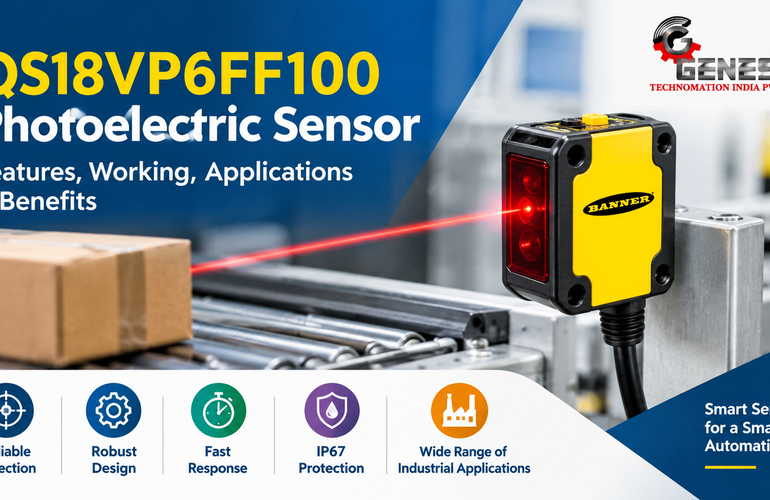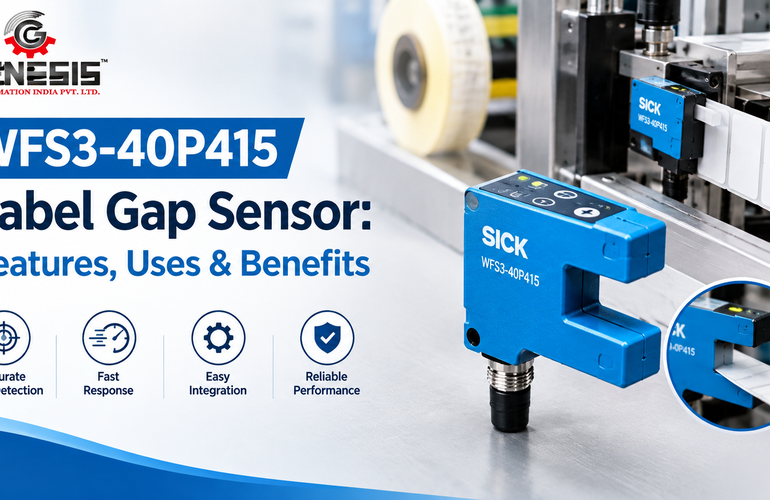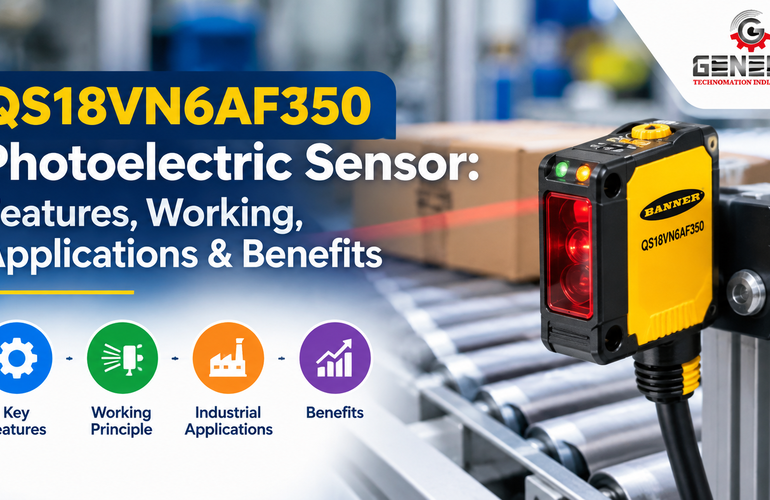

Label Gap Sensor vs Photoelectric Sensor is one of the most searched comparisons among machine builders, OEMs, packaging engineers, and industrial automation professionals. Although both sensors rely on optical technology, they are designed for different purposes and deliver very different performance depending on the application. Choosing the wrong sensor can lead to inaccurate detection, machine downtime, product waste, and reduced production efficiency.
In today’s automated manufacturing environment, sensors are the foundation of reliable machine operation. Whether a production line is labeling bottles, inspecting pharmaceutical packaging, detecting products on conveyors, or counting cartons, selecting the appropriate sensing technology directly affects machine accuracy and productivity.
A Label Gap Sensor is specifically engineered to detect the small gap between consecutive labels on a roll. These sensors are optimized for high-speed labeling applications and can accurately identify transparent, opaque, metallic, paper, and film labels. Their primary function is to ensure labels are dispensed precisely at the correct position during automated labeling.
In contrast, a Photoelectric Sensor is a general-purpose industrial sensor used to detect the presence, absence, position, or movement of objects. Rather than identifying label gaps, it detects products by sensing reflected or interrupted light. Photoelectric sensors are widely used in conveyors, robotic systems, packaging equipment, assembly lines, warehouse automation, and countless industrial processes.
Although both sensors use light as the detection medium, their internal sensing methods, optical technologies, operating principles, and intended applications differ significantly. Understanding these differences is essential for designing reliable automation systems and avoiding unnecessary production issues.
This comprehensive guide explains:
- What a Label Gap Sensor is
- What a Photoelectric Sensor is
- How each sensor works
- Key differences in technology and performance
- Advantages and limitations
- Industrial applications
- Which sensor is the right choice for your automation project
Whether you are designing a new labeling machine, upgrading an existing packaging line, or selecting sensors for an automated production system, this guide will help you make an informed decision.
What is a Label Gap Sensor?
A Label Gap Sensor, also called a Label Detection Sensor, Photoelectric Label Sensor, or Transparent Label Sensor, is a specialized optical sensor designed to detect the gap between consecutive labels on a backing liner. Its primary role is to ensure labels are dispensed accurately during automated labeling processes.
Unlike standard object detection sensors, a Label Gap Sensor distinguishes subtle differences between the label material and the liner, enabling highly precise label positioning even at high production speeds.
Definition
A Label Gap Sensor is an industrial automation sensor that identifies the transition between a label and its backing material using optical transmission, ultrasonic sensing, or capacitive technology. It provides an output signal each time a label gap is detected, allowing the labeling machine to dispense labels with exceptional precision.
Why Label Gap Sensors Are Important
Modern packaging lines operate at speeds ranging from 100 to more than 1,000 products per minute. Even a minor error in label placement can result in:
- Product rejection
- Barcode misalignment
- Regulatory compliance issues
- Increased material waste
- Customer dissatisfaction
- Production downtime
A dedicated Industrial Label Gap Sensor minimizes these risks by delivering consistent and repeatable label detection.
Working Principle of a Label Gap Sensor
The operating principle depends on the sensing technology used.
Optical Transmission Technology
In this method:
- A transmitter emits light through the label web.
- A receiver measures the amount of transmitted light.
- The sensor detects changes in light intensity between the label and the gap.
- The controller identifies the label edge.
- The labeling machine dispenses the label precisely.
This method is ideal for paper labels and opaque materials.
Ultrasonic Technology
Ultrasonic Label Gap Sensors emit high-frequency sound waves instead of relying solely on light.
The sensor measures how ultrasonic waves travel through:
- Label material
- Backing liner
- Air gap
Since ultrasonic waves are largely unaffected by transparency or color, they are highly effective for detecting:
- Transparent labels
- Clear films
- Glossy packaging
- Reflective labels
This technology is widely used in beverage, pharmaceutical, and cosmetics industries where clear labels are common.
Capacitive Detection
Some specialized sensors use changes in dielectric properties to distinguish labels from their backing.
This approach is suitable for:
- Thin plastic labels
- Special packaging materials
- Customized industrial applications
Construction of a Label Gap Sensor
A typical Label Gap Sensor consists of:
- Optical transmitter
- Optical receiver
- Signal processing electronics
- High-speed microcontroller
- LED status indicators
- Sensitivity adjustment controls
- Industrial housing
- M8 or M12 connectors
- Mounting brackets
Industrial models are designed to withstand vibration, dust, and demanding factory environments.
Technologies Used in Label Gap Sensors
Modern Industrial Label Gap Sensors incorporate advanced technologies such as:
Optical Fiber Technology
Provides excellent detection accuracy in compact spaces.
LED Light Source
Offers stable illumination with a long operational life.
Laser Technology
Used where extremely high precision is required.
Ultrasonic Technology
Ideal for transparent labels and glossy packaging.
Digital Signal Processing (DSP)
Filters electrical noise and compensates for variations in label materials, improving reliability in high-speed applications.
Advantages of Label Gap Sensors
A Label Gap Sensor offers several benefits for automated labeling systems:
- Extremely high detection accuracy
- Reliable operation at high machine speeds
- Excellent repeatability
- Detection of transparent labels
- Compact design for easy installation
- Low maintenance requirements
- Fast response times
- Seamless integration with PLCs and industrial controllers
- Reduced label waste
- Improved production efficiency
Limitations of Label Gap Sensors
Despite their advantages, these sensors have certain limitations:
- Primarily designed for label detection rather than general object sensing
- Short sensing distance compared to standard photoelectric sensors
- Performance depends on proper alignment
- Some models require calibration when changing label materials
- Advanced ultrasonic models may have a higher initial cost
Typical Applications of Label Gap Sensors
Label Gap Sensors are widely used in:
- Automatic labeling machines
- Bottle labeling systems
- Carton labeling
- Pharmaceutical packaging
- Food packaging
- Cosmetic manufacturing
- Printing and converting machinery
- Barcode label dispensers
- RFID label applications
- Flexible packaging equipment
Industries Using Label Gap Sensors
These sensors play a vital role across multiple sectors, including:
| Industry | Typical Application |
| Food & Beverage | Bottle and container labeling |
| Pharmaceuticals | Medicine packaging and compliance labeling |
| Cosmetics | Premium product labeling |
| FMCG | High-speed product identification |
| Printing | Label roll inspection and dispensing |
| Logistics | Barcode label application |
| Warehousing | Shipping label automation |
| Electronics | Product identification labels |
What is a Photoelectric Sensor?
A Photoelectric Sensor is a versatile industrial sensor that detects the presence, absence, position, or movement of an object by emitting and receiving light. Unlike a Label Gap Sensor, which focuses on detecting label gaps, a Photoelectric Sensor is designed for broad object detection across countless industrial automation tasks.
Photoelectric sensors are among the most widely used Industrial Automation Sensors due to their long sensing range, fast response, and ability to detect a wide variety of materials without physical contact.
Definition
A Photoelectric Sensor is an electronic sensing device that uses a light emitter and a receiver to detect objects by measuring changes in transmitted or reflected light.
These sensors can detect:
- Boxes
- Bottles
- Pallets
- Metal parts
- Plastic components
- Glass containers
- Cartons
- Packages
- Machine parts
- Finished products
Working Principle
The operating sequence typically involves:
- The emitter projects a beam of light, usually infrared, visible red, or laser.
- The beam travels toward a target or reflector.
- An object either interrupts or reflects the beam.
- The receiver detects the resulting change in light intensity.
- The sensor processes the signal and switches its output.
- The PLC or controller initiates the required machine action.
This non-contact method enables reliable detection without mechanical wear.
Types of Photoelectric Sensors
1. Through-Beam Photoelectric Sensor
A separate transmitter and receiver are mounted opposite each other. An object is detected when it blocks the light beam.
Advantages:
- Long sensing distance
- High reliability
- Excellent performance in dusty environments
- Suitable for large objects
Typical Applications:
- Conveyor systems
- Pallet detection
- Warehouse automation
- High-speed sorting lines
2. Retro-Reflective Photoelectric Sensor
In this configuration, the transmitter and receiver are housed together, and a reflector returns the emitted light. Detection occurs when an object interrupts the reflected beam.
Advantages:
- Easier installation than through-beam systems
- Moderate sensing range
- Cost-effective for many applications
Typical Applications:
- Carton conveyors
- Packaging machines
- Material handling
- Automated storage systems
3. Diffuse Photoelectric Sensor
The emitted light reflects directly from the object back to the sensor.
Advantages:
- No separate reflector required
- Simple installation
- Suitable for short-range detection
Typical Applications:
- Product presence detection
- Assembly lines
- Robotics
- Pick-and-place systems
4. Background Suppression Photoelectric Sensor
This advanced type distinguishes the target object from the background using triangulation or time-based optical processing, allowing precise detection even when backgrounds vary.
Advantages:
- Reliable detection of objects regardless of background color
- Improved accuracy
- Reduced false triggering
Typical Applications:
- Electronics manufacturing
- Packaging automation
- Precision assembly
- Robotic handling
Advantages of Photoelectric Sensors
Photoelectric Sensors offer several operational benefits:
- Long sensing distances, from a few millimeters to several meters
- Non-contact detection minimizes mechanical wear
- Fast response suitable for high-speed automation
- Multiple sensing modes for diverse applications
- Easy integration with PLCs, HMIs, and industrial networks
- Reliable performance across a wide range of industries
- Compact designs for space-constrained installations
- Cost-effective for general object detection
Limitations of Photoelectric Sensors
Engineers should also consider their limitations:
- Standard models are not optimized for detecting label gaps.
- Transparent or highly reflective objects may require specialized variants.
- Ambient light, dust, or contamination can affect performance if not properly managed.
- Alignment is critical, especially for through-beam and retro-reflective types.
- Surface color and texture can influence diffuse sensor performance.
Common Industrial Applications
Photoelectric Sensors are used extensively in:
- Conveyor object detection
- Material handling systems
- Automated assembly lines
- Packaging machinery
- Pallet positioning
- Robotics and pick-and-place systems
- Presence and absence detection
- Counting and sorting products
- Warehouse automation
- Safety interlocks (non-safety-rated applications)
Their flexibility makes them a standard component in modern industrial automation, where reliable object detection is essential for efficient production and process control.
Quick Comparison between Label Gap and Photoelectric Sensor
| Feature | Label Gap Sensor | Photoelectric Sensor |
| Primary Purpose | Detects gaps between labels on a backing liner | Detects the presence, absence, or movement of objects |
| Detection Method | Optical transmission, ultrasonic, or capacitive sensing | Light interruption or reflected light detection |
| Detects Labels | Excellent | Limited (application-dependent) |
| Detects Transparent Materials | Excellent with ultrasonic or specialized optical models | Requires specialized transparent-object models |
| Detects General Objects | Not intended for general object detection | Excellent for a wide range of materials |
| Typical Sensing Distance | Short (typically a few millimeters) | Short to several meters, depending on type |
| Response Speed | Very high for high-speed labeling | High, suitable for most industrial automation tasks |
| Detection Accuracy | Extremely high for label positioning | High for object detection, lower for label gap detection |
| Installation | Requires precise alignment with the label web | Generally straightforward; varies by sensing mode |
| Cost | Higher for advanced ultrasonic models | Wide range, from economical to premium |
| Maintenance | Low with periodic cleaning and alignment checks | Low with routine lens cleaning and inspection |
| Best Applications | Labeling machines, print-and-apply systems | Conveyors, packaging lines, robotics, material handling |
| Packaging Machines | Ideal for label dispensing | Ideal for product detection and positioning |
| Conveyor Systems | Limited use | Excellent |
| Labeling Machines | Primary sensor choice | Used for product presence detection alongside label sensors |
| Printing Industry | Label registration and dispensing | Sheet or product detection |
| Automation Systems | Specialized labeling tasks | General industrial automation and object sensing |
Working Principle Comparison between Photoelectric and Label Gap Sensor
While both sensors rely on optical or wave-based technologies, their detection objectives differ fundamentally.
How a Label Gap Sensor Detects Label Gaps
A Label Gap Sensor monitors the continuous label web and identifies the transition between the label material and the gap on the backing liner. It uses changes in transmitted light or ultrasonic wave characteristics to detect this transition with high precision, enabling accurate label dispensing even at very high production speeds.
How a Photoelectric Sensor Detects Objects
A Photoelectric Sensor emits a light beam toward a target or reflector. When an object interrupts or reflects the beam, the receiver detects the change in light intensity and sends an output signal to the machine controller.
Internal Sensing Technologies
- Label Gap Sensors: Optical transmission, ultrasonic sensing, capacitive sensing, digital signal processing.
- Photoelectric Sensors: Infrared LEDs, visible red LEDs, laser emitters, photodiodes, background suppression optics, and high-speed signal processing.
Signal Processing and Detection Accuracy
Label Gap Sensors use specialized algorithms to differentiate subtle variations between label material and the liner, delivering exceptional repeatability for precise label placement.
Photoelectric Sensors prioritize reliable object detection across varying shapes, sizes, and materials. Their signal processing focuses on identifying changes in light caused by object presence, making them ideal for conveyors, robotics, packaging, and material handling rather than precise label registration.
Key Differences Between Label Gap Sensor and Photoelectric Sensor
Although both devices belong to the family of Industrial Automation Sensors, they solve different engineering challenges. A Label Gap Sensor is purpose-built for detecting the transition between labels on a backing liner, while a Photoelectric Sensor is designed for general object detection. Understanding these differences helps machine designers, maintenance engineers, and automation integrators select the right technology for reliable production.
1. Detection Technology
This is the most significant difference between the two sensors.
Label Gap Sensor
A Label Gap Sensor uses one or more of the following technologies:
- Optical transmission
- Ultrasonic sensing
- Capacitive sensing
- Digital signal processing (DSP)
These technologies are optimized to detect tiny variations between the label and the liner, even when labels are transparent, glossy, or very thin.
Photoelectric Sensor
A Photoelectric Sensor detects an object by monitoring changes in light. It typically uses:
- Infrared LEDs
- Visible red LEDs
- Laser emitters
- Photodiodes
- Background suppression optics
Its primary objective is to determine whether an object is present within the sensing area rather than identifying label gaps.
2. Working Principle
Label Gap Sensor
The sensor continuously scans the label web and identifies the transition between:
- Label
- Gap
- Backing liner
The controller receives a switching signal exactly when the gap passes through the sensing area, ensuring precise label dispensing.
Photoelectric Sensor
The sensor emits a beam of light. Detection occurs when:
- An object interrupts the beam.
- An object reflects light back to the receiver.
- A reflector’s beam is blocked.
The output changes whenever the target object enters or leaves the sensing zone.
3. Purpose
| Label Gap Sensor | Photoelectric Sensor |
| Detect label gaps | Detect objects |
| Control label dispensing | Detect product presence |
| Maintain label registration | Count products |
| Ensure precise label placement | Position products on conveyors |
4. Accuracy
Accuracy is one of the biggest deciding factors.
Label Gap Sensor
Designed specifically for labeling systems, these sensors provide extremely accurate detection of:
- Paper labels
- Transparent labels
- Metallic labels
- Film labels
- Foil labels
Typical repeatability is measured in fractions of a millimeter, making them ideal for high-speed dispensing.
Photoelectric Sensor
Photoelectric Sensors offer excellent accuracy for object detection, but they are not optimized to distinguish small gaps between labels on a roll.
5. Precision
Precision refers to how consistently the sensor produces the same result.
Label Gap Sensor
- Very high repeatability
- Stable switching point
- Reliable operation at high machine speeds
Photoelectric Sensor
- High precision for object sensing
- Performance depends on object size, color, reflectivity, and surface finish
6. Sensing Distance
| Sensor Type | Typical Distance |
| Label Gap Sensor | Few millimeters |
| Diffuse Photoelectric | Up to several hundred millimeters |
| Retro Reflective | Up to several meters |
| Through Beam | Several meters to tens of meters (model dependent) |
Photoelectric Sensors clearly offer greater sensing distances, making them suitable for conveyor systems and material handling.
7. Transparent Label Detection
Transparent labels are challenging because they allow most light to pass through.
Label Gap Sensor
Specialized ultrasonic or advanced optical Label Gap Sensors can reliably detect:
- Clear labels
- Transparent films
- PET labels
- Thin packaging materials
Photoelectric Sensor
Standard Photoelectric Sensors often struggle with transparent labels unless specifically designed for clear object detection.
8. Color Sensitivity
Label Gap Sensor
High-quality models compensate for variations in:
- White labels
- Black labels
- Colored labels
- Printed labels
- Metallic finishes
This ensures consistent detection without frequent recalibration.
Photoelectric Sensor
Diffuse Photoelectric Sensors can be influenced by:
- Object color
- Surface texture
- Reflectivity
- Finish
Laser and background suppression models reduce these effects but do not eliminate them entirely.
9. Surface Detection
Different packaging materials behave differently under optical sensing.
Label Gap Sensor
Performs reliably with:
- Glossy labels
- Matte labels
- Plastic films
- Laminated labels
- Foil labels
- Paper labels
Photoelectric Sensor
Surface characteristics such as gloss, transparency, or uneven textures can influence detection performance, depending on the sensing mode.
10. Environmental Resistance
Industrial environments expose sensors to:
- Dust
- Oil mist
- Moisture
- Vibration
- Temperature fluctuations
Label Gap Sensor
Designed for packaging machinery, these sensors typically feature:
- Rugged housings
- High IP ratings
- Vibration resistance
- Stable optical systems
Photoelectric Sensor
Industrial Photoelectric Sensors are also built for demanding environments and are available with high ingress protection ratings suitable for manufacturing plants.
11. Installation
Label Gap Sensor
Installation requires:
- Accurate alignment with the label web
- Proper spacing from the liner
- Initial sensitivity setup
Once configured, operation is highly reliable.
Photoelectric Sensor
Installation varies depending on the sensing type:
- Through Beam: Requires alignment between transmitter and receiver.
- Retro Reflective: Requires a reflector.
- Diffuse: Simplest installation with a single housing.
12. Calibration
Label Gap Sensor
Calibration may be required when switching to:
- Different label materials
- New liner thicknesses
- Transparent labels
- Metallic labels
Many modern sensors feature automatic teach-in functions to simplify this process.
Photoelectric Sensor
Most models require only basic sensitivity adjustment or teach-in during installation.
13. Speed
Modern packaging equipment often operates at extremely high throughput.
Label Gap Sensor
Designed for:
- High-speed label dispensing
- Continuous web detection
- Rapid response times
- Minimal switching delay
Photoelectric Sensor
Equally fast for object detection but optimized for tracking products rather than label registration.
14. Repeatability
Repeatability ensures consistent machine performance.
Label Gap Sensor
Provides:
- Consistent label placement
- Stable dispensing
- Reduced waste
- Improved production quality
Photoelectric Sensor
Offers reliable object detection with repeatability appropriate for conveyor systems, robotics, and automated handling.
15. Maintenance
Label Gap Sensor
Routine maintenance includes:
- Cleaning optical windows
- Checking alignment
- Inspecting cables
- Verifying teach settings
- Monitoring sensor indicators
Photoelectric Sensor
Maintenance generally consists of:
- Lens cleaning
- Reflector inspection (if used)
- Cable checks
- Functional testing
16. Cost
| Category | Label Gap Sensor | Photoelectric Sensor |
| Initial Cost | Medium to High | Low to High |
| Installation Cost | Moderate | Low to Moderate |
| Maintenance Cost | Low | Low |
| Replacement Frequency | Low | Low |
Although specialized Label Gap Sensors can have a higher purchase price, they often reduce label waste and rework, resulting in a strong return on investment.
17. Return on Investment (ROI)
Label Gap Sensor
Benefits include:
- Reduced label waste
- Lower product rejection rates
- Improved packaging quality
- Higher production efficiency
- Less machine downtime
Photoelectric Sensor
Benefits include:
- Faster production
- Reliable object detection
- Improved conveyor control
- Reduced mechanical wear
- Lower operating costs
18. Lifespan
Both sensor types typically offer long service lives when properly maintained.
Factors influencing lifespan include:
- Ambient temperature
- Vibration
- Dust levels
- Cleaning practices
- Installation quality
- Electrical protection
With appropriate preventive maintenance, industrial sensors often provide years of dependable service.
Comprehensive Comparison Table
| Feature | Label Gap Sensor | Photoelectric Sensor |
| Primary Function | Detect label gaps | Detect objects |
| Detection Method | Optical, ultrasonic, capacitive | Infrared, visible light, laser |
| Best Accuracy | Label positioning | Product detection |
| Transparent Label Detection | Excellent | Limited unless specialized |
| Transparent Object Detection | Good (specialized models) | Good with transparent-object variants |
| General Object Detection | Limited | Excellent |
| Sensing Distance | Short | Short to long |
| Conveyor Detection | Limited | Excellent |
| Label Roll Detection | Excellent | Limited |
| Bottle Labeling | Excellent | Supports product positioning |
| High-Speed Packaging | Excellent | Excellent for object tracking |
| Repeatability | Extremely high | High |
| Sensitivity to Surface Finish | Low (advanced models compensate) | Can vary with sensing mode |
| Ease of Setup | Moderate | Easy to moderate |
| Typical Industries | Packaging, pharmaceuticals, printing | Manufacturing, logistics, automotive, food processing |
Advantages of Label Gap Sensors
A Label Gap Sensor is the preferred solution when accurate label positioning is essential. Its specialized design delivers benefits that standard object detection sensors cannot consistently provide.
1. Exceptional Detection Accuracy
These sensors are engineered to detect minute transitions between labels and gaps, ensuring precise dispensing even at high production speeds.
2. Reliable Transparent Label Detection
Ultrasonic and advanced optical models accurately identify:
- Clear labels
- Transparent films
- PET labels
- Glossy packaging materials
This capability is particularly valuable in beverage, cosmetic, and pharmaceutical packaging.
3. High-Speed Operation
Modern Label Gap Sensors support fast response times suitable for continuous-motion labeling systems without compromising accuracy.
4. Compact Design
Their small footprint allows installation in confined machine spaces, making integration easier for OEMs and machine builders.
5. Stable and Repeatable Performance
Consistent switching points help reduce label waste, improve registration accuracy, and maintain product quality throughout long production runs.
6. Easy Integration
Most industrial models support standard outputs such as:
- PNP
- NPN
- Push-pull
- IO-Link (selected models)
This simplifies connection to PLCs and industrial controllers.
7. Reduced Waste
Accurate gap detection minimizes:
- Misapplied labels
- Rejected products
- Material consumption
- Machine stoppages
8. Improved Production Efficiency
Reliable sensing enables higher machine uptime and smoother operation, contributing to increased throughput and lower operating costs.
Advantages of Photoelectric Sensors
Photoelectric Sensors remain one of the most versatile sensing solutions in industrial automation because they can detect a wide variety of objects without physical contact.
1. Long Sensing Distance
Depending on the sensing mode, Photoelectric Sensors can detect objects from a few millimeters to several meters away, making them suitable for large machinery and conveyor systems.
2. Versatile Object Detection
They can detect:
- Cartons
- Bottles
- Metal components
- Plastic parts
- Glass containers
- Wooden products
- Packaged goods
This versatility makes them indispensable across manufacturing industries.
3. Multiple Sensing Modes
Available options include:
- Through Beam
- Retro Reflective
- Diffuse
- Background Suppression
Each mode is tailored to different installation requirements and detection challenges.
4. High-Speed Response
Photoelectric Sensors provide rapid switching, allowing accurate counting, positioning, and presence detection on fast-moving production lines.
5. Non-Contact Operation
Since detection is optical, there is no physical contact with the target, reducing wear and extending equipment life.
6. Cost-Effective Solution
For general object detection, Photoelectric Sensors often provide an economical balance of performance, reliability, and maintenance.
7. Broad Industrial Compatibility
They are widely used in:
- Conveyor systems
- Packaging automation
- Robotics
- Assembly lines
- Warehousing
- Material handling
- Automotive manufacturing
- Food processing
8. Easy Maintenance
Routine care usually involves only cleaning the sensing surface and checking alignment, keeping maintenance requirements low while ensuring consistent performance.
Limitations of Label Gap Sensors
Although a Label Gap Sensor is the preferred solution for label detection and dispensing applications, it is not the ideal choice for every industrial automation task. Understanding its limitations helps engineers and machine builders select the most suitable sensing technology.
1. Limited Sensing Distance
Unlike Photoelectric Sensors, Label Gap Sensors are designed for close-range operation. Most models require the label web to pass directly through the sensing area.
Impact:
- Not suitable for long-distance object detection
- Cannot monitor conveyors from several meters away
- Requires accurate mounting
2. Application-Specific Design
A Label Gap Sensor is purpose-built for label detection.
It is generally not recommended for:
- Product counting
- Pallet detection
- Carton detection
- Presence sensing
- Position sensing
For these applications, a Photoelectric Sensor is usually a better choice.
3. Initial Setup Can Be Critical
Proper operation depends on:
- Correct sensor alignment
- Suitable mounting
- Proper sensitivity settings
- Stable label web tension
Improper installation can reduce detection reliability.
4. Material Changes May Require Re-Teaching
When production changes to:
- Different label materials
- Different liner thickness
- Metallic labels
- Transparent films
the sensor may require recalibration or an automatic teach procedure.
5. Higher Cost for Specialized Models
Advanced technologies such as:
- Ultrasonic
- High-resolution optical systems
- Laser-assisted detection
generally cost more than standard Photoelectric Sensors.
However, the higher initial investment is often offset by lower waste and better labeling accuracy.
6. Sensitive to Contamination
Accumulation of:
- Dust
- Glue residue
- Oil
- Ink
- Paper particles
can reduce optical performance if cleaning is neglected.
Routine preventive maintenance minimizes this risk.
Limitations of Photoelectric Sensors
Photoelectric Sensors are among the most versatile industrial sensors available, but they also have limitations depending on the application.
1. Limited Label Gap Detection
A standard Photoelectric Sensor is designed to detect objects rather than tiny gaps between labels.
This can result in:
- Missed label gaps
- Inconsistent label positioning
- Poor dispensing accuracy
For precision labeling, a dedicated Label Gap Sensor is recommended.
2. Transparent Object Detection Challenges
Standard diffuse sensors may struggle to detect:
- Transparent bottles
- Clear films
- Glass
- PET materials
Specialized transparent-object models are often required.
3. Surface Reflectivity Can Affect Performance
Detection accuracy may vary depending on:
- Glossy surfaces
- Matte finishes
- Highly reflective metal
- Dark-colored materials
Modern background suppression and laser models reduce these effects but cannot eliminate them entirely.
4. Ambient Light Interference
Strong environmental lighting or direct sunlight can influence sensor performance if the sensor is not properly shielded or selected for the application.
Industrial-grade models include optical filters and signal processing to minimize interference.
5. Alignment Requirements
Through Beam and Retro Reflective sensors require proper alignment between:
- Transmitter
- Receiver
- Reflector
Misalignment can lead to false detections or missed objects.
6. Dirt on the Lens
Dust, moisture, oil, or packaging residue on the sensing lens may reduce the amount of transmitted or received light, affecting detection reliability.
Regular cleaning helps maintain optimal performance.
Application Comparison
Choosing the right sensor depends on the machine, production process, and detection objective. The table below compares where each technology performs best.
| Industry | Label Gap Sensor | Photoelectric Sensor |
| Packaging | ★★★★★ | ★★★★★ |
| Food & Beverage | ★★★★★ | ★★★★★ |
| Pharmaceutical | ★★★★★ | ★★★★☆ |
| Printing & Converting | ★★★★★ | ★★★☆☆ |
| Logistics | ★★☆☆☆ | ★★★★★ |
| Conveyor Systems | ★★☆☆☆ | ★★★★★ |
| FMCG | ★★★★★ | ★★★★★ |
| Automotive | ★★☆☆☆ | ★★★★★ |
| Electronics | ★★★★☆ | ★★★★★ |
| Warehousing | ★☆☆☆☆ | ★★★★★ |
Application Comparison Explained
Packaging Industry
Packaging machines often use both sensors together.
Label Gap Sensor
Used for:
- Label dispensing
- Label registration
- Roll monitoring
- Transparent label detection
Photoelectric Sensor
Used for:
- Product detection
- Carton positioning
- Conveyor synchronization
- Package counting
Food & Beverage Industry
Food manufacturers rely on accurate labeling and product tracking.
Label Gap Sensor
Ideal for:
- Bottle labeling
- Jar labeling
- Flexible packaging
- Beverage labels
Photoelectric Sensor
Ideal for:
- Conveyor control
- Bottle detection
- Case counting
- Product positioning
Pharmaceutical Industry
Regulatory compliance demands precise label placement.
Label Gap Sensors ensure:
- Correct label positioning
- Barcode alignment
- Batch tracking
- Tamper label application
Photoelectric Sensors monitor:
- Product movement
- Presence detection
- Conveyor control
Printing Industry
Printing machines require extremely accurate label registration.
Label Gap Sensors are used for:
- Label web control
- Print registration
- Roll inspection
- Gap detection
Photoelectric Sensors detect:
- Printed sheets
- Finished products
- Conveyor movement
Logistics and Warehousing
Warehouses primarily depend on Photoelectric Sensors.
Typical applications include:
- Parcel detection
- Sorting systems
- Automated storage
- Conveyor monitoring
- Barcode station positioning
Label Gap Sensors have limited use in these environments because the focus is on object detection rather than label dispensing.
Automotive Industry
Automotive manufacturing uses Photoelectric Sensors extensively for:
- Component detection
- Robotic assembly
- Position verification
- Material handling
Label Gap Sensors are generally limited to part identification and component labeling stations.
Electronics Manufacturing
Electronics production requires precise sensing.
Label Gap Sensors are suitable for:
- PCB labels
- Component identification labels
- Barcode application
Photoelectric Sensors assist with:
- Pick-and-place machines
- Assembly automation
- Tray detection
- Product counting
Which Sensor Should You Choose?
There is no universal “best” sensor. The correct choice depends entirely on the application and the type of detection required.
Scenario 1: Automatic Labeling Machine
Recommended Sensor: Label Gap Sensor
Reason:
- Detects label gaps accurately
- Prevents label misplacement
- Supports high-speed operation
Scenario 2: Bottle Labeling
Recommended Sensor: Label Gap Sensor
Especially suitable for:
- Beverage bottles
- Pharmaceutical bottles
- Cosmetic bottles
- Chemical containers
Transparent bottle labels are best handled using ultrasonic Label Gap Sensors.
Scenario 3: Transparent Labels
Recommended Sensor: Ultrasonic Label Gap Sensor
Reason:
- Reliable detection regardless of transparency
- High repeatability
- Stable performance with clear films
Scenario 4: Packaging Machine
Recommended Solution: Combination of Both Sensors
A typical packaging line uses:
- Label Gap Sensor for label dispensing
- Photoelectric Sensor for product positioning
This combination delivers higher accuracy and smoother machine operation.
Scenario 5: Conveyor Object Detection
Recommended Sensor: Photoelectric Sensor
Ideal for:
- Boxes
- Bottles
- Cartons
- Pallets
- Packages
Scenario 6: Counting Products
Recommended Sensor: Photoelectric Sensor
High-speed response enables accurate counting on:
- Conveyor belts
- Assembly lines
- Packaging machines
- Sorting systems
Scenario 7: Presence Detection
Recommended Sensor: Photoelectric Sensor
Applications include:
- Machine safety logic (non-safety-rated sensing)
- Product detection
- Missing product detection
- Material verification
Scenario 8: Position Sensing
Recommended Sensor: Photoelectric Sensor
Used extensively in:
- Robotics
- Automated assembly
- Pick-and-place systems
- Material handling equipment
Buying Guide: How to Choose the Right Sensor
Selecting the right sensor requires evaluating both technical specifications and the operating environment. The following factors should be considered before making a purchase.
1. Sensing Distance
Ask yourself:
- How far is the target from the sensor?
- Is close-range or long-range detection required?
For label web detection, choose a Label Gap Sensor. For long-distance object detection, a Photoelectric Sensor is generally more suitable.
2. Label Material
Consider whether your application uses:
- Paper labels
- Transparent labels
- Metallic labels
- Glossy labels
- Plastic films
Transparent and reflective materials often require ultrasonic or advanced optical Label Gap Sensors.
3. Machine Speed
High-speed production lines require sensors with:
- Fast response times
- High switching frequency
- Excellent repeatability
- Stable signal processing
Ensure the sensor’s specifications match the maximum operating speed of your equipment.
4. Output Type
Verify compatibility with your control system.
Common output options include:
- PNP
- NPN
- Push-Pull
- Analog Output
- IO-Link Communication
Choose a sensor that integrates seamlessly with your PLC or industrial controller.
5. Mounting Requirements
Evaluate:
- Available installation space
- Bracket design
- Cable routing
- Connector type (M8 or M12)
- Ease of alignment
Compact sensors simplify installation in confined machine layouts.
6. Operating Environment
Consider environmental factors such as:
- Dust
- Moisture
- Oil mist
- Vibration
- Ambient temperature
- Washdown requirements
Select a sensor with an appropriate housing and ingress protection rating for the application.
7. IP Rating
Industrial environments often demand robust protection.
Common ratings include:
- IP65 – Protection against dust and water jets
- IP67 – Suitable for temporary immersion and harsh factory conditions
- IP69K – Designed for high-pressure, high-temperature washdown environments commonly found in food and beverage processing
8. Brand Quality
Selecting a reputable manufacturer provides several advantages:
- Consistent product quality
- Reliable technical documentation
- Long-term availability of spare parts
- Compliance with international standards
- Proven field performance
9. Warranty and Service
Before purchasing, confirm:
- Warranty period
- Availability of replacement units
- Local service support
- Technical troubleshooting assistance
Reliable after-sales support can significantly reduce downtime.
10. Technical Support
For complex automation projects, access to experienced application engineers is just as important as the sensor itself. Assistance with selection, installation, configuration, and commissioning can improve system performance and shorten project timelines.
For businesses seeking dependable Label Gap Sensors and Photoelectric Sensors, Genesis Technomation India Private Limitedoffers a broad portfolio of industrial automation products suitable for packaging, labeling, conveyor, and manufacturing applications. In addition to supplying quality sensors, the company provides technical guidance to help customers choose solutions that align with their machine design and operational requirements.
Common Mistakes to Avoid
Many sensing issues arise not from the sensor itself but from incorrect selection or installation. Avoid these common mistakes:
- Choosing a standard Photoelectric Sensor for precision label gap detection.
- Ignoring the type of label material, especially transparent or metallic labels.
- Selecting a sensing distance that does not match the machine layout.
- Mounting the sensor without proper alignment.
- Skipping the teach-in or calibration procedure after changing label stock.
- Overlooking environmental factors such as dust, vibration, or washdown conditions.
- Using incompatible output types with the PLC or controller.
- Neglecting routine inspection and cleaning of optical surfaces.
- Failing to verify response time for high-speed production lines.
- Prioritizing purchase price over long-term reliability and technical support.
Maintenance Tips
Routine preventive maintenance helps maximize sensor life and maintain consistent detection performance.
Cleaning
- Remove dust and adhesive residue from optical surfaces.
- Use a lint-free cloth and approved cleaning solution.
- Avoid abrasive materials that may scratch the lens.
Alignment
- Verify sensor alignment during scheduled maintenance.
- Inspect mounting brackets for movement caused by vibration.
- Re-align the sensor after replacing machine components or changing label rolls.
Calibration
- Re-run the teach procedure after changing label material or liner type.
- Confirm switching performance before restarting production.
- Record settings for recurring product changeovers.
Inspection
Regularly check:
- Connectors
- Cables
- LED status indicators
- Mounting hardware
- Lens condition
Replace damaged components promptly to prevent unexpected downtime.
Preventive Maintenance
Establish a maintenance schedule that includes:
- Weekly visual inspections
- Monthly functional tests
- Cleaning based on the production environment
- Verification of sensor response at operating speed
Basic Troubleshooting
If detection becomes unreliable:
- Clean the sensing surface.
- Check power supply and wiring.
- Confirm sensor alignment.
- Verify teach or sensitivity settings.
- Inspect the target material for changes in thickness, transparency, or reflectivity.
- Review PLC diagnostics and input status.
- Replace the sensor only after eliminating installation or application-related causes.
By following these practices, manufacturers can reduce unplanned downtime, extend sensor lifespan, and maintain reliable performance in demanding industrial automation systems.
Frequently Asked Questions (FAQs)
What is a Label Gap Sensor?
A Label Gap Sensor is a specialized industrial sensor designed to detect the gap between consecutive labels on a backing liner. It ensures accurate label dispensing in automatic labeling machines by identifying the transition between the label and the gap with high precision.
What is a Photoelectric Sensor?
A Photoelectric Sensor is a non-contact sensing device that detects the presence, absence, or movement of an object using a beam of light. It is commonly used in conveyor systems, packaging machinery, robotics, material handling, and industrial automation.
What is the main difference between a Label Gap Sensor and a Photoelectric Sensor?
The primary difference is their intended purpose.
- Label Gap Sensor: Detects gaps between labels for accurate label dispensing.
- Photoelectric Sensor: Detects the presence or position of objects in industrial processes.
Although both use optical technology, they are designed for different applications.
Which sensor is more accurate?
For label dispensing applications, the Label Gap Sensor is significantly more accurate because it is specifically engineered to detect small transitions between labels and gaps.
For general object detection, Photoelectric Sensors provide excellent accuracy and reliability across a wide range of industrial environments.
Can a Photoelectric Sensor detect labels?
A standard Photoelectric Sensor can detect the presence of a label if there is sufficient contrast or reflectivity. However, it is not intended to identify the precise gap between labels on a roll.
For accurate label positioning, a dedicated Label Gap Sensor should be used.
Can a Label Gap Sensor detect objects?
A Label Gap Sensor is optimized for detecting labels and backing liners rather than general objects. While it may detect certain materials at close range, it should not replace a Photoelectric Sensor for conveyor detection, counting, or presence sensing.
Which sensor is better for transparent labels?
An Ultrasonic Label Gap Sensor is generally the preferred choice for transparent labels because ultrasonic technology is less affected by transparency, gloss, or print variations than standard optical methods.
Can Photoelectric Sensors detect transparent objects?
Yes, but standard Photoelectric Sensors may struggle with clear bottles, films, or glass. Specialized transparent-object Photoelectric Sensors are available for these applications and should be selected when reliable detection of clear materials is required.
Which industries use Label Gap Sensors?
Label Gap Sensors are widely used in:
- Food and beverage packaging
- Pharmaceutical manufacturing
- Cosmetics production
- Printing and converting
- FMCG packaging
- Chemical processing
- Logistics labeling
- Consumer goods manufacturing
Which industries use Photoelectric Sensors?
Photoelectric Sensors are used across numerous industries, including:
- Automotive manufacturing
- Warehouse automation
- Material handling
- Packaging
- Electronics assembly
- Food processing
- Robotics
- Logistics
- Textile manufacturing
- General industrial automation
What is the typical sensing distance of a Label Gap Sensor?
Most Label Gap Sensors operate over a short sensing distance because the label web passes directly through the sensing area. The exact range varies by manufacturer and sensing technology.
What sensing distance can a Photoelectric Sensor provide?
The sensing distance depends on the sensor type:
- Diffuse sensors: Short range
- Background suppression sensors: Short to medium range
- Retro-reflective sensors: Medium range
- Through-beam sensors: Long range, often several meters
Always refer to the manufacturer’s specifications when selecting a model.
Do Label Gap Sensors require calibration?
Yes. Depending on the label material, backing liner, or production changeover, the sensor may require calibration or a teach-in process. Many modern models include automatic teach functions that simplify setup.
How long do these sensors typically last?
With correct installation and routine maintenance, both Label Gap Sensors and Photoelectric Sensors can operate reliably for many years. Their service life depends on environmental conditions, operating cycles, electrical protection, and maintenance practices.
How do I choose the right sensor?
Consider the following factors:
- Application requirements
- Detection target
- Sensing distance
- Label material
- Machine speed
- Mounting space
- Environmental conditions
- IP rating
- Output type
- PLC compatibility
- Availability of technical support
Matching the sensor’s specifications to the application’s needs is essential for reliable performance.
Can both sensors be used in the same machine?
Yes. In fact, many modern packaging and labeling systems combine both technologies.
For example:
- Label Gap Sensor: Controls precise label dispensing.
- Photoelectric Sensor: Detects product arrival and synchronizes conveyor movement.
Using both sensors together often improves overall machine efficiency and accuracy.
What maintenance is required for these sensors?
Routine maintenance includes:
- Cleaning optical surfaces
- Checking mounting alignment
- Inspecting cables and connectors
- Verifying teach settings
- Performing functional tests during preventive maintenance
Regular inspection helps maintain consistent performance and minimizes unplanned downtime.
Are Label Gap Sensors suitable for high-speed labeling machines?
Yes. Label Gap Sensors are specifically designed for high-speed applications and offer fast response times, excellent repeatability, and precise label positioning, making them ideal for modern packaging and labeling equipment.
Can environmental conditions affect sensor performance?
Yes. Dust, moisture, vibration, oil mist, and temperature fluctuations can influence sensor performance if the wrong model is selected or maintenance is neglected. Choosing an appropriate IP-rated sensor and following recommended maintenance practices help ensure reliable operation.
Why is choosing the correct sensor important?
Selecting the right sensor helps manufacturers achieve:
- Higher production efficiency
- Accurate product detection
- Precise label placement
- Reduced material waste
- Fewer rejected products
- Lower maintenance costs
- Improved machine uptime
- Better overall process reliability
The correct sensor not only improves machine performance but also reduces long-term operating costs.
Final Comparison Summary
The table below provides a quick overview of the strengths of each sensor.
| Requirement | Recommended Sensor |
| Label gap detection | ✅ Label Gap Sensor |
| Transparent label detection | ✅ Ultrasonic Label Gap Sensor |
| Product presence detection | ✅ Photoelectric Sensor |
| Conveyor automation | ✅ Photoelectric Sensor |
| Product counting | ✅ Photoelectric Sensor |
| Bottle labeling | ✅ Label Gap Sensor |
| Carton detection | ✅ Photoelectric Sensor |
| Print registration | ✅ Label Gap Sensor |
| Position sensing | ✅ Photoelectric Sensor |
| Warehouse automation | ✅ Photoelectric Sensor |
| Packaging line synchronization | ✅ Combination of Both Sensors |
| High-speed labeling | ✅ Label Gap Sensor |
Conclusion
The comparison of Label Gap Sensor vs Photoelectric Sensor demonstrates that while both technologies rely on optical sensing principles, they are designed to solve different automation challenges.
A Label Gap Sensor is the preferred solution when precise label registration and dispensing are essential. It excels in detecting label gaps with exceptional accuracy, making it ideal for labeling machines, print-and-apply systems, pharmaceutical packaging, food and beverage production, and other high-speed packaging applications. Specialized ultrasonic models further enhance performance by reliably detecting transparent and reflective labels.
A Photoelectric Sensor, on the other hand, is the better choice for general object detection. Its versatility makes it suitable for conveyors, robotics, assembly lines, packaging machinery, material handling systems, and warehouse automation. With multiple sensing modes—such as through-beam, retro-reflective, diffuse, and background suppression—it can be adapted to a wide range of industrial environments.
In many modern production lines, the most effective approach is not choosing one sensor over the other but using both together. A Label Gap Sensor ensures accurate label dispensing, while a Photoelectric Sensor detects products, synchronizes conveyor movement, and confirms product presence. This combination improves machine efficiency, minimizes waste, and supports consistent production quality.
When selecting a sensor, evaluate factors such as:
- Detection objective
- Label or product material
- Required sensing distance
- Machine speed
- Environmental conditions
- Output type and PLC compatibility
- IP rating
- Ease of maintenance
- Availability of technical support
Investing in the right sensing technology can reduce downtime, improve process reliability, and increase the overall efficiency of industrial automation systems.
Trusted Industrial Automation Partner
For businesses seeking dependable Label Gap Sensors, Photoelectric Sensors, and other industrial automation components, Genesis Technomation India Private Limited is a trusted supplier serving a wide range of manufacturing industries.
Genesis Technomation India Private Limited offers reliable sensing solutions for:
- Automatic labeling machines
- Packaging equipment
- Conveyor systems
- Material handling applications
- Printing and converting machinery
- Food and beverage production
- Pharmaceutical manufacturing
- General industrial automation
In addition to supplying high-quality automation products, the company provides technical guidance to help OEMs, system integrators, maintenance teams, and industrial buyers select solutions that match their application requirements. Whether you are designing a new machine or upgrading an existing production line, professional application support can simplify sensor selection and improve long-term system performance.
By combining the appropriate sensing technology with sound engineering practices, manufacturers can achieve greater accuracy, higher productivity, and more reliable automation across their operations.
Key Takeaways
- Label Gap Sensors are purpose-built for accurate label gap detection and dispensing.
- Photoelectric Sensors are versatile solutions for detecting objects, positioning products, and automating conveyors.
- Transparent labels are best handled by Ultrasonic Label Gap Sensors.
- Through-beam and retro-reflective Photoelectric Sensors are ideal for long-distance object detection.
- Many packaging systems benefit from using both sensor types together.
- Proper installation, calibration, and preventive maintenance maximize sensor performance and service life.
- Selecting a reputable supplier with strong technical support helps ensure long-term reliability and easier integration into industrial automation systems.
Related Posts