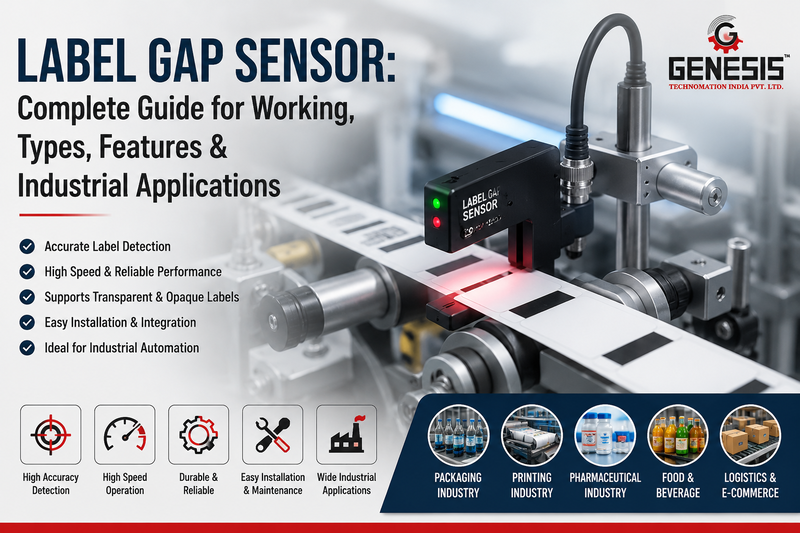
Label Gap Sensor technology has become an essential part of modern industrial automation, helping manufacturers achieve precise, high-speed, and reliable label detection across packaging and production lines. Whether it is a pharmaceutical bottle, a food package, a cosmetic container, or an FMCG product, accurate label positioning directly affects product quality, regulatory compliance, and brand reputation.
In today’s highly competitive manufacturing environment, businesses are under constant pressure to improve productivity while reducing waste and downtime. Even a slight error in label placement can result in rejected products, production delays, increased material wastage, and dissatisfied customers. This is where a high-quality Label Gap Sensor plays a vital role.
A Label Gap Sensor is specifically designed to identify the small space or “gap” between consecutive labels on a label roll. By detecting these gaps with exceptional accuracy, the sensor ensures that each label is dispensed and applied at the correct position, even when production lines operate at very high speeds.
Unlike conventional sensors that may struggle with transparent materials or varying label colors, modern Industrial Label Sensors use advanced optical sensing technologies to deliver consistent performance under demanding industrial conditions. These sensors can reliably detect paper labels, transparent film labels, metallic labels, and other specialized materials used across different industries.
As manufacturing facilities continue to adopt Industry 4.0 practices, intelligent sensors are becoming increasingly important for automated inspection, machine synchronization, quality assurance, and real-time process control. Label Gap Sensors integrate seamlessly with PLCs, labeling machines, packaging equipment, and industrial automation systems, making them an indispensable component of smart factories.
Industries across India—including pharmaceuticals, food processing, beverages, logistics, cosmetics, chemicals, printing, and e-commerce packaging—depend on reliable Label Detection Sensors to maintain production efficiency and product consistency.
At Genesis Technomation India Private Limited, we help manufacturers select the right industrial sensing solutions based on machine design, label material, production speed, and application requirements. Our technical experts provide application guidance, genuine industrial sensors, integration support, and after-sales assistance to help customers maximize operational efficiency.
What is a Label Gap Sensor?
A Label Gap Sensor is a specialized industrial sensor designed to detect the gap between consecutive labels on a backing liner. It enables automatic labeling systems to identify the exact position of each label before dispensing or applying it to a product.
Unlike general-purpose photoelectric sensors, Label Gap Sensors are optimized for detecting very small differences in light transmission or reflection between the label and the gap. This precision allows labeling machines to maintain accurate label placement even at high operating speeds.
These sensors are widely used in:
- Automatic labeling machines
- Packaging equipment
- Printing presses
- Pharmaceutical packaging systems
- Food processing lines
- Bottle labeling machines
- Barcode printing systems
- Carton packaging machines
- Conveyor-based automation systems
Without a Label Gap Sensor, labeling systems would struggle to determine where one label ends and the next begins. This could lead to overlapping labels, missed labels, machine stoppages, and product rejects.
Why is a Label Gap Sensor Important?
Modern manufacturing depends on precision. Even a minor labeling error can affect product quality, customer trust, and regulatory compliance.
A Label Gap Sensor helps manufacturers by:
- Detecting label edges with high accuracy
- Identifying label gaps at high speeds
- Improving dispensing precision
- Reducing label wastage
- Preventing production interruptions
- Enhancing product appearance
- Supporting automated inspection
- Increasing overall equipment efficiency (OEE)
For industries such as pharmaceuticals and food processing, where labeling accuracy is critical for compliance and traceability, reliable gap detection is especially important.
Purpose of a Label Gap Sensor
The primary purpose of a Label Gap Sensor is to ensure that labels are dispensed and applied accurately by detecting the transition between the label and the gap on the backing material.
Its core functions include:
- Detecting label start position
- Detecting label end position
- Identifying transparent labels
- Detecting opaque labels
- Synchronizing label dispensing
- Controlling automatic label applicators
- Improving packaging accuracy
- Supporting high-speed production
Detection Principles
Modern Label Gap Sensors use several sensing principles depending on the application and label material.
Through-Beam Detection
A light transmitter sends light toward a receiver.
When the label blocks or changes the transmitted light, the receiver identifies the difference between the label and the gap.
This method provides excellent reliability for many standard labeling applications.
Optical Detection
Optical Label Sensors analyze changes in light intensity reflected from or transmitted through the label material.
They are commonly used where precise detection is required.
Advantages include:
- High repeatability
- Fast response
- Excellent accuracy
- Compact installation
Label Edge Detection
Rather than only identifying the entire label, advanced sensors can detect the exact leading and trailing edges.
This enables:
- Precise dispensing
- Accurate cutting
- Better label positioning
- High-speed synchronization
Transparent Label Detection
Transparent labels are among the most challenging materials for conventional sensors.
Modern Transparent Label Sensors use specialized optical technologies that detect subtle differences between transparent film labels and the backing liner, helping maintain reliable operation without frequent adjustments.
Industries That Commonly Use Label Gap Sensors
Label Gap Sensors are widely adopted in:
| Industry | Typical Application |
| Pharmaceuticals | Medicine bottle labeling |
| Food Processing | Package labeling |
| Beverage | Bottle labeling |
| Cosmetics | Product branding |
| FMCG | Consumer goods packaging |
| Printing | Label printing verification |
| Logistics | Shipping labels |
| Chemical | Drum labeling |
| Electronics | Product identification |
| Automotive | Component labeling |
How Does a Label Gap Sensor Work?
A Label Gap Sensor operates by detecting the difference between the label material and the space separating two consecutive labels. This information is transmitted to the machine controller, enabling accurate dispensing at the correct moment.
Although sensing technologies vary between manufacturers, the overall operating principle remains similar.
Step 1 – Light Transmission
Inside the sensor is a light source, typically an LED or infrared emitter.
The transmitter projects light toward the receiver through the label path.
Step 2 – Label Passes Through the Sensor
As the label moves between the transmitter and receiver, the amount of transmitted light changes.
The sensor continuously monitors these changes.
Step 3 – Gap Recognition
When the backing liner reaches the sensing area, the transmitted light differs from the label material.
The electronics recognize this variation as the label gap.
Step 4 – Signal Processing
The internal amplifier filters and processes the optical signal to distinguish genuine label gaps from environmental interference, such as dust or vibration.
Step 5 – Output Signal
Once the gap is detected, the sensor generates an electrical output signal.
Common output types include:
- PNP
- NPN
- Push-Pull
- Digital Switching Output
- IO-Link (on supported models)
The controller then commands the labeling machine to dispense or position the next label.
Step 6 – PLC Integration
Most industrial Label Gap Sensors integrate seamlessly with:
- PLCs
- Servo drives
- Motion controllers
- Industrial PCs
- Machine controllers
- SCADA systems
This integration enables synchronized machine operation, high-speed label application, and improved production efficiency.
Benefits of Automated Detection
Automatic gap detection provides several operational advantages:
- Consistent label placement
- Reduced manual intervention
- Improved production speed
- Better product appearance
- Fewer rejected products
- Increased machine uptime
- Lower material wastage
- Enhanced quality control
Types of Label Gap Sensors
Different industrial applications require different sensing technologies. Selecting the appropriate sensor depends on label material, machine speed, environmental conditions, mounting space, and accuracy requirements.
The following are the most commonly used types of Label Gap Sensors.
1. Fork Sensors
Fork Sensors feature a U-shaped housing where the transmitter and receiver are aligned opposite each other. The label web passes through the slot, enabling highly accurate gap detection.
Advantages
- Very high repeatability
- Simple installation
- Excellent for high-speed labeling
- Compact construction
- Minimal alignment effort
Limitations
- Limited slot width
- Not suitable for oversized label webs
Common Applications
- Label dispensing machines
- Pharmaceutical packaging
- Barcode labeling
- Bottle labeling
- OEM labeling equipment
2. Through-Beam Label Sensors
Through Beam Label Sensors use separate transmitting and receiving elements to detect changes in light transmission through the label web.
Advantages
- High sensing accuracy
- Stable detection
- Suitable for demanding industrial environments
- Long sensing distance
Limitations
- Requires precise alignment
- Installation may be more complex
Applications
- High-speed packaging
- Printing machines
- Conveyor systems
- Automated production lines
3. Optical Label Sensors
Optical sensors detect changes in transmitted or reflected light to distinguish labels from gaps.
Advantages
- Fast response time
- High precision
- Reliable operation
- Compact size
Limitations
- May require calibration for different materials
Typical Uses
- Packaging automation
- Label inspection
- Printing applications
- OEM machinery
4. Transparent Label Sensors
These sensors are specifically designed to detect transparent film labels that standard photoelectric sensors may not reliably distinguish.
Advantages
- Excellent performance with clear labels
- Reduced false detection
- Reliable high-speed operation
- Supports premium packaging applications
Limitations
- Generally more application-specific
- Proper setup is important for consistent performance
Common Industries
- Cosmetics
- Pharmaceuticals
- Beverage packaging
- Personal care products
- Premium food packaging
5. Contrast Sensors
Contrast sensors identify differences in color or contrast between a printed mark and its background.
Advantages
- Ideal for printed registration marks
- Fast switching
- High repeatability
Limitations
- Intended for contrast detection rather than label-gap detection in many applications
Applications
- Printing presses
- Flexible packaging
- Registration mark detection
- Film converting
6. Photoelectric Label Sensors
Photoelectric Label Sensors detect labels using optical principles and are commonly integrated into automated labeling systems.
Advantages
- Versatile
- Reliable
- Cost-effective
- Suitable for many industrial applications
Limitations
- Performance depends on material characteristics and application setup
Applications
- Packaging machines
- Food processing
- Conveyor automation
- Industrial production lines
Comparison of Sensor Types
| Sensor Type | Best For | Strength | Consideration |
| Fork Sensor | High-speed labeling | Excellent repeatability | Slot size should match label web |
| Through-Beam Sensor | Industrial automation | Long sensing distance | Requires alignment |
| Optical Sensor | General label detection | Fast response | May need calibration |
| Transparent Label Sensor | Clear labels | Reliable transparent label detection | Application-specific setup |
| Contrast Sensor | Registration marks | Color differentiation | Different purpose from gap sensing |
| Photoelectric Sensor | General industrial use | Versatile and economical | Material-dependent performance |
Major Components of a Label Gap Sensor
A Label Gap Sensor combines optical, electronic, and mechanical elements to deliver accurate and repeatable label detection in demanding industrial environments.
1. LED Light Source
The LED emitter projects a stable beam of light through or onto the label web, providing the reference signal required for gap detection.
Key advantages:
- Long operational life
- Low power consumption
- Stable light intensity
- High reliability
2. Infrared Light Emitter
Many industrial sensors use infrared light because it is less affected by ambient lighting and offers consistent performance across a wide range of label materials.
Benefits include:
- Improved sensing stability
- Reliable operation in industrial environments
- Reduced interference from visible light
3. Optical Receiver
The optical receiver detects changes in transmitted or reflected light and converts them into electrical signals for processing.
Functions:
- Detects label edges
- Identifies gaps
- Supports high-speed sensing
- Provides repeatable measurements
4. Sensor Housing
The housing protects internal components from dust, vibration, and mechanical impacts while enabling secure installation on industrial equipment.
Typical housing materials include:
- Industrial-grade plastic
- Aluminum
- Stainless steel (application-dependent)
5. Output Circuit
The output circuit converts processed optical information into a switching signal compatible with PLCs and machine controllers.
Common output options include:
- PNP
- NPN
- Push-Pull
- Digital outputs
- IO-Link (model dependent)
6. Signal Amplifier
The amplifier strengthens weak optical signals and filters electrical noise, improving detection accuracy under varying operating conditions.
7. Connector and Cabling
Industrial connectors ensure reliable electrical communication between the sensor and the automation system.
Common connection types include:
- M8 connectors
- M12 connectors
- Pre-wired cable versions
8. Mounting Options
Manufacturers offer multiple mounting configurations to simplify integration with different machine designs.
Typical mounting methods include:
- Bracket mounting
- Adjustable rail mounting
- Panel mounting
- OEM machine integration
Component Overview
| Component | Primary Function |
| LED / Infrared Emitter | Generates sensing light |
| Optical Receiver | Detects changes in light |
| Signal Amplifier | Enhances and filters signals |
| Output Circuit | Sends switching output |
| Housing | Protects internal electronics |
| Connector | Enables electrical connection |
| Mounting System | Supports installation and alignment |
Key Features of a Label Gap Sensor
Modern Label Gap Sensors are engineered to deliver precise, repeatable performance across a wide range of industrial labeling applications.
High Detection Accuracy
Advanced optical technologies enable reliable identification of label gaps, even on high-speed production lines.
Fast Response Time
Designed for rapid switching, these sensors support high-throughput packaging and labeling operations without compromising accuracy.
Reliable Label Detection
Consistent sensing performance helps minimize false detections, reducing production interruptions and improving product quality.
Compact Design
Small form factors allow easy installation in space-constrained labeling machines and OEM equipment.
Easy Installation
Features such as integrated indicators, teach-in functions (on supported models), and standardized connectors simplify setup and commissioning.
Long Service Life
Industrial-grade construction and durable electronic components contribute to extended operational life under continuous use.
High-Speed Operation
Suitable for fast-moving label webs and automated packaging systems, ensuring synchronization with modern production equipment.
Low Maintenance
Robust optical systems and durable housings reduce the need for frequent maintenance, helping lower operating costs.
Industrial-Grade Durability
Designed to withstand demanding factory conditions, these sensors are suitable for applications involving vibration, dust, and continuous operation.
IP Protection
Many industrial Label Gap Sensors are available with IP-rated enclosures to provide protection against dust and moisture, supporting reliable use in challenging environments.
Benefits of Using a Label Gap Sensor
A Label Gap Sensor is far more than a simple detection device. It is a critical component that enhances the performance, reliability, and efficiency of automated labeling systems. Whether installed on a compact tabletop labeling machine or a fully automated high-speed packaging line, the right sensor helps manufacturers achieve consistent results while minimizing production losses.
As industries continue to embrace automation and smart manufacturing, Label Gap Sensors have become indispensable for maintaining product quality, improving throughput, and reducing operational costs.
1. Accurate Label Positioning
One of the primary advantages of a Label Gap Sensor is its ability to identify the precise gap between labels. This ensures that every label is dispensed at the correct location on the product.
Accurate label placement is especially important for:
- Pharmaceutical bottles
- Food containers
- Cosmetic products
- Chemical drums
- Beverage bottles
- FMCG packaging
Proper positioning improves product appearance while ensuring compliance with industry regulations and branding requirements.
Practical Example
A pharmaceutical manufacturer producing thousands of medicine bottles per hour relies on a Label Gap Detection Sensor to ensure each label is positioned consistently. Even a minor misalignment could obscure critical information such as dosage instructions, expiry dates, or batch numbers.
2. Increased Production Speed
Modern production facilities often operate at high line speeds. Manual label detection is impractical and prone to errors.
High Speed Label Sensors enable automated labeling systems to operate continuously without sacrificing accuracy.
Advantages
- Supports high-speed conveyors
- Enables faster packaging cycles
- Reduces machine idle time
- Increases production output
- Improves Overall Equipment Effectiveness (OEE)
3. Reduced Product Rejection
Incorrectly positioned labels often result in rejected products, additional inspections, and rework.
By accurately detecting label gaps, a Label Sensor significantly reduces labeling defects.
Helps Prevent
- Missing labels
- Double labels
- Crooked labels
- Misaligned labels
- Overlapping labels
4. Reduced Material Waste
Label rolls represent a significant operational cost, particularly for premium products using specialty or transparent labels.
A Label Gap Sensor minimizes unnecessary label wastage by ensuring labels are dispensed only when required.
Benefits
- Lower label consumption
- Reduced backing liner waste
- Less packaging scrap
- Improved sustainability
5. Improved Product Quality
Consumers often judge a product by its appearance. A neatly applied label enhances the perceived quality of the product and strengthens brand trust.
Consistent label placement contributes to:
- Better shelf appeal
- Improved customer confidence
- Professional packaging
- Reduced quality complaints
6. Enhanced Automation Efficiency
A Label Gap Sensor integrates seamlessly with industrial automation systems, enabling synchronized communication between sensors, PLCs, servo motors, and labeling equipment.
Automation Benefits
- Faster decision-making
- Accurate triggering
- Reliable machine synchronization
- Consistent production flow
7. Lower Downtime
Frequent machine stoppages due to label detection errors can negatively impact production schedules.
Reliable Label Detection Sensors help reduce downtime by:
- Preventing false triggering
- Improving detection stability
- Supporting continuous production
- Reducing manual intervention
8. Better Traceability
Many industries require every product to carry unique identification labels containing barcodes, QR codes, batch numbers, and serial numbers.
Reliable gap detection ensures these labels are applied correctly, supporting traceability throughout the supply chain.
Industries benefiting include:
- Pharmaceuticals
- Medical devices
- Electronics
- Automotive
- Food processing
9. Lower Maintenance Costs
Modern Industrial Label Sensors are designed for long operational life with minimal maintenance.
Advantages include:
- Durable optical components
- Industrial-grade housings
- Stable electronic circuits
- Reliable long-term operation
10. Improved Return on Investment (ROI)
Although a high-quality Label Gap Sensor represents an initial investment, it delivers long-term value through:
- Higher production efficiency
- Reduced waste
- Lower labor costs
- Improved quality
- Fewer machine stoppages
The result is a faster return on investment for manufacturers.
Key Benefits at a Glance
| Benefit | Business Impact |
| Accurate label positioning | Improved product quality |
| High-speed detection | Increased productivity |
| Reduced waste | Lower operating costs |
| Reliable operation | Less downtime |
| Better automation | Higher efficiency |
| Easy integration | Simplified machine design |
| Long service life | Reduced maintenance |
| Industrial durability | Reliable performance |
Industrial Applications of Label Gap Sensors
Label Gap Sensors are widely used across industries where accurate label positioning is essential for product identification, branding, regulatory compliance, and automated production.
Below are the major applications.
1. Packaging Industry
The packaging industry is one of the largest users of Label Gap Sensors.
Packaging machines process thousands of products every hour, making accurate label detection essential.
Common Applications
- Carton packaging
- Flexible packaging
- Bottle packaging
- Pouch packaging
- Box labeling
- Tray labeling
- Shrink wrap systems
Benefits
- Faster production
- Reduced label waste
- Consistent packaging quality
- Reliable automation
2. Printing Industry
Printing machines require precise synchronization between printed labels and cutting or dispensing operations.
A Label Detection Sensor ensures accurate registration throughout the printing process.
Used In
- Label printing presses
- Barcode printing
- Variable data printing
- Roll-to-roll printing
- Digital printing systems
Benefits
- Improved print alignment
- Reduced printing errors
- Better registration accuracy
3. Pharmaceutical Industry
Pharmaceutical manufacturers operate under strict regulatory requirements where labeling accuracy is critical.
Incorrect labeling may result in compliance issues, recalls, or patient safety concerns.
Applications
- Medicine bottles
- Syrup containers
- Injection labels
- Medical devices
- Blister packaging
- Prescription labels
Benefits
- Accurate label positioning
- Regulatory compliance
- Improved traceability
- Reduced rejection
4. Food & Beverage Industry
Food manufacturers use Label Gap Sensors to apply product information accurately on containers, bottles, jars, and pouches.
Common Products
- Water bottles
- Juice bottles
- Dairy products
- Snack packets
- Frozen foods
- Bakery products
Advantages
- Hygienic production
- Attractive packaging
- Accurate nutritional labeling
- Reliable date coding alignment
5. FMCG Industry
Fast-Moving Consumer Goods manufacturers produce products in very high volumes.
Reliable Label Sensors help maintain consistent labeling quality across thousands of products every hour.
Examples include:
- Soap
- Shampoo
- Toothpaste
- Detergent
- Household cleaners
- Personal care products
6. Cosmetics Industry
Premium cosmetic products often use transparent or decorative labels.
Transparent Label Sensors help detect these labels accurately while maintaining a premium product appearance.
Typical products:
- Perfumes
- Cream jars
- Shampoo bottles
- Lotion bottles
- Makeup containers
7. Chemical Industry
Chemical packaging requires durable and correctly positioned labels containing:
- Hazard warnings
- Safety instructions
- Batch numbers
- Storage guidelines
Applications include:
- Industrial drums
- Chemical bottles
- Lubricants
- Paint containers
- Fertilizer packaging
8. Beverage Industry
High-speed beverage lines rely on Label Gap Sensors to maintain synchronization between conveyors, filling systems, and labeling equipment.
Typical applications:
- Soft drink bottles
- Mineral water
- Alcohol-free beverages
- Juice packaging
- Energy drinks
9. Logistics & Warehousing
Modern logistics operations require accurate shipping labels for efficient inventory management and tracking.
Label Gap Sensors support:
- Shipping label printing
- Parcel identification
- Barcode application
- Warehouse automation
- Courier systems
10. E-commerce Packaging
Rapid growth in e-commerce has increased demand for automated labeling systems.
Applications include:
- Shipping labels
- Order identification
- Product stickers
- QR code labels
- Courier labels
11. Label Converting Machines
Label converting equipment requires accurate gap sensing during:
- Die cutting
- Laminating
- Slitting
- Rewinding
- Roll inspection
Reliable Label Inspection Sensors improve finished label quality and reduce material waste.
12. Automatic Label Applicators
Automatic label applicators use Label Gap Sensors to synchronize label dispensing with product movement.
Applications include:
- Conveyor systems
- Robotic packaging
- OEM machines
- Filling lines
13. Bottle Labeling Machines
Bottle labeling systems are among the most common applications.
Industries include:
- Pharmaceuticals
- Beverages
- Cosmetics
- Chemicals
- Food processing
The sensor ensures every bottle receives one correctly positioned label.
14. Carton Packaging Machines
Cartons require accurate identification for shipping and inventory control.
Applications include:
- Medicine cartons
- Electronics
- Consumer goods
- Industrial equipment
15. Shrink Sleeve Machines
Shrink sleeve packaging requires precise synchronization before heat shrinking.
Label Gap Sensors help maintain consistent sleeve positioning for:
- Beverage containers
- Cosmetic bottles
- Food jars
- Specialty packaging
16. Barcode Printing Systems
Barcode accuracy is essential for inventory management and traceability.
Applications include:
- Manufacturing
- Warehousing
- Distribution centers
- Retail packaging
17. Inspection Machines
Inspection systems use Label Presence Sensors to verify:
- Label existence
- Correct placement
- Missing labels
- Double labels
- Printing accuracy
18. OEM Machine Manufacturing
Machine builders integrate Label Gap Sensors into custom automation equipment.
Applications include:
- Packaging machines
- Pharmaceutical equipment
- Conveyor automation
- Printing systems
- Assembly automation
19. Industrial Automation Systems
Modern smart factories rely on sensors for real-time decision-making.
A Label Gap Sensor integrates with:
- PLCs
- Servo drives
- HMI systems
- SCADA platforms
- Industrial PCs
- Motion controllers
This integration improves process reliability, production visibility, and automation efficiency.
Industry Applications Overview
| Industry | Typical Application | Key Benefit |
| Packaging | Label dispensing | Accurate positioning |
| Pharmaceuticals | Medicine bottles | Regulatory compliance |
| Food & Beverage | Product labeling | Consistent branding |
| Cosmetics | Transparent labels | Premium appearance |
| Printing | Registration control | Better print accuracy |
| Logistics | Shipping labels | Faster tracking |
| Chemical | Hazard labels | Safety compliance |
| FMCG | Consumer packaging | High-speed production |
| OEM | Machine integration | Reliable automation |
Label Gap Sensor vs Photoelectric Sensor
Although both sensors use light-based detection, they are designed for different purposes.
| Feature | Label Gap Sensor | Photoelectric Sensor |
| Primary Function | Detects label gaps | Detects objects |
| Accuracy | Very high for labels | General object detection |
| Transparent Labels | Supported by suitable models | Often challenging |
| Packaging Machines | Excellent | Limited for gap sensing |
| High-Speed Labeling | Optimized | Depends on application |
| Label Edge Detection | Yes | Not application-specific |
| Best Use | Label dispensing | Presence/absence detection |
Which One Should You Choose?
Choose a Label Gap Sensor when your application requires precise label edge or gap detection. A general Photoelectric Sensor is more suitable for object presence detection rather than accurate label dispensing.
Label Gap Sensor vs Vision Sensor
Vision Sensors provide image-based inspection, whereas Label Gap Sensors are optimized for dedicated label detection tasks.
| Feature | Label Gap Sensor | Vision Sensor |
| Detection Method | Optical gap sensing | Image processing |
| Complexity | Low | High |
| Cost | Lower | Higher |
| Installation | Simple | More involved |
| Inspection Capability | Label position | Multi-feature inspection |
| Processing Speed | Very fast | Depends on image analysis |
| Best Application | Label dispensing | Quality inspection |
Which One Should You Choose?
If the goal is reliable gap detection for automated labeling, a Label Gap Sensor is generally the more practical and cost-effective solution. Vision Sensors are better suited for advanced inspection tasks involving multiple product characteristics.
Label Gap Sensor vs Fork Sensor
A Fork Sensor is a sensor design, while a Label Gap Sensor refers to the application of detecting label gaps. Many Label Gap Sensors are built using a fork-style housing.
| Feature | Label Gap Sensor | Fork Sensor |
| Purpose | Detect label gaps | Housing/design type |
| Typical Use | Labeling systems | Labels, webs, small parts |
| Detection Technology | Optical gap sensing | Through-beam sensing |
| Installation | Application-specific | Easy alignment |
| High-Speed Operation | Excellent | Excellent |
| Packaging Machines | Ideal | Commonly used |
Key Difference
A Fork Sensor describes the mechanical configuration, whereas a Label Gap Sensor describes the functional application. Many industrial fork sensors are specifically engineered to perform label gap detection.
Common Problems with Label Gap Sensors and Their Solutions
Even high-quality sensors can experience performance issues if installation, maintenance, or application conditions are not optimized. Understanding common problems helps reduce downtime and maintain reliable production.
| Problem | Possible Cause | Recommended Solution |
| False label detection | Incorrect sensitivity setting | Recalibrate the sensor using the manufacturer’s recommended procedure |
| Missed label gaps | Sensor misalignment | Realign the transmitter and receiver or adjust the label path |
| Difficulty detecting transparent labels | Standard sensor used for clear labels | Use a dedicated Transparent Label Sensor designed for film labels |
| Dust on optical surfaces | Contaminated sensing area | Clean the optical window regularly with a non-abrasive cloth |
| Inconsistent detection | Label material variation | Perform teach-in or recalibration when changing label materials |
| Electrical noise | Poor grounding or cable routing | Use shielded cables and follow proper grounding practices |
| Label skew | Incorrect web tension | Adjust label roll tension and guide alignment |
| Machine vibration | Loose mounting bracket | Secure the sensor using a rigid mounting arrangement |
| Frequent output fluctuations | Unstable power supply | Verify supply voltage and electrical connections |
| Intermittent operation | Damaged cable or connector | Inspect connectors and replace worn cables if necessary |
Best Practices to Avoid Detection Issues
- Install the sensor according to the manufacturer’s alignment guidelines.
- Use the correct sensing technology for the label material, especially transparent or reflective labels.
- Keep the sensing window clean and free from adhesive residue.
- Route sensor cables away from high-voltage power lines to reduce electrical interference.
- Check mounting hardware periodically to prevent movement caused by machine vibration.
- Verify sensor settings whenever changing label size, material, or backing liner.
- Perform routine preventive maintenance during scheduled equipment servicing.
- Use genuine industrial sensors from trusted suppliers for long-term reliability.
Looking for a reliable Label Gap Sensor for your packaging, labeling, or printing machine? Genesis Technomation India Private Limited can help you select the right sensing solution based on your machine speed, label material, environmental conditions, and automation requirements.
Installation Guide for a Label Gap Sensor
Proper installation is essential to achieve accurate label detection, reliable machine performance, and maximum sensor lifespan. While installation steps may vary slightly depending on the manufacturer and machine design, the following best practices apply to most Label Gap Sensors, Fork Sensors, and Industrial Label Sensors used in packaging and labeling applications.
Step 1: Review the Machine Layout
Before installing the sensor, inspect the labeling machine and identify the most suitable sensing position.
Check the following:
- Label roll direction
- Label web path
- Conveyor movement
- Available mounting space
- Electrical connection points
- PLC or controller compatibility
Ensure the sensor can detect the label web without interference from moving machine components.
Step 2: Select the Correct Mounting Position
Mount the Label Gap Sensor where the label web passes smoothly without excessive vibration or tension.
The mounting location should:
- Provide a stable sensing area
- Allow easy adjustment
- Be protected from accidental impacts
- Minimize exposure to dust and adhesive buildup
Step 3: Secure the Sensor
Install the sensor using the recommended mounting bracket or hardware.
Avoid:
- Loose mounting
- Excessive tightening
- Misaligned brackets
- Unsupported cable routing
A rigid mounting arrangement helps maintain consistent sensing accuracy during high-speed operation.
Step 4: Thread the Label Web
Guide the label web through the sensing area according to the sensor design.
For Fork Sensors:
- Ensure the backing liner passes centrally through the slot.
- Avoid twisting or folding the label web.
- Maintain proper web tension.
Step 5: Connect the Electrical Wiring
Connect the sensor according to the manufacturer’s wiring diagram.
Typical connections include:
- Power supply
- Ground
- Output signal
- PLC input
- Machine controller
Use shielded industrial cables where required to minimize electrical noise.
Step 6: Configure Sensor Settings
Many modern Label Gap Sensors support manual adjustment or teach-in functionality.
Configure:
- Sensitivity
- Detection mode
- Output logic
- Response time
- Switching threshold
Follow the manufacturer’s setup instructions for optimal performance.
Step 7: Perform Functional Testing
Run several labels through the machine to verify:
- Accurate gap detection
- Stable switching
- Correct PLC response
- Proper label dispensing
- Reliable machine synchronization
Test at both low and high production speeds.
Step 8: Fine-Tune if Necessary
If detection is inconsistent:
- Recheck alignment
- Adjust sensitivity
- Verify label web tension
- Inspect electrical connections
- Clean the sensing area
Once stable operation is confirmed, record the settings for future maintenance.
Installation Checklist
| Installation Item | Status |
| Sensor securely mounted | ✔ |
| Correct label path | ✔ |
| Proper alignment | ✔ |
| Electrical wiring verified | ✔ |
| PLC communication tested | ✔ |
| Detection calibrated | ✔ |
| High-speed test completed | ✔ |
| Operator training completed | ✔ |
Maintenance Tips for Label Gap Sensors
Routine maintenance helps ensure consistent detection accuracy, minimizes downtime, and extends sensor service life.
20 Practical Maintenance Tips
- Clean the optical window regularly using a soft, lint-free cloth.
- Remove adhesive residue before it accumulates.
- Inspect sensor alignment during routine maintenance.
- Verify mounting bolts remain secure.
- Check for cable damage or wear.
- Keep connectors dry and clean.
- Inspect wiring for loose terminals.
- Confirm stable power supply voltage.
- Recalibrate after changing label material.
- Avoid scratching optical surfaces.
- Keep dust away from the sensing area.
- Prevent excessive vibration near the sensor.
- Replace damaged brackets immediately.
- Verify PLC input signals periodically.
- Follow the manufacturer’s recommended maintenance schedule.
- Keep spare sensors available for critical production lines.
- Protect the sensor from high-pressure cleaning unless its IP rating supports it.
- Record maintenance activities for preventive maintenance planning.
- Train operators to identify early signs of detection issues.
- Use genuine replacement parts and approved accessories.
Preventive Maintenance Checklist
| Maintenance Task | Recommended Frequency |
| Clean sensing window | Daily |
| Inspect alignment | Weekly |
| Check mounting hardware | Weekly |
| Inspect cables | Monthly |
| Verify electrical connections | Monthly |
| Functional test | Monthly |
| Review calibration | After label changes |
| Full preventive inspection | Quarterly |
Buying Guide: How to Choose the Right Label Gap Sensor
Selecting the correct Label Gap Sensor is crucial for achieving reliable detection, reducing downtime, and maximizing production efficiency. The ideal sensor depends on your application, machine design, production speed, and label characteristics.
1. Label Material
Different materials require different sensing technologies.
Consider whether your labels are:
- Paper
- Transparent film
- Metallic
- Glossy
- Matte
- Reflective
Transparent labels often require dedicated Transparent Label Sensors.
2. Label Size
Very small labels require sensors with high repeatability and precise edge detection.
Consider:
- Label width
- Label length
- Gap size
- Roll diameter
3. Production Speed
Machine speed directly influences sensor selection.
Choose a sensor capable of matching your production rate.
Typical applications:
- Low-speed manual labeling
- Medium-speed packaging
- High-speed automatic labeling
- Continuous production lines
4. Machine Type
Identify the equipment where the sensor will be installed.
Examples:
- Automatic labeling machine
- Bottle labeling machine
- Carton labeling system
- Printing machine
- Conveyor system
- Inspection machine
- Packaging line
5. Detection Technology
Select the sensing principle based on the application.
Available technologies include:
- Fork Sensor
- Through Beam Sensor
- Optical Sensor
- Transparent Label Sensor
- Contrast Sensor
6. Mounting Space
Evaluate available installation space.
Consider:
- Sensor dimensions
- Cable exit direction
- Bracket compatibility
- Access for maintenance
7. Environmental Conditions
Industrial environments vary significantly.
Check:
- Dust levels
- Moisture
- Ambient temperature
- Vibration
- Cleaning procedures
Choose an appropriate IP-rated sensor where required.
8. Output Type
Ensure compatibility with your control system.
Common outputs include:
- PNP
- NPN
- Push-Pull
- Digital switching output
- IO-Link (supported models)
9. Supply Voltage
Verify compatibility with the machine’s electrical system.
Common industrial supply voltages include:
- 10–30 V DC
- 24 V DC
Always follow the manufacturer’s specifications.
10. Brand Reputation and Technical Support
A reliable supplier provides more than just a product.
Look for:
- Technical consultation
- Application engineering
- Genuine products
- After-sales support
- Spare parts availability
- Warranty assistance
11. Budget and Total Cost of Ownership
Instead of focusing solely on purchase price, evaluate:
- Reliability
- Maintenance costs
- Service life
- Downtime reduction
- Technical support
- Spare availability
A high-quality sensor often delivers lower lifetime operating costs.
Label Gap Sensor Selection Checklist
| Selection Criteria | Importance |
| Label material | Very High |
| Machine speed | Very High |
| Detection accuracy | Very High |
| Sensor type | High |
| Mounting options | High |
| IP protection | Medium to High |
| Output compatibility | High |
| Technical support | High |
| Brand reputation | High |
| Budget | Medium |
Label Gap Sensor Models Available
The following Label Gap Sensor models are widely used across industrial labeling, packaging, and automation applications. Specifications and capabilities may vary depending on the manufacturer and product variant. Always refer to the official datasheet before final selection.
1. GAP-VE04B04M8
The GAP-VE04B04M8 is commonly used in compact labeling systems where accurate gap detection and stable operation are required.
Typical Applications
- Bottle labeling machines
- Packaging automation
- Pharmaceutical labeling
- OEM labeling equipment
- Conveyor-based systems
2. XUVE04M3KSNM8
The XUVE04M3KSNM8 is suitable for industrial label detection in automated production environments requiring reliable optical sensing.
Typical Applications
- Packaging lines
- Printing machines
- Food processing
- Consumer goods manufacturing
- Automatic label applicators
3. XUVU06M3KSNM8
The XUVU06M3KSNM8 is commonly selected for applications involving demanding label detection and continuous production.
Typical Applications
- High-speed labeling
- Packaging automation
- Industrial conveyors
- OEM machinery
- Automated inspection systems
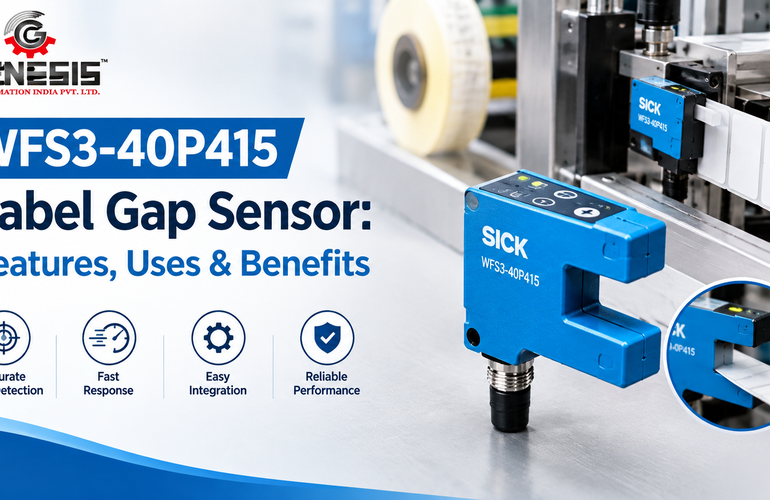
4. WFS3-40P415
The WFS3-40P415 is frequently integrated into labeling and packaging equipment where consistent sensing performance is required.
Typical Applications
- Label dispensing
- Packaging machinery
- Carton labeling
- Pharmaceutical packaging
- Industrial automation
5. GS 61/6 – 50110769
The GS 61/6 – 50110769 is widely used for reliable label detection in industrial production environments.
Typical Applications
- Printing systems
- Packaging machines
- Label applicators
- Conveyor automation
- OEM equipment
6. GS 61/6-S8 – 50110110
The GS 61/6-S8 – 50110110 is designed for accurate sensing in automated labeling operations.
Typical Applications
- Beverage packaging
- Cosmetics production
- Pharmaceutical labeling
- FMCG packaging
- Industrial labeling systems
7. GSU12/6GX.3-M12
The GSU12/6GX.3-M12 is suitable for applications requiring dependable optical detection in automated production lines.
Typical Applications
- Packaging machines
- Automatic labeling
- Conveyor systems
- Industrial inspection
- Smart factory automation
8. GS63B/6D-S8 – 50128010
The GS63B/6D-S8 – 50128010 is commonly used in advanced labeling systems where stable performance and repeatability are important.
Typical Applications
- Label converting machines
- Packaging automation
- Pharmaceutical manufacturing
- Food processing
- OEM machinery
Note: The application examples above are general industry use cases. Specifications such as sensing distance, response time, output type, and environmental ratings should always be confirmed using the official product documentation before implementation.
Comparison of Available Models
| Model | Typical Industry Applications |
| GAP-VE04B04M8 | Bottle labeling, packaging, pharmaceuticals |
| XUVE04M3KSNM8 | Packaging, printing, food processing |
| XUVU06M3KSNM8 | High-speed labeling, automation |
| WFS3-40P415 | Packaging machines, carton labeling |
| GS 61/6 – 50110769 | Printing, conveyors, OEM equipment |
| GS 61/6-S8 – 50110110 | Beverage, cosmetics, FMCG |
| GSU12/6GX.3-M12 | Packaging, inspection, automation |
| GS63B/6D-S8 – 50128010 | Label converting, food, pharmaceuticals |
Why Choose Genesis Technomation India Private Limited?
Choosing the right automation partner is just as important as selecting the right sensor. Genesis Technomation India Private Limited supports manufacturers across India with industrial sensing solutions tailored to real-world production challenges.
Trusted Industrial Automation Partner
Genesis Technomation India Private Limited supplies genuine industrial automation products for packaging, printing, pharmaceutical, food processing, automotive, and OEM applications.
Application Engineering Support
Every production line is unique. Our experienced engineers assist customers in selecting the most suitable Label Gap Sensor based on:
- Label material
- Machine speed
- Installation space
- Automation architecture
- Environmental conditions
Genuine Industrial Sensors
We provide access to high-quality industrial sensors from leading manufacturers, ensuring dependable performance and long service life.
Technical Consultation
Our technical team helps customers with:
- Product selection
- Sensor integration
- PLC compatibility
- Installation guidance
- Troubleshooting assistance
Fast Delivery Across India
With an efficient supply network, Genesis Technomation India Private Limited supports customers across major industrial regions, helping minimize downtime and project delays.
Competitive Pricing
Customers benefit from cost-effective automation solutions without compromising quality or technical support.
After-Sales Support
Our commitment continues after delivery through:
- Technical assistance
- Product guidance
- Maintenance recommendations
- Application support
- Replacement planning
Why Industrial Buyers Prefer Genesis Technomation India Private Limited
- Experienced industrial automation supplier
- Strong application engineering expertise
- Genuine industrial sensors
- Packaging and labeling automation knowledge
- Support for OEMs and system integrators
- Reliable customer service
- Fast response to technical queries
- Nationwide supply capability
- Competitive commercial solutions
- Focus on long-term customer relationships
Contact Us for Expert Guidance
Looking for the right Label Gap Sensor for your packaging or labeling machine? Contact Genesis Technomation India Private Limited for expert assistance in selecting the most suitable sensing solution for your application.
Need help integrating a Label Gap Sensor with your PLC or packaging equipment? Our automation specialists can recommend compatible solutions that align with your machine requirements and production goals.
Planning a new packaging or labeling line? Genesis Technomation India Private Limited can help you choose the right industrial sensors to improve accuracy, reduce downtime, and enhance overall equipment efficiency.
Want to upgrade your existing labeling machine? Speak with our technical team to explore reliable sensor options that support modern industrial automation and high-speed production.
FAQs About Label Gap Sensors
1. What is a Label Gap Sensor?
A Label Gap Sensor is an industrial sensor designed to detect the gap between consecutive labels on a backing liner. It enables automatic labeling machines to dispense and apply labels accurately, improving production efficiency and reducing labeling errors.
2. How does a Label Gap Sensor work?
A Label Gap Sensor uses optical sensing technology to identify the difference between the label material and the gap between labels. Once the gap is detected, the sensor sends a switching signal to the machine controller or PLC, ensuring precise label dispensing.
3. What is the difference between a Label Sensor and a Gap Sensor?
A Label Sensor is a broader term for sensors used in labeling applications, while a Gap Sensor specifically detects the space between labels. Many modern Label Gap Sensors perform both functions within a single device.
4. Can Label Gap Sensors detect transparent labels?
Yes. Dedicated Transparent Label Sensors are designed to detect clear film labels by identifying subtle differences between the transparent label and the backing liner. These sensors are commonly used in cosmetics, beverage, and pharmaceutical industries.
5. Which industries use Label Gap Sensors?
Label Gap Sensors are widely used in:
- Packaging
- Pharmaceuticals
- Food processing
- Beverage manufacturing
- Cosmetics
- FMCG
- Chemical processing
- Logistics
- Printing
- Label converting
- OEM machine manufacturing
- Industrial automation
6. Which Label Gap Sensor is best for packaging machines?
The best sensor depends on your machine design, label material, production speed, mounting space, and control system. Fork-style and optical Label Gap Sensors are commonly selected for packaging automation due to their high accuracy and repeatability.
7. How do I install a Label Gap Sensor?
Installation generally involves:
- Selecting the correct mounting position.
- Aligning the sensor with the label web.
- Connecting the electrical wiring.
- Configuring sensitivity or teach-in settings.
- Testing the sensor under operating conditions.
Always follow the manufacturer’s installation instructions for the specific model.
8. How long does a Label Gap Sensor last?
The service life depends on operating conditions, maintenance practices, and the manufacturer’s design. With proper installation and routine maintenance, industrial Label Gap Sensors can provide reliable long-term performance.
9. Which output types are available?
Common industrial output options include:
- PNP
- NPN
- Push-Pull
- Digital Switching Output
- IO-Link (available on selected models)
The appropriate output should be selected based on your PLC or control system requirements.
10. What maintenance is required?
Routine maintenance typically includes:
- Cleaning the sensing window
- Checking sensor alignment
- Inspecting cables and connectors
- Verifying electrical connections
- Recalibrating after changing label materials
- Inspecting mounting hardware
Preventive maintenance helps maintain consistent performance and reduce downtime.
11. Which model is suitable for high-speed labeling?
The appropriate model depends on production speed, label dimensions, material type, and machine configuration. Always compare the sensor’s response characteristics and compatibility with your application before selection.
12. Can Label Gap Sensors integrate with PLCs?
Yes. Most industrial Label Gap Sensors are designed for seamless integration with PLCs, HMIs, motion controllers, industrial PCs, and SCADA systems using standard industrial outputs.
13. Can a Label Gap Sensor detect very small labels?
Yes. Many industrial Label Gap Sensors are designed to detect small labels with high repeatability. However, the minimum detectable label size varies by model and manufacturer, so always review the official datasheet.
14. Are Label Gap Sensors suitable for high-speed production lines?
Yes. Modern High Speed Label Sensors are specifically engineered for continuous operation on automated production lines where rapid and accurate label detection is essential.
15. What causes false label detection?
Common causes include:
- Dust or adhesive contamination
- Incorrect sensitivity settings
- Sensor misalignment
- Electrical interference
- Damaged cables
- Improper installation
Regular maintenance and correct calibration help prevent these issues.
16. Can one sensor detect different label materials?
Many Label Gap Sensors support multiple label materials after appropriate configuration. However, transparent, reflective, or specialty labels may require dedicated sensing technologies.
17. What environmental factors affect sensor performance?
Performance can be influenced by:
- Dust accumulation
- Moisture
- Excessive vibration
- Temperature extremes
- Strong ambient lighting
- Electrical noise
Choosing a sensor with the appropriate IP rating and installing it correctly helps maintain reliable operation.
18. What is the difference between a Fork Sensor and a Label Gap Sensor?
A Fork Sensor describes the mechanical design, where the transmitter and receiver are positioned opposite each other in a fork-shaped housing. A Label Gap Sensor describes the application of detecting gaps between labels. Many Label Gap Sensors use a fork-style design.
19. Can Label Gap Sensors be used in smart factories?
Yes. Many modern sensors support Industry 4.0 initiatives by integrating with automated production systems, enabling improved machine synchronization, diagnostics, and process monitoring.
20. Why should I purchase a Label Gap Sensor from Genesis Technomation India Private Limited?
Genesis Technomation India Private Limited offers:
- Genuine industrial automation products
- Expert application engineering
- Technical consultation
- Packaging automation expertise
- Product selection assistance
- Reliable after-sales support
- Fast delivery across India
- Competitive pricing
This combination helps customers select the right sensor for their production requirements.
21. How do I choose the right Label Gap Sensor for my machine?
Consider the following factors before making a selection:
- Label material
- Label dimensions
- Gap size
- Machine speed
- Available mounting space
- Required output type
- Environmental conditions
- PLC compatibility
- Required IP rating
- Future maintenance needs
Consulting an experienced automation supplier can simplify the selection process.
22. Can Label Gap Sensors improve production efficiency?
Yes. By ensuring accurate label detection and reducing labeling errors, Label Gap Sensors help increase throughput, reduce downtime, minimize material waste, and improve product quality.
Conclusion
A Label Gap Sensor is an essential component in modern industrial automation, delivering precise label detection for packaging, printing, pharmaceutical, food processing, logistics, and numerous other manufacturing applications. By accurately identifying the gap between labels, these sensors help ensure consistent label placement, reduce waste, minimize machine downtime, and improve overall production efficiency.
Selecting the right Label Gap Sensor requires careful consideration of factors such as label material, production speed, mounting configuration, environmental conditions, and control system compatibility. Investing in the appropriate sensing technology not only improves operational reliability but also supports long-term productivity and product quality.
Whether you are designing a new packaging line, upgrading an existing labeling machine, or integrating sensors into OEM equipment, choosing the right industrial automation partner is equally important.
Genesis Technomation India Private Limited provides comprehensive industrial automation solutions, genuine Label Gap Sensors, expert application engineering, technical consultation, and dependable after-sales support. Our experienced team works closely with manufacturers, OEMs, system integrators, and maintenance professionals to recommend the most suitable sensing solution for each application.
Looking for the ideal Label Gap Sensor for your packaging or labeling machine? Contact Genesis Technomation India Private Limited today for expert guidance, product recommendations, and reliable industrial automation solutions tailored to your production requirements.
Related Posts