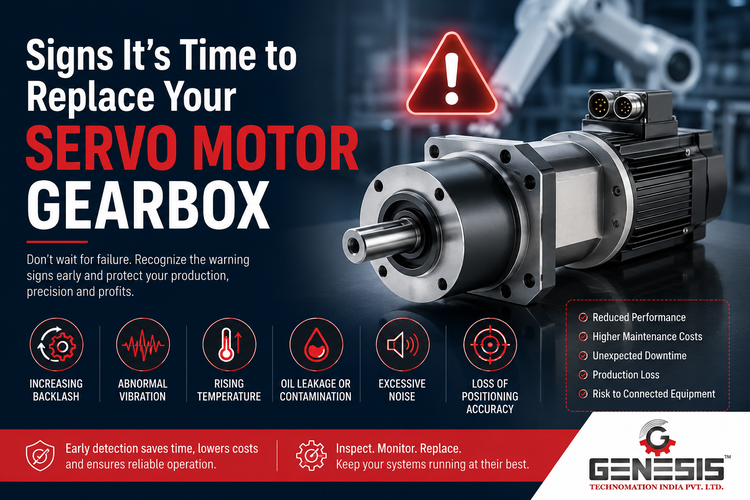
Why Recognizing Gearbox Replacement Signs Early Saves Time, Money, and Machine Performance
In modern manufacturing, precision is not optional. Whether you’re operating CNC machining centers, robotic assembly lines, automated packaging equipment, or high-speed material handling systems, every movement must be accurate, repeatable, and reliable. When a Gearbox for Servo Motors begins to deteriorate, that precision quietly slips away. The change is often gradual, making it easy to overlook until production quality drops or an unexpected failure brings operations to a halt.
Many maintenance teams focus on repairing symptoms rather than identifying the underlying cause. A machine that suddenly requires frequent calibration, generates unusual vibration, or struggles to maintain positioning accuracy may not have a servo drive issue at all. In many cases, the real culprit is a worn Servo Motor Gearbox that has reached the end of its service life.
Ignoring these warning signs can have far-reaching consequences. A gearbox operating with excessive backlash or internal wear places additional stress on bearings, couplings, shafts, and even the servo motor itself. Over time, the increased mechanical resistance causes the drive system to work harder, consuming more energy while delivering lower performance. Production efficiency declines, maintenance costs rise, and the likelihood of catastrophic failure increases.
Replacing a gearbox before complete failure is rarely viewed as an unnecessary expense by experienced maintenance engineers. Instead, it is considered a strategic investment that protects production schedules, safeguards expensive machinery, and reduces long-term operating costs.
This guide focuses exclusively on the practical indicators that signal it is time to replace a Gearbox for Servo Motors. Rather than explaining basic gearbox theory, the emphasis is on real-world diagnostics, maintenance decisions, inspection techniques, and replacement strategies used in industrial environments.
By understanding these warning signs early, maintenance teams can:
- Prevent unexpected production shutdowns
- Maintain machining and positioning accuracy
- Reduce emergency maintenance costs
- Extend servo motor life
- Improve overall equipment effectiveness (OEE)
- Reduce scrap and product rejection
- Maintain consistent production quality
- Protect high-value automation equipment
The objective is simple: identify gearbox problems before they become expensive machine failures.
Why Delaying Gearbox Replacement Can Be Expensive
A gearbox rarely fails overnight. Internal wear usually develops over thousands of operating hours, progressing slowly until the gearbox can no longer maintain the precision expected from a servo-driven system.
Unfortunately, many facilities continue operating worn gearboxes because production has not yet stopped completely. This short-term decision often results in significantly higher long-term costs.
Production Downtime Becomes More Frequent
Unexpected machine stoppages are among the most expensive maintenance events in manufacturing.
When a Planetary Gearbox suddenly locks, loses torque, or develops severe bearing damage, production may stop without warning. Restarting the machine often requires emergency troubleshooting, spare part sourcing, gearbox replacement, alignment verification, and machine recalibration.
The financial impact extends beyond repair costs.
Downtime may include:
- Idle production lines
- Missed customer deliveries
- Operator downtime
- Overtime labor
- Expedited shipping charges
- Lost manufacturing capacity
Replacing a gearbox during scheduled maintenance is significantly less disruptive than reacting to an unexpected failure.
Product Quality Begins to Decline
Precision manufacturing depends on repeatable motion.
As backlash increases and gear wear progresses, machine accuracy slowly deteriorates. Components may still appear functional, but dimensional tolerances become increasingly inconsistent.
This commonly results in:
- Incorrect machining dimensions
- Inconsistent packaging positions
- Robot placement errors
- Printing registration problems
- Assembly inaccuracies
Quality issues often appear before maintenance teams recognize gearbox wear.
Replacing the gearbox early restores positioning accuracy and helps maintain consistent product quality.
Machine Accuracy Continues to Decrease
Many automated systems depend on micron-level positioning accuracy.
Applications such as:
- CNC machining
- Semiconductor manufacturing
- Robotic welding
- Laser cutting
- Precision inspection
Cannot tolerate excessive mechanical play.
A worn Precision Gearbox introduces movement that servo software cannot fully compensate for.
Engineers frequently attempt to correct these issues by adjusting servo parameters, increasing controller gains, or recalibrating machine positions. While these changes may temporarily improve performance, they cannot eliminate mechanical wear inside the gearbox.
Eventually, replacement becomes the only practical solution.
Emergency Repairs Cost More than Planned Maintenance
Scheduled maintenance allows organizations to:
- Order the correct replacement gearbox
- Schedule technician availability
- Plan machine downtime
- Verify replacement compatibility
- Perform alignment correctly
Emergency repairs rarely provide these advantages.
Instead, companies often pay premium prices for:
- Express shipping
- Emergency labor
- Weekend maintenance
- Production recovery costs
Planning gearbox replacement before complete failure significantly reduces total maintenance expenditure.
Servo Motors Experience Additional Stress
A deteriorating gearbox doesn’t only affect itself.
As friction increases, the servo motor must compensate by producing greater torque.
This additional load causes:
- Higher operating temperatures
- Increased current consumption
- Reduced motor efficiency
- Shortened bearing life
- Increased drive stress
Replacing a worn Gearbox for Servo Motors protects the entire motion control system—not just the gearbox itself.
Maintenance Costs Continue to Rise
Maintenance teams often notice a pattern before gearbox replacement finally occurs.
Initially, maintenance requests are occasional.
Then they become monthly.
Eventually, they become weekly.
Repeated maintenance activities may include:
- Tightening couplings
- Replacing seals
- Re-lubrication
- Servo tuning
- Alignment corrections
- Bearing replacements
When maintenance frequency continues increasing, replacing the gearbox is usually more economical than repeatedly repairing individual symptoms.
Early Warning Signs Your Servo Motor Gearbox Needs Replacement
The following indicators are among the most reliable signs that a Servo Motor Gearbox may be approaching the end of its operational life.
Recognizing these symptoms early allows maintenance teams to plan replacement before major production losses occur.
1. Increasing Backlash
Backlash is one of the earliest and most critical indicators of gearbox wear.
As gears wear, the clearance between mating gear teeth increases.
Initially, the change may be almost impossible to notice during normal operation.
Over time, however, excessive backlash produces measurable positioning errors.
Common Symptoms
- Delayed response during direction changes
- Noticeable mechanical play
- Reduced positioning accuracy
- Jerky machine movement
- Difficulty holding precise locations
Typical Causes
- Gear tooth wear
- Bearing wear
- Long operating hours
- Poor lubrication
- Excessive loading
Operational Impact
High backlash reduces machine precision.
Applications requiring exact positioning, such as CNC machining and robotics, become increasingly inaccurate.
Parts begin drifting outside acceptable tolerances.
Replacement Recommendation
If backlash exceeds manufacturer specifications despite correct adjustment procedures, replacing the gearbox is generally more cost-effective than continued maintenance.
2. Loss of Positioning Accuracy
Servo systems depend on precise mechanical transmission.
When the gearbox develops internal wear, commanded positions no longer match actual machine movement.
Operators often observe:
- Incorrect tool positioning
- Robot arm deviation
- Misaligned product placement
- Position drift
These symptoms become especially visible during repetitive production cycles.
Common Causes
- Internal gear wear
- Bearing deterioration
- Shaft movement
- Increasing backlash
Why It Matters
Positioning errors directly affect:
- Product quality
- Machining tolerances
- Automation reliability
- Customer acceptance rates
Replacing the gearbox restores mechanical precision and allows the servo controller to operate within its intended performance range.
3. Declining Repeatability
Many industrial machines perform identical movements thousands—or even millions—of times every month.
Repeatability ensures every cycle produces the same result.
A worn Planetary Gear Reducer gradually loses this consistency.
Common Symptoms
- Variable stopping positions
- Different results between identical cycles
- Robot path inconsistencies
- Repeated calibration adjustments
Operational Impact
Poor repeatability increases:
- Scrap rates
- Inspection failures
- Machine setup time
- Customer complaints
Even when servo motors function perfectly, worn gearbox components prevent consistent motion transmission.
Replacement should be considered once repeatability falls below production requirements.
4. Abnormal Vibration
Every gearbox produces some level of vibration.
The concern arises when vibration characteristics begin changing.
Maintenance teams should investigate vibration that becomes:
- Louder
- More frequent
- Irregular
- Load-dependent
Possible Causes
- Bearing damage
- Gear tooth wear
- Shaft imbalance
- Misalignment
- Internal component looseness
Ignoring abnormal vibration accelerates internal damage and may eventually affect nearby machine components.
Vibration analysis should become part of routine predictive maintenance.
When vibration continues increasing despite corrective actions, gearbox replacement becomes the safest option.
5. Excessive Operating Noise
Noise rarely appears without a reason.
Grinding, knocking, whining, or clicking sounds usually indicate internal mechanical deterioration.
Common Sources
- Damaged bearings
- Broken gear teeth
- Lubrication failure
- Excessive backlash
- Gear misalignment
Noise often becomes more noticeable during:
- Startup
- Rapid acceleration
- High-speed operation
- Heavy loads
Maintenance personnel should never assume unusual gearbox noise is “normal aging.”
It is frequently one of the earliest indicators that replacement planning should begin.
6. Rising Operating Temperature
Heat is one of the clearest indicators of increasing internal friction.
A gearbox operating above its normal temperature range may suffer from:
- Lubrication breakdown
- Bearing wear
- Gear mesh problems
- Overloading
- Contamination
Warning Indicators
- Housing too hot to touch safely
- Consistent temperature increase over time
- Thermal imaging hot spots
- Lubricant discoloration
Excessive heat accelerates wear, shortens lubricant life, and increases the risk of unexpected failure.
Trend monitoring through thermal inspections helps identify deterioration before severe damage occurs.
7. Oil Leakage Around the Gearbox
Oil leakage is more than a housekeeping issue.
Even minor leaks can gradually reduce lubrication effectiveness, allowing metal-to-metal contact inside the gearbox.
Common Leak Locations
- Input shaft seal
- Output shaft seal
- Housing joints
- Inspection covers
- Drain plugs
Possible Causes
- Worn seals
- Shaft wear
- Excessive internal pressure
- Housing distortion
- Bearing movement
Operational Risks
Oil loss can lead to:
- Higher operating temperatures
- Accelerated gear wear
- Bearing failure
- Lubrication starvation
- Reduced gearbox lifespan
While replacing seals may solve minor leakage, recurring leaks combined with increased backlash, vibration, or bearing wear often indicate that the gearbox has reached the point where full replacement is the most reliable solution.
The first warning signs—such as increasing backlash, positioning errors, abnormal vibration, excessive noise, rising temperatures, and oil leakage—often indicate that internal gearbox components are beginning to wear. However, gearbox deterioration rarely stops there. As wear progresses, more obvious mechanical and operational problems start to appear.
Ignoring these symptoms can result in reduced machine efficiency, higher maintenance costs, and unexpected production failures. Regular inspections and condition monitoring help maintenance teams identify these issues before they lead to catastrophic gearbox damage.
Below are the remaining critical warning signs that indicate it may be time to replace your Gearbox for Servo Motors.
8. Lubricant Contamination
Lubrication is the lifeblood of any Servo Motor Gearbox. Clean lubricant minimizes friction, dissipates heat, and protects gears and bearings from premature wear. Once contaminants enter the lubrication system, internal components begin to deteriorate much faster.
Contamination can occur from several sources, including dust, moisture, coolant, cleaning chemicals, worn seals, or internal wear debris.
Common Symptoms
- Cloudy or milky lubricant
- Darkened oil before the scheduled replacement interval
- Presence of dirt or sludge
- Water contamination
- Foaming lubricant
- Increased operating temperature
Common Causes
- Damaged seals
- Poor maintenance practices
- Operating in dusty or humid environments
- Improper lubricant storage
- Condensation inside the gearbox
Operational Impact
Contaminated lubricant accelerates:
- Bearing wear
- Gear tooth abrasion
- Corrosion
- Increased friction
- Reduced lubrication efficiency
Once contamination causes significant internal damage, replacing the lubricant alone may not restore gearbox performance.
Replacement Recommendation
If oil analysis consistently reveals contamination alongside increased backlash, vibration, or bearing wear, replacing the gearbox is generally more reliable than attempting repeated repairs.
9. Metal Particles Found in the Lubricant
One of the strongest indicators of internal gearbox damage is the presence of metallic particles in the lubricant.
Routine oil analysis often detects wear long before operators notice changes in machine performance.
Warning Signs
- Metallic flakes during oil changes
- Fine silver-colored particles
- Bronze or copper-colored debris
- Magnetic particles collected on drain plugs
- Increasing metal concentration in oil reports
Possible Causes
- Gear tooth wear
- Bearing failure
- Shaft wear
- Internal scoring
- Surface fatigue
Why It Matters
Metal particles indicate that gearbox components are physically wearing away.
If ignored, these particles circulate through the gearbox, accelerating damage to every moving component.
Replacement Recommendation
Finding significant metal debris should never be ignored. It is often one of the final warning signs before complete gearbox failure.
10. Excessive Shaft Movement
Input and output shafts should rotate smoothly while maintaining proper alignment.
Noticeable shaft movement often indicates internal bearing wear or shaft support deterioration.
Symptoms
- Side-to-side shaft movement
- Axial play
- Shaft wobble
- Coupling misalignment
- Increased vibration
Causes
- Bearing failure
- Worn shaft journals
- Excessive operating loads
- Misalignment
- Internal gearbox damage
Operational Impact
Excessive shaft movement can damage:
- Couplings
- Servo motors
- Machine bearings
- Drive components
- Output mechanisms
Continued operation significantly increases repair costs.
11. Visible Gear Wear Patterns
Gear inspection during scheduled maintenance often provides valuable insight into gearbox health.
Certain wear patterns indicate normal aging, while others suggest serious mechanical problems.
Common Wear Patterns
- Pitting
- Scoring
- Surface fatigue
- Broken tooth edges
- Uneven tooth contact
- Cracks
- Tooth chipping
Causes
- Lubrication failure
- Overloading
- Misalignment
- Contamination
- Excessive operating temperatures
Operational Consequences
Damaged gear teeth reduce:
- Torque transmission
- Motion accuracy
- Gear efficiency
- Equipment reliability
When multiple gear teeth exhibit advanced wear, replacement is generally more economical than rebuilding.
12. Bearing Deterioration
Bearings play a critical role in maintaining accurate shaft positioning inside a Precision Gearbox.
As bearings wear, the gearbox gradually loses its ability to transmit motion accurately.
Common Symptoms
- Grinding noise
- Increased vibration
- Shaft looseness
- Higher operating temperatures
- Lubricant contamination
Root Causes
- Fatigue
- Contamination
- Lubrication failure
- Excessive loading
- Improper installation
Operational Impact
Bearing deterioration accelerates wear throughout the gearbox because gear alignment becomes increasingly unstable.
Ignoring damaged bearings frequently leads to complete gearbox failure.
13. Reduced Torque Transmission
A healthy Planetary Gear Reducer transfers motor torque efficiently to the driven equipment.
When internal components wear, torque transmission gradually decreases.
Warning Signs
- Reduced machine pulling force
- Difficulty lifting rated loads
- Slower acceleration
- Increased slipping under heavy loads
- Frequent torque limitations
Causes
- Gear tooth wear
- Bearing damage
- Excessive backlash
- Internal friction
- Shaft damage
Operational Impact
Machines requiring consistent torque may begin experiencing:
- Production interruptions
- Reduced throughput
- Lower machining quality
- Process inconsistency
If torque loss continues despite proper servo tuning, the gearbox should be evaluated for replacement.
14. Output Speed Inconsistencies
Modern automation systems rely on stable speed control.
A worn Motion Control Gearbox may produce inconsistent output speeds even though the servo motor operates normally.
Common Symptoms
- Irregular conveyor speeds
- Variable machine cycle times
- Uneven robotic movement
- Inconsistent indexing
- Process instability
Potential Causes
- Gear wear
- Shaft movement
- Bearing damage
- Internal friction
- Backlash
Why It Matters
Speed inconsistency directly affects:
- Packaging accuracy
- Filling operations
- Label positioning
- Cutting precision
- Product synchronization
Replacement restores consistent mechanical transmission throughout the drive system.
15. Increased Power Consumption
A gearbox experiencing internal friction requires more energy to perform the same work.
Many facilities notice rising electricity consumption without immediately identifying the gearbox as the source.
Indicators
- Higher servo motor current
- Increased drive load
- Reduced system efficiency
- Rising operating costs
- Higher motor temperatures
Causes
- Bearing wear
- Lubrication failure
- Internal friction
- Gear damage
Monitoring energy trends often helps identify gearbox deterioration before major failures occur.
16. Frequent Overload Alarms
Servo drives continuously monitor operating conditions.
As gearbox resistance increases, overload alarms become more common.
Typical Alarm Conditions
- Excessive torque demand
- Current overload
- Motor overload
- Peak load warnings
- Unexpected torque spikes
Common Causes
- Mechanical binding
- Bearing seizure
- Gear damage
- Excessive friction
- Internal contamination
Repeatedly resetting overload alarms without identifying the mechanical cause only delays the inevitable.
If electrical components test normally, the gearbox should be thoroughly inspected.
17. Servo Tuning Becomes Increasingly Unstable
One overlooked indicator of gearbox wear is frequent servo tuning adjustments.
Maintenance engineers may notice that parameters requiring years of stable operation suddenly need repeated optimization.
Typical Symptoms
- Servo oscillation
- Hunting
- Overshoot
- Inconsistent acceleration
- Difficulty achieving smooth motion
Why This Happens
Mechanical wear introduces variables that servo controllers cannot fully compensate for.
As backlash and internal play increase, controller tuning becomes increasingly difficult.
Operational Consequences
Engineers spend valuable maintenance time:
- Adjusting gains
- Recalibrating axes
- Retuning motion profiles
- Investigating electrical systems
In reality, replacing the worn gearbox often restores stable servo performance.
18. Unexpected Machine Stops
Random production stoppages are among the most disruptive symptoms of gearbox deterioration.
Initially, these interruptions may appear unrelated.
Eventually, maintenance records often reveal a clear mechanical pattern.
Common Symptoms
- Emergency shutdowns
- Axis faults
- Position errors
- Motion interruptions
- Intermittent mechanical locking
Causes
- Broken gear teeth
- Bearing seizure
- Internal debris
- Shaft damage
- Mechanical interference
Unexpected stops not only reduce production but also increase operator frustration and troubleshooting time.
19. Difficulty Maintaining Machine Calibration
Machines requiring regular calibration should maintain their settings for extended periods.
When calibration begins drifting rapidly, gearbox wear is often responsible.
Warning Indicators
- Frequent encoder verification
- Repeated axis calibration
- Constant offset corrections
- Variable positioning results
- Machine alignment drifting
Why It Happens
Internal wear changes the mechanical relationship between motor rotation and output movement.
Servo software cannot permanently compensate for changing mechanical geometry.
Recommendation
If calibration intervals continue becoming shorter despite correct maintenance practices, replacing the gearbox should be seriously considered.
20. Frequent Production Rejects
One of the clearest business indicators of gearbox deterioration is an increasing reject rate.
Quality problems frequently appear long before complete mechanical failure.
Common Examples
- Incorrect machining dimensions
- Misaligned packaging
- Poor print registration
- Inaccurate robotic assembly
- Filling inconsistencies
- Welding defects
- Positioning errors
Business Impact
Production rejects increase:
- Material waste
- Labor costs
- Inspection time
- Customer complaints
- Delivery delays
Many companies initially investigate process settings, tooling, sensors, or software. However, the underlying issue may simply be a worn Automation Gearbox that can no longer deliver the precision required by the application.
Replacing the gearbox restores repeatability, improves product consistency, and reduces costly rework.
Recognizing Multiple Warning Signs Together
While a single symptom does not always indicate immediate gearbox replacement, multiple warning signs occurring simultaneously should never be ignored.
For example, a gearbox exhibiting increased backlash, higher operating temperatures, lubricant contamination, and declining positioning accuracy is approaching the end of its reliable service life. Continuing to operate under these conditions increases the risk of sudden failure and collateral damage to connected components, including servo motors, couplings, bearings, and driven machinery.
Maintenance teams should evaluate the overall condition of the gearbox rather than focusing on isolated symptoms. Combining vibration analysis, oil analysis, thermal imaging, backlash measurement, and production performance data provides a more accurate picture of gearbox health and supports informed replacement decisions.
For facilities planning a replacement, selecting a high-quality Gearbox for Servo Motors with the correct torque rating, backlash specification, mounting configuration, and reduction ratio is essential for restoring machine performance. Companies modernizing CNC machines, robotics, packaging systems, and other precision automation equipment often work with Genesis Technomation India Pvt Ltd, which supplies reliable Planetary Gearboxes designed for demanding industrial motion control applications. Choosing the correct replacement helps minimize downtime while ensuring long-term accuracy and dependable operation.
Machine Performance Indicators, Root Causes of Failure & Inspection Checklist
By the time a Gearbox for Servo Motors begins showing obvious mechanical wear, its impact usually extends far beyond the gearbox itself. Production quality may decline, cycle times become inconsistent, servo drives require frequent adjustments, and machine operators start reporting recurring issues that seem unrelated at first glance.
Experienced maintenance engineers rarely rely on a single symptom when evaluating gearbox health. Instead, they examine machine performance trends, operating conditions, maintenance history, and inspection data to determine whether the gearbox has reached the end of its reliable service life.
This section explores how gearbox wear affects different industrial applications, the most common causes of premature gearbox failure, and the practical inspection procedures that should be completed before deciding whether repair or replacement is the right solution.
Machine Performance Indicators That Should Never Be Ignored
Mechanical wear inside a Servo Motor Gearbox often reveals itself through declining machine performance before complete gearbox failure occurs. Operators, maintenance teams, and production managers should pay close attention to these changes because they typically worsen over time rather than improving on their own.
Below are some of the most common application-specific performance indicators.
CNC Machines Start Losing Machining Accuracy
CNC machining centers rely on highly accurate motion control to produce parts within tight tolerances. Even a small increase in gearbox backlash or bearing wear can result in noticeable dimensional errors.
Common Symptoms
- Inconsistent cutting dimensions
- Surface finish deterioration
- Tool path deviations
- Poor contour accuracy
- Circular interpolation errors
- Frequent tool offset adjustments
Operational Impact
A worn Precision Gearbox affects machining precision by introducing unwanted movement between the servo motor and the machine axis. This can lead to:
- Higher scrap rates
- Increased inspection failures
- Longer setup times
- Additional finishing operations
- Reduced customer confidence
If machining accuracy continues to decline despite proper tooling, calibration, and servo tuning, the gearbox should be thoroughly inspected.
Robotic Systems Lose Positional Precision
Industrial robots perform thousands of identical movements every day. Their ability to repeat the same motion accurately depends on the mechanical integrity of every drive component.
A deteriorating gearbox affects robotic performance in subtle but significant ways.
Warning Signs
- End effector misses target positions
- Welding paths become inconsistent
- Pick locations drift
- Increased correction cycles
- Longer robot cycle times
Why It Happens
As gear teeth wear and backlash increases, the robot loses its ability to maintain precise positioning.
This becomes especially problematic in:
- Robotic welding
- Assembly automation
- Material handling
- Vision-guided robotics
- Collaborative robotic applications
Replacing a worn Planetary Gearbox restores repeatability and reduces programming adjustments.
Pick-and-Place Systems Begin Missing Targets
High-speed pick-and-place machines depend on rapid acceleration combined with precise positioning.
Even minor gearbox wear affects synchronization between machine axes.
Common Indicators
- Products dropped during transfer
- Misaligned component placement
- Vacuum pickup failures
- Reduced throughput
- Frequent production interruptions
In industries such as electronics manufacturing, where placement accuracy is measured in fractions of a millimeter, gearbox wear can quickly lead to unacceptable rejection rates.
Packaging Equipment Develops Timing Problems
Packaging machinery relies on synchronized motion between conveyors, sealing units, labeling stations, and cutting mechanisms.
When gearbox wear develops, timing gradually becomes inconsistent.
Typical Symptoms
- Misaligned labels
- Incorrect sealing positions
- Uneven filling
- Product jams
- Variable indexing accuracy
Business Consequences
Packaging errors increase:
- Product waste
- Material consumption
- Customer complaints
- Machine downtime
- Maintenance interventions
Replacing a worn Motion Control Gearbox helps restore smooth synchronization across the production line.
Printing Machines Experience Registration Errors
Modern printing equipment depends on highly synchronized servo axes.
As backlash increases, print registration becomes increasingly difficult to maintain.
Warning Signs
- Color misalignment
- Variable image positioning
- Uneven print quality
- Frequent registration adjustments
- Reduced production speed
These symptoms often appear gradually, making trend analysis particularly valuable.
Semiconductor Equipment Becomes Less Stable
Semiconductor manufacturing demands extremely high positioning accuracy.
Even microscopic mechanical movement can affect production quality.
Gearbox wear may contribute to:
- Alignment drift
- Wafer handling errors
- Increased inspection failures
- Reduced process consistency
- Equipment calibration issues
Because semiconductor equipment operates within exceptionally tight tolerances, gearbox replacement is often recommended before significant wear develops.
Textile Machinery Produces Inconsistent Results
Servo-controlled textile equipment depends on consistent tension and synchronized movement.
A worn gearbox can introduce speed variations that affect product quality.
Possible Problems
- Uneven fabric feeding
- Stitch inconsistencies
- Yarn tension variations
- Registration errors
- Reduced production efficiency
Replacing the gearbox restores stable motion transmission and improves production consistency.
Medical Automation Requires Absolute Reliability
Medical manufacturing equipment often produces products with strict regulatory requirements.
Any loss of positioning accuracy may affect:
- Product quality
- Traceability
- Validation procedures
- Production compliance
Maintenance teams should treat gearbox deterioration as a critical issue rather than waiting for complete failure.
Food Processing Equipment Suffers Productivity Losses
Servo-driven food processing equipment operates continuously under demanding conditions.
Common gearbox-related issues include:
- Conveyor synchronization errors
- Filling inaccuracies
- Portion inconsistencies
- Packaging defects
- Increased downtime
Contamination control is particularly important in food manufacturing, making early gearbox replacement preferable to catastrophic failure.
Root Causes Behind Premature Gearbox Failure
Understanding why a gearbox fails is just as important as recognizing the warning signs. Replacing a damaged gearbox without addressing the underlying cause often results in the same problem recurring much sooner than expected.
The following factors are among the most common reasons why a Gearbox for Servo Motors experiences premature failure.
Overloading Beyond Rated Capacity
Every gearbox is designed to transmit a specific amount of torque.
Operating above its rated capacity places excessive stress on:
- Gear teeth
- Bearings
- Shafts
- Housing components
Common Causes
- Larger product loads
- Machine modifications
- Process changes
- Incorrect torque calculations
- Unexpected shock loading
Continuous overloading significantly shortens gearbox life.
Incorrect Gearbox Sizing
One of the most common installation mistakes is selecting a gearbox based solely on motor size rather than application requirements.
Proper sizing should consider:
- Peak torque
- Continuous torque
- Acceleration requirements
- Load inertia
- Duty cycle
- Safety factor
An undersized Servo Gear Reducer will experience accelerated wear even under normal operating conditions.
Poor Lubrication Practices
Lubrication problems remain one of the leading causes of gearbox failure.
Common mistakes include:
- Incorrect lubricant selection
- Delayed oil changes
- Mixing incompatible lubricants
- Overfilling
- Underfilling
Poor lubrication increases friction, operating temperatures, and internal wear.
Following manufacturer-recommended lubrication intervals is essential for maximizing gearbox life.
Contamination
Industrial environments expose gearboxes to numerous contaminants.
Examples include:
- Dust
- Metal particles
- Moisture
- Chemicals
- Cleaning agents
- Process debris
Contamination damages bearings and gear surfaces while reducing lubricant effectiveness.
Proper sealing and contamination control should be part of every preventive maintenance program.
Improper Installation
Even a premium High Precision Gearbox can fail prematurely if installed incorrectly.
Typical installation errors include:
- Improper bolt tightening
- Incorrect coupling installation
- Shaft forcing
- Housing distortion
- Poor alignment
Following manufacturer installation procedures helps prevent unnecessary mechanical stress.
Shaft Misalignment
Misalignment increases radial and axial loading on gearbox bearings.
Over time, this causes:
- Bearing fatigue
- Shaft wear
- Coupling damage
- Seal failure
- Increased vibration
Laser alignment tools help minimize installation errors and extend gearbox service life.
Excessive Shock Loads
Sudden impacts create forces that often exceed normal operating torque.
Examples include:
- Emergency stops
- Product jams
- Machine crashes
- Heavy load engagement
- Abrupt acceleration
Repeated shock loading accelerates fatigue throughout the gearbox.
Where shock loads cannot be avoided, engineers should consider selecting a gearbox with an appropriate service factor.
Thermal Expansion
Temperature fluctuations affect gearbox alignment and bearing preload.
High operating temperatures may result from:
- Continuous heavy loads
- Poor ventilation
- Inadequate lubrication
- High ambient temperatures
Thermal expansion should always be considered during machine design and maintenance planning.
Inadequate Maintenance
Skipping routine inspections often allows small problems to develop into major failures.
Common maintenance oversights include:
- Ignoring vibration trends
- Delaying oil analysis
- Overlooking minor leaks
- Missing alignment checks
- Failing to monitor operating temperatures
A structured preventive maintenance schedule significantly reduces unexpected gearbox failures.
Continuous High-Duty Cycles
Many production facilities operate 24 hours a day with minimal downtime.
While modern Planetary Reducers are designed for demanding environments, continuous operation naturally accelerates wear.
Maintenance schedules should account for:
- Total operating hours
- Load cycles
- Production intensity
- Environmental conditions
Condition-based maintenance is particularly valuable for high-duty-cycle equipment.
Inspection Checklist Before Deciding on Replacement
Before replacing a Gearbox for Servo Motors, maintenance engineers should perform a comprehensive inspection to evaluate its overall condition. A systematic approach helps determine whether the gearbox can continue operating safely, requires repair, or has reached the point where replacement is the most cost-effective option.
Measure Backlash
Backlash should always be measured against the manufacturer’s specified limits.
Inspection should verify:
- Rotational play
- Axial movement
- Consistency across the gear rotation
- Changes compared with previous maintenance records
Progressively increasing backlash is one of the strongest indicators that replacement should be planned.
Inspect Bearings
Bearing condition can be evaluated using:
- Vibration analysis
- Acoustic monitoring
- Manual rotation checks
- End-play measurement
Any indication of roughness, looseness, or abnormal noise warrants further investigation.
Perform Oil Analysis
Routine lubricant analysis provides valuable information about internal gearbox condition.
Oil testing may identify:
- Metal wear particles
- Moisture contamination
- Oxidation
- Viscosity changes
- Additive depletion
Trend analysis is far more useful than relying on a single sample.
Conduct Vibration Analysis
Vibration monitoring is one of the most effective predictive maintenance tools available.
Engineers should monitor:
- Overall vibration levels
- Frequency spectra
- Bearing frequencies
- Gear mesh frequencies
- Harmonic changes
A gradual increase in vibration often indicates internal wear well before failure occurs.
Use Thermal Imaging
Infrared inspections quickly identify abnormal heat generation.
Look for:
- Bearing hot spots
- Uneven housing temperatures
- Lubrication problems
- Localized friction points
Comparing temperature trends over time provides valuable insights into gearbox health.
Verify Shaft Alignment
Misalignment should be checked whenever gearbox problems are suspected.
Inspection should include:
- Motor-to-gearbox alignment
- Gearbox-to-machine alignment
- Coupling alignment
- Shaft runout
Correct alignment reduces unnecessary bearing and gear loading.
Inspect Couplings
Damaged couplings often indicate underlying gearbox issues.
Check for:
- Cracks
- Wear
- Misalignment marks
- Loose fasteners
- Elastomer deterioration
Couplings should never be reused if they show significant wear after gearbox failure.
Examine Gearbox Mounting
A loose or distorted mounting surface can introduce additional stresses.
Inspection points include:
- Mounting bolt torque
- Base flatness
- Structural cracks
- Housing distortion
- Mounting rigidity
Stable mounting is essential for maintaining gearbox accuracy and longevity.
Inspect Gear Teeth
Whenever internal inspection is possible, evaluate:
- Tooth contact patterns
- Surface pitting
- Scoring
- Chipping
- Fatigue cracks
- Wear distribution
Uneven wear often indicates alignment or loading issues that should be corrected before installing a replacement gearbox.
Check Seal Condition
Seal inspection should include:
- Oil leakage
- Hardening
- Cracks
- Wear grooves
- Contamination ingress
Replacing seals may solve minor leakage, but repeated seal failures often indicate deeper mechanical issues within the gearbox.
A thorough inspection not only confirms whether replacement is necessary but also helps identify the root cause of failure. Addressing these underlying issues before installing a new Gearbox for Servo Motors improves long-term reliability and prevents repeat failures. For facilities upgrading CNC machines, robotics, packaging equipment, or other precision automation systems, selecting the correct Planetary Gearbox is equally important. Genesis Technomation India Pvt Ltd offers precision-engineered gearbox solutions for demanding industrial applications and can assist in choosing a replacement that matches the machine’s torque requirements, reduction ratio, mounting configuration, and precision needs.
Repair vs. Replacement, Selecting the Right Gearbox & Maintenance Best Practices
Identifying gearbox wear is only half the challenge. The next step is deciding whether the existing unit should be repaired or replaced. This decision affects production reliability, maintenance budgets, equipment uptime, and long-term operating costs.
While repairs may appear less expensive initially, they are not always the most economical solution. In many industrial applications, particularly those requiring high precision and continuous operation, replacing a worn Gearbox for Servo Motors delivers greater value over the equipment’s remaining service life.
This section explains how to evaluate repair versus replacement, how to select the correct replacement gearbox, and the maintenance practices that help maximize gearbox reliability.
Repair vs. Replacement: Which Option Delivers Better Value?
Not every gearbox requires immediate replacement. Minor issues such as external oil leaks, damaged seals, or lubrication problems can often be corrected without replacing the complete unit.
However, once critical internal components begin to wear, repair costs can quickly approach the price of a new gearbox while offering a much shorter remaining service life.
The decision should be based on technical condition, not simply the repair invoice.
When Repair Is a Practical Choice
Repair may be appropriate when the gearbox has relatively low operating hours and the damage is limited to easily replaceable components.
Typical situations include:
- Worn or damaged oil seals
- Lubrication issues identified early
- Minor bearing replacement
- External fastener damage
- Small alignment corrections
- Coupling replacement
- Preventive servicing during scheduled shutdowns
In these cases, repairing the gearbox can restore normal operation if no significant internal wear has occurred.
When Replacement Becomes the Better Investment
Replacement should be strongly considered when multiple components have deteriorated or when gearbox performance can no longer meet production requirements.
Common indicators include:
- Excessive backlash beyond manufacturer limits
- Multiple damaged bearings
- Worn or chipped gear teeth
- Cracked gearbox housing
- Severe lubricant contamination with metal particles
- Shaft damage
- Repeated overheating
- Frequent production interruptions
- Reduced positioning accuracy
- Increasing maintenance frequency
Attempting to rebuild a gearbox in this condition often results in recurring failures and additional downtime.
Consider the Total Cost of Ownership
Focusing only on the purchase price can lead to poor maintenance decisions.
Instead, evaluate the total cost of ownership by considering:
- Repair expenses
- Future maintenance costs
- Production downtime
- Emergency service charges
- Lost productivity
- Product rejects
- Energy consumption
- Remaining gearbox life
- Availability of replacement parts
A new Planetary Gearbox frequently offers lower lifetime operating costs than repeatedly repairing an aging unit.
Reliability Matters More Than Initial Savings
Production facilities operating around the clock cannot afford unexpected failures.
Replacing a worn gearbox provides several long-term benefits:
- Improved production stability
- Lower maintenance requirements
- Better machine accuracy
- Increased operator confidence
- Reduced emergency repairs
- Longer inspection intervals
For high-value automation systems, reliability often outweighs the short-term savings associated with repair.
Precision Requirements Influence the Decision
Applications with tight positional tolerances rarely tolerate worn gearboxes.
Examples include:
- CNC machining
- Robotic welding
- Semiconductor manufacturing
- Laser cutting
- Pharmaceutical equipment
- Medical device production
Even after repair, an older gearbox may not achieve the original backlash specification required for these applications.
Replacing it with a new Low Backlash Gearbox is often the most dependable solution.
Remaining Service Life Should Be Evaluated
Every gearbox has a finite operating life.
If a gearbox has already accumulated thousands of operating hours under heavy-duty conditions, investing in major repairs may not provide an acceptable return.
Questions maintenance teams should ask include:
- How many operating hours has the gearbox completed?
- Has it required repeated repairs?
- Are spare parts still available?
- Does the application demand high precision?
- Is the equipment critical to production?
If most answers indicate advanced wear, replacement is usually the more practical decision.
How to Choose the Right Replacement Gearbox
Selecting a replacement gearbox involves much more than matching the existing model number.
Modern production equipment often evolves over time. Machine upgrades, increased production speeds, heavier loads, or new operating conditions may require a gearbox with different performance characteristics.
Choosing the correct Gearbox for Servo Motors ensures reliable operation while minimizing future maintenance requirements.
Verify Torque Requirements
Torque capacity should always exceed the application’s continuous operating requirements while accommodating peak loads.
Evaluate:
- Continuous torque
- Peak torque
- Shock loading
- Acceleration torque
- Emergency stop conditions
Undersized gearboxes experience accelerated wear and reduced service life.
Oversizing, however, may increase costs unnecessarily.
Proper engineering calculations are essential.
Select the Correct Reduction Ratio
The reduction ratio directly affects:
- Output speed
- Torque multiplication
- Positioning accuracy
- Machine dynamics
- Cycle time
Changing the ratio without evaluating the complete motion system can significantly alter machine performance.
Replacement gearboxes should match the original design unless a system redesign is intended.
Evaluate Backlash Requirements
Different industrial applications require different levels of positioning accuracy.
Typical examples include:
Very Low Backlash Applications
- Robotics
- CNC machining
- Semiconductor equipment
- Laser systems
Moderate Backlash Applications
- Material handling
- Packaging
- Conveyor systems
- Automated assembly
Selecting a gearbox with the appropriate backlash specification ensures optimal motion control performance.
Consider Gearbox Efficiency
Mechanical efficiency affects:
- Energy consumption
- Heat generation
- Motor loading
- Operating costs
High-efficiency Planetary Gear Reducers reduce power losses while improving overall machine performance.
Confirm Mounting Compatibility
Improper mounting creates installation delays and alignment issues.
Verify:
- Mounting flange dimensions
- Bolt patterns
- Pilot diameters
- Housing dimensions
- Mounting orientation
Choosing a gearbox designed for direct replacement minimizes installation time.
Check Shaft Dimensions Carefully
Never assume shaft sizes are identical between manufacturers.
Inspect:
- Input shaft diameter
- Output shaft diameter
- Shaft length
- Keyway dimensions
- Splines
- Clamping interfaces
Incorrect shaft dimensions may require expensive machine modifications.
Match the Application Requirements
Every automation system has unique operating demands.
The replacement gearbox should match the intended application.
Examples include:
CNC Equipment
Requires:
- Extremely low backlash
- High torsional rigidity
- Excellent repeatability
Industrial Robotics
Requires:
- Smooth motion
- Compact size
- High positional accuracy
- Long operating life
Packaging Machinery
Requires:
- High-speed operation
- Reliable indexing
- Continuous-duty capability
Material Handling Systems
Requires:
- High torque
- Durability
- Shock-load resistance
Selecting the gearbox according to the application’s actual operating conditions improves long-term reliability.
Consider Environmental Conditions
Industrial environments vary significantly.
Evaluate:
- Ambient temperature
- Humidity
- Dust exposure
- Washdown requirements
- Chemical exposure
- Outdoor installation
- Corrosive environments
The gearbox should be designed to withstand these conditions throughout its service life.
Review the Duty Cycle
Operating hours greatly influence gearbox selection.
Questions to consider include:
- Is production continuous?
- Does the machine operate in multiple shifts?
- How frequently does acceleration occur?
- Are there frequent start-stop cycles?
High-duty-cycle applications require robust gearbox construction.
Verify the Required IP Rating
Environmental protection should never be overlooked.
The required IP rating depends on:
- Water exposure
- Dust levels
- Cleaning procedures
- Outdoor use
- Food-grade environments
Selecting the proper enclosure protection extends gearbox life and reduces contamination risks.
Work With an Experienced Supplier
Selecting the correct gearbox is not simply a purchasing decision—it is an engineering decision.
An experienced supplier can help evaluate:
- Torque calculations
- Service factors
- Gear ratios
- Mounting compatibility
- Precision requirements
- Environmental suitability
For companies replacing or upgrading a Gearbox for Servo Motors, Genesis Technomation India Pvt Ltd offers a comprehensive range of precision Planetary Gearboxes suitable for CNC machinery, robotics, packaging equipment, automated production lines, and other motion control applications. Their technical team can help identify a gearbox that matches both the mechanical and performance requirements of the machine, reducing installation issues and supporting long-term reliability.
Best Maintenance Practices to Extend Gearbox Life
Even the highest-quality gearbox requires proper maintenance to achieve its expected service life.
A structured maintenance program not only reduces unexpected failures but also improves production efficiency and lowers operating costs.
Establish a Preventive Maintenance Program
Preventive maintenance remains the foundation of gearbox reliability.
Routine inspections should include:
- Oil level checks
- Leak inspections
- Fastener verification
- Operating temperature review
- Noise assessment
- Visual condition checks
Small problems identified early are significantly less expensive to correct.
Implement Predictive Maintenance
Predictive maintenance uses equipment condition rather than fixed schedules to determine maintenance requirements.
Common monitoring techniques include:
- Vibration analysis
- Oil analysis
- Thermal imaging
- Ultrasonic inspection
- Motor current analysis
- Trend monitoring
Predictive maintenance often identifies gearbox deterioration months before failure occurs.
Follow the Recommended Lubrication Schedule
Lubrication intervals should never be based on guesswork.
Maintenance teams should follow manufacturer recommendations while considering:
- Operating hours
- Load conditions
- Ambient temperature
- Environmental contamination
- Duty cycle
Always use lubricants with the correct viscosity and specifications.
Monitor Vibration Trends
Rather than waiting for excessive vibration, trend monitoring identifies gradual changes.
Maintenance personnel should compare current readings with historical baseline values.
Increasing vibration usually indicates:
- Bearing wear
- Gear damage
- Shaft imbalance
- Misalignment
Early intervention reduces repair costs.
Track Operating Temperatures
Temperature monitoring provides valuable information about gearbox condition.
Significant temperature increases may indicate:
- Lubrication problems
- Overloading
- Internal friction
- Bearing deterioration
Thermal imaging inspections are particularly useful during routine preventive maintenance.
Perform Alignment Checks Regularly
Misalignment is a common cause of premature gearbox failure.
Periodic alignment verification should include:
- Servo motor alignment
- Coupling alignment
- Shaft runout
- Mounting integrity
Correct alignment minimizes unnecessary mechanical loading.
Control Contamination
Keeping contaminants out of the gearbox dramatically extends service life.
Best practices include:
- Replacing damaged seals promptly
- Maintaining clean work areas
- Filtering lubricants
- Using clean transfer equipment
- Protecting gearbox vents
- Following proper storage procedures
Even small amounts of contamination can accelerate internal wear.
Schedule Comprehensive Inspections
Routine visual inspections alone are not enough.
Periodic detailed inspections should include:
- Backlash measurement
- Bearing evaluation
- Lubricant condition
- Mounting verification
- Coupling inspection
- Shaft movement checks
- Gear tooth examination
Documenting inspection results helps identify gradual deterioration before it affects production.
Train Maintenance Personnel
Many gearbox failures are preventable when maintenance teams receive proper training.
Personnel should understand:
- Early warning signs
- Inspection techniques
- Lubrication procedures
- Installation best practices
- Alignment methods
- Safe operating limits
Well-trained technicians identify problems sooner and reduce the likelihood of costly failures.
Keep Accurate Maintenance Records
Historical maintenance data provides valuable insight into gearbox performance.
Useful records include:
- Operating hours
- Lubrication history
- Vibration reports
- Oil analysis results
- Temperature trends
- Previous repairs
- Alignment measurements
- Replacement history
These records support better maintenance planning and improve long-term asset management.
A disciplined maintenance strategy, combined with selecting a high-quality replacement Gearbox for Servo Motors, significantly improves machine reliability and extends the lifespan of servo-driven systems. Working with trusted suppliers such as Genesis Technomation India Pvt Ltd ensures that replacement Precision Gearboxes meet the application’s torque, backlash, and durability requirements while providing dependable performance in demanding industrial automation environments.
Replacing a worn Gearbox for Servo Motors at the right time is more than a maintenance activity—it is a strategic decision that protects production efficiency, product quality, and equipment reliability. While every industry uses servo-driven systems differently, they all share one requirement: consistent, precise, and dependable motion control.
This final section explores the industries that benefit most from proactive gearbox replacement, highlights common mistakes that shorten gearbox life, and explains why investing in a high-quality replacement gearbox delivers better long-term value.
Industries That Benefit from Timely Gearbox Replacement
Servo-driven machinery is used across nearly every modern manufacturing sector. In many of these industries, even a minor reduction in positioning accuracy or torque transmission can affect production quality, increase waste, or interrupt operations.
Replacing a worn gearbox before complete failure helps maintain productivity, reduce maintenance costs, and extend the service life of connected equipment.
Industrial Automation
Industrial automation systems depend on synchronized motion between multiple machine axes. Any loss of gearbox precision can affect the performance of the entire production line.
Benefits of Timely Replacement
- Improved positioning accuracy
- Stable cycle times
- Reduced unplanned downtime
- Better synchronization between machines
- Higher Overall Equipment Effectiveness (OEE)
Replacing a worn Automation Gearbox allows automated systems to maintain consistent performance even during continuous production.
CNC Manufacturing
CNC machines are designed to produce components with extremely tight dimensional tolerances. Gearbox wear can introduce positioning errors that compromise machining accuracy.
Benefits
- Better dimensional consistency
- Improved surface finish
- Reduced scrap
- Longer tool life
- Fewer machine recalibrations
Installing a new Precision Gearbox restores the accuracy required for precision machining applications.
Robotics
Industrial robots operate with high acceleration, rapid direction changes, and repetitive motion. These demanding conditions place significant stress on the gearbox.
Replacing worn gearboxes helps maintain:
- Path accuracy
- Repeatability
- Smooth motion
- Faster cycle times
- Reliable robotic performance
This is especially important in robotic welding, palletizing, assembly, and inspection systems.
Pharmaceutical Equipment
Pharmaceutical production requires exceptional precision, repeatability, and process validation.
A deteriorating gearbox can affect:
- Filling accuracy
- Packaging alignment
- Label positioning
- Product traceability
Proactive gearbox replacement helps maintain regulatory compliance while reducing production interruptions.
Food Processing Equipment
Servo-controlled food processing machinery often operates in demanding environments involving moisture, washdowns, and continuous production.
Replacing worn gearboxes provides:
- Consistent conveyor movement
- Accurate filling operations
- Reliable packaging
- Lower maintenance costs
- Improved production efficiency
Selecting a gearbox with the appropriate sealing and environmental protection also helps improve long-term reliability.
Packaging Machinery
Packaging lines rely on synchronized motion to maintain high production speeds.
A new Planetary Gear Reducer can improve:
- Label placement accuracy
- Carton positioning
- Sealing consistency
- Product indexing
- Overall throughput
Reduced downtime is particularly valuable during high-volume production periods.
Textile Manufacturing
Textile equipment depends on smooth, synchronized motion to maintain product quality.
Replacing worn gearboxes helps eliminate:
- Speed fluctuations
- Fabric misalignment
- Uneven material feeding
- Tension inconsistencies
This results in higher production efficiency and better finished products.
Printing Industry
Modern printing presses use servo-driven systems for accurate registration and material handling.
Benefits of timely replacement include:
- Better color registration
- Reduced setup time
- Improved print consistency
- Higher production speeds
- Lower waste
Material Handling Systems
Material handling equipment often operates continuously throughout the day.
Reliable gearbox performance improves:
- Conveyor synchronization
- Lifting operations
- Sorting accuracy
- Warehouse automation
- Distribution efficiency
Reduced downtime is especially important in logistics and distribution facilities.
Automotive Manufacturing
Automotive production depends heavily on robotic automation and precision assembly.
Replacing worn Servo Gear Reducers supports:
- Accurate robotic welding
- Precise component placement
- Consistent assembly quality
- Reliable conveyor systems
- Reduced production delays
For high-volume automotive manufacturing, preventing unexpected gearbox failures is essential for maintaining production schedules.
Common Mistakes Companies Make
Many gearbox failures are not caused by manufacturing defects but by avoidable maintenance or operational mistakes. Understanding these common errors can significantly increase gearbox life while reducing repair costs.
Waiting Until Complete Failure
One of the most expensive mistakes is delaying replacement until the gearbox stops functioning entirely.
This approach often leads to:
- Emergency downtime
- Damage to servo motors
- Broken couplings
- Higher repair costs
- Longer production interruptions
Planned replacement is almost always more cost-effective than emergency replacement.
Ignoring Backlash Measurements
Some companies only investigate backlash after production quality begins to decline.
Routine backlash measurement allows maintenance teams to detect wear long before major failures occur.
Ignoring this important inspection point often results in unnecessary damage to surrounding equipment.
Using Incorrect Lubricants
Not all industrial lubricants are interchangeable.
Using the wrong lubricant may cause:
- Increased friction
- Higher operating temperatures
- Bearing damage
- Premature gear wear
- Seal deterioration
Always use lubricants recommended by the gearbox manufacturer.
Purchasing Low-Quality Replacement Gearboxes
Choosing the lowest-priced gearbox can increase long-term maintenance costs.
Lower-quality gearboxes may have:
- Higher backlash
- Inferior bearings
- Poor heat treatment
- Reduced efficiency
- Shorter service life
Investing in a high-quality Gearbox for Servo Motors typically results in lower lifetime ownership costs.
Ignoring Vibration Data
Vibration analysis is one of the most valuable predictive maintenance tools available.
Ignoring increasing vibration levels often allows minor bearing or gear damage to develop into complete gearbox failure.
Trend monitoring should be incorporated into every preventive maintenance program.
Improper Installation Practices
Even a premium gearbox can fail prematurely if installed incorrectly.
Common installation mistakes include:
- Shaft misalignment
- Uneven mounting surfaces
- Incorrect bolt torque
- Improper coupling installation
- Failure to verify alignment after installation
Following manufacturer installation procedures significantly improves gearbox reliability.
Selecting the Wrong Reduction Ratio
Choosing an incorrect reduction ratio affects:
- Machine speed
- Torque output
- Cycle times
- Motion accuracy
- Servo tuning
Always verify application requirements before ordering a replacement gearbox.
Reusing Damaged Couplings
A coupling that has experienced excessive vibration or overload should be carefully inspected before reuse.
Damaged couplings can introduce:
- Misalignment
- Additional vibration
- Bearing stress
- Shaft loading
Replacing worn couplings during gearbox replacement often prevents future failures.
Overlooking Environmental Conditions
Environmental factors have a significant impact on gearbox life.
Common examples include:
- Dust accumulation
- High humidity
- Chemical exposure
- Washdown environments
- Extreme temperatures
Selecting a gearbox designed for the operating environment reduces maintenance requirements and extends service life.
Why Quality Matters in Replacement Gearboxes
Not all gearboxes deliver the same level of performance. Precision manufacturing, material quality, bearing selection, and assembly accuracy all influence reliability and service life.
A high-quality Planetary Gearbox provides measurable advantages throughout its operational life.
Precision Manufacturing Improves Motion Accuracy
Accurately machined gears maintain:
- Better tooth engagement
- Reduced vibration
- Lower backlash
- Consistent torque transmission
This is particularly important for applications requiring high positioning accuracy.
Low Backlash Supports Precision Motion
Backlash directly influences positioning performance.
High-quality Low Backlash Gearboxes improve:
- CNC machining accuracy
- Robotic repeatability
- Packaging precision
- Semiconductor alignment
- Automated inspection systems
Lower backlash also reduces the amount of servo compensation required.
Longer Service Life Reduces Operating Costs
Premium gearbox manufacturers invest in:
- High-grade alloy steels
- Precision grinding
- Advanced heat treatment
- Superior bearing technology
- Strict quality control
These factors contribute to longer service life and fewer maintenance interventions.
Higher Mechanical Efficiency
Efficient gear design minimizes energy losses.
Benefits include:
- Reduced power consumption
- Lower operating temperatures
- Improved motor efficiency
- Reduced wear
- Lower operating costs
These savings become increasingly significant in facilities operating multiple shifts.
Reduced Maintenance Requirements
Well-manufactured gearboxes typically require:
- Fewer repairs
- Longer inspection intervals
- Less frequent adjustments
- Improved lubrication performance
- Lower downtime
This allows maintenance teams to focus on preventive rather than reactive maintenance.
Improved Productivity
Reliable gearboxes contribute directly to production performance.
Benefits include:
- Stable cycle times
- Better product quality
- Fewer machine stoppages
- Reduced scrap
- Higher equipment availability
For manufacturers operating competitive production environments, these improvements can have a substantial impact on profitability.
Choosing a Trusted Industrial Supplier
Selecting the right supplier is just as important as selecting the right gearbox.
A reputable supplier should offer:
- Technical product guidance
- Multiple gearbox configurations
- Application engineering support
- Consistent product quality
- Reliable after-sales assistance
- Availability of replacement models
For companies looking to replace or upgrade a Gearbox for Servo Motors, Genesis Technomation India Pvt Ltd provides a comprehensive range of precision Planetary Gearboxes suitable for CNC machines, robotics, packaging equipment, material handling systems, printing machinery, and other industrial automation applications. Their engineering team can assist with selecting the appropriate gearbox based on torque requirements, reduction ratio, mounting configuration, backlash specifications, and operating conditions. Businesses planning machine modernization or OEM replacements can explore the company’s range of Planetary Gearboxes here:
https://genesisindsol.in/product-category/planetary-gearbox
Conclusion
A Gearbox for Servo Motors rarely fails without warning. In most cases, it provides multiple indicators that its performance is beginning to decline. Increasing backlash, reduced positioning accuracy, abnormal vibration, rising operating temperatures, lubricant contamination, excessive noise, declining torque transmission, unstable servo tuning, and frequent production rejects are all signals that should prompt a detailed inspection.
Waiting until complete gearbox failure often results in far greater costs than a planned replacement. Emergency downtime, damaged servo motors, lost production, expensive repairs, and delayed customer deliveries can significantly impact overall business performance. By monitoring gearbox condition through routine inspections, vibration analysis, oil analysis, thermal imaging, and backlash measurements, maintenance teams can identify wear at an early stage and schedule replacement before serious failures occur.
Choosing the correct replacement gearbox is equally important. Factors such as torque capacity, reduction ratio, backlash, mounting compatibility, shaft dimensions, duty cycle, efficiency, environmental conditions, and IP rating should all be carefully evaluated to ensure long-term reliability. A properly selected Planetary Gearbox not only restores machine accuracy but also improves energy efficiency, reduces maintenance requirements, and extends the lifespan of the entire servo drive system.
For manufacturers involved in industrial automation, CNC machining, robotics, packaging, pharmaceutical production, food processing, printing, textile manufacturing, material handling, and automotive assembly, investing in a high-quality replacement gearbox is a proactive decision that protects productivity and minimizes lifecycle costs.
When it is time to replace a Gearbox for Servo Motors, partnering with a trusted supplier makes the process easier and more reliable. Genesis Technomation India Pvt Ltd offers precision-engineered Planetary Gearboxes designed for demanding motion control applications. Whether you are replacing an aging gearbox, upgrading existing machinery, or selecting a solution for a new OEM project, their product range provides dependable performance, low backlash, high efficiency, and the durability required for modern industrial automation systems. Exploring their Planetary Gearbox solutions can help ensure your equipment continues to operate with the precision, reliability, and productivity your manufacturing processes demand.
Related Posts