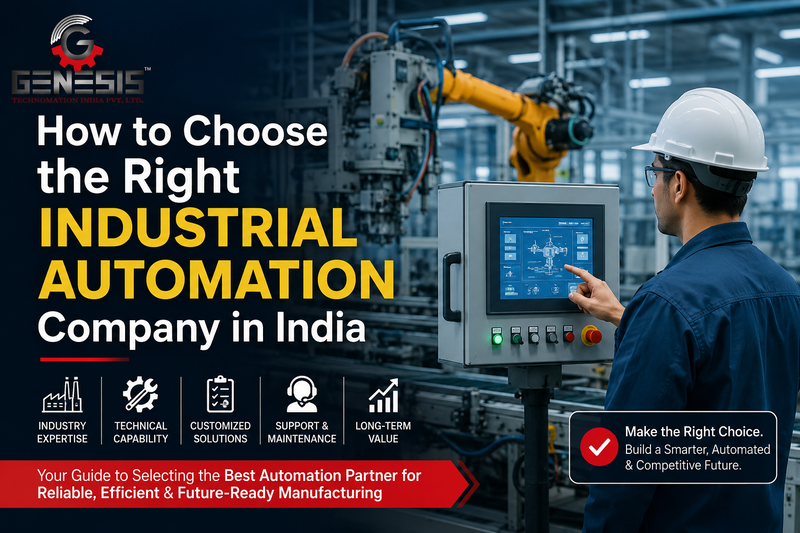
Industrial automation has become one of the most important investments for modern manufacturing businesses. Whether you operate an automotive plant, pharmaceutical facility, packaging unit, textile mill, food processing factory, or engineering workshop, the right automation strategy can significantly improve productivity, reduce operating costs, enhance product quality, and strengthen your competitive position.
As Indian manufacturing rapidly embraces Industry 4.0, manufacturers are no longer investing only in machines—they are investing in intelligent systems capable of making real-time decisions, collecting production data, optimising workflows, and minimising downtime. Technologies such as PLCs, SCADA systems, servo drives, industrial sensors, machine vision, Industrial IoT (IIoT), and motion control have transformed the way factories operate.
However, implementing these technologies successfully depends largely on selecting the right industrial automation company in India. A capable automation partner does much more than supply equipment. It studies your production process, identifies bottlenecks, designs customised automation solutions, integrates hardware and software, commissions the system, trains operators, and provides long-term technical support.
Choosing the wrong automation company can have serious consequences, including:
- Costly production delays
- Poor system integration
- Unexpected maintenance expenses
- Low return on investment
- Frequent machine breakdowns
- Compatibility issues between devices
- Extended project timelines
- Increased downtime
- Limited future scalability
By contrast, working with an experienced Industrial Automation Company in India can help businesses achieve sustainable growth through reliable, efficient, and scalable automation solutions tailored to their operational requirements.
This comprehensive buyer’s guide explains everything manufacturers, OEMs, machine builders, procurement teams, and industrial engineers should know before selecting an automation partner. From understanding industrial automation services to evaluating technical expertise, product portfolios, system integration capabilities, and after-sales support, this guide will help you make an informed investment decision for your business.
What Is an Industrial Automation Company?
An Industrial Automation Company in India specialises in designing, developing, integrating, installing, and maintaining automated systems that improve manufacturing processes. These companies combine mechanical engineering, electrical engineering, electronics, industrial software, instrumentation, and control systems to create efficient production environments.
Rather than relying solely on manual labour, modern factories use intelligent automation systems capable of monitoring equipment, collecting production data, controlling machinery, and making real-time operational adjustments.
An automation company typically works with manufacturers throughout the complete project lifecycle—from consultation and design to implementation, commissioning, operator training, and after-sales support.
Understanding Industrial Automation
Industrial automation refers to the use of advanced control systems, computers, programmable controllers, sensors, drives, robotics, and software to operate industrial processes with minimal human intervention.
Automation is not intended to replace people entirely. Instead, it enables employees to focus on higher-value tasks while repetitive, hazardous, or highly precise operations are handled by intelligent machines.
Modern automation systems can:
- Monitor production in real time
- Control manufacturing equipment automatically
- Detect faults instantly
- Reduce operator errors
- Optimise production schedules
- Improve consistency
- Generate detailed production reports
- Support predictive maintenance
This combination of hardware and software creates a smarter, more connected manufacturing environment.
Core Technologies Used by Industrial Automation Companies
Programmable Logic Controllers (PLC)
PLCs are the brains of industrial automation systems. They receive signals from sensors, process programmed logic, and control motors, valves, conveyors, cylinders, and other industrial equipment.
PLC-based automation provides:
- High reliability
- Fast processing
- Flexible programming
- Easy troubleshooting
- Long service life
- Scalability for future expansion
SCADA Systems
Supervisory Control and Data Acquisition (SCADA) systems allow operators to monitor and control entire production processes from a central interface.
Typical SCADA functions include:
- Alarm management
- Historical data logging
- Remote monitoring
- Production reporting
- Equipment diagnostics
- Energy monitoring
SCADA improves operational visibility and enables quicker decision-making.
Human Machine Interface (HMI)
HMIs provide graphical interfaces that enable operators to interact with machines.
A well-designed HMI allows users to:
- Start and stop equipment
- Monitor production status
- View alarms
- Change operating parameters
- Access maintenance information
User-friendly HMIs reduce training time and improve operator efficiency.
Motion Control Systems
Motion control is essential wherever precision movement is required.
Applications include:
- CNC machinery
- Packaging machines
- Robotics
- Pick-and-place systems
- Printing machines
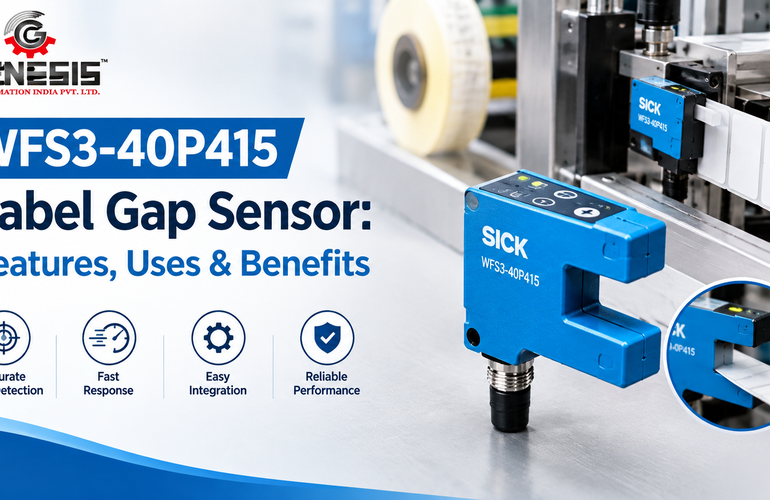
- Labelling equipment
Motion control solutions typically include:
- Servo motors
- Servo gearboxes
- Motion controllers
- Drives
- Encoders
- Planetary gearboxes
- Linear actuators
These components ensure smooth, accurate, and repeatable movement.
Industrial Sensors
Industrial sensors act as the eyes and ears of automation systems.
Common sensor types include:
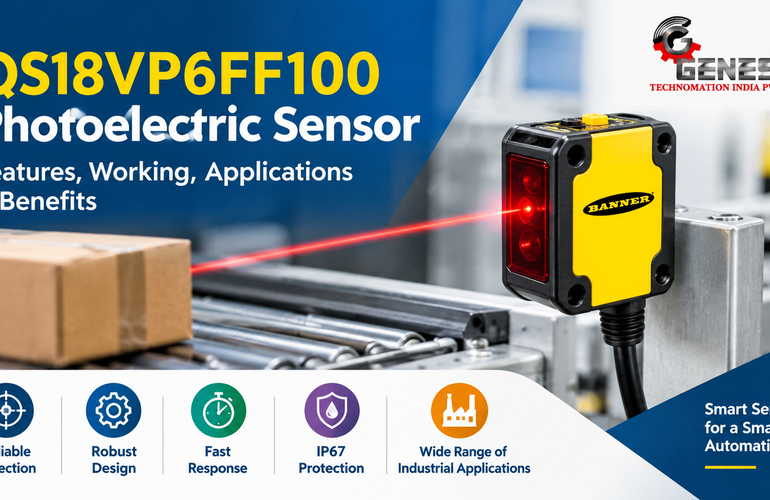
- Photoelectric sensors
- Inductive proximity sensors
- Capacitive sensors
- Laser sensors
- Ultrasonic sensors
- Pressure sensors
- Temperature sensors
- Humidity sensors
- Flow meters
- Level sensors
Sensor technology enables machines to detect objects, measure distances, monitor environmental conditions, and maintain precise process control.
Industrial Networking
Modern factories require reliable communication between machines.
Industrial networking technologies include:
- Ethernet/IP
- PROFINET
- Modbus TCP
- Modbus RTU
- EtherCAT
- CANopen
- PROFIBUS
Reliable communication ensures seamless data exchange across PLCs, HMIs, drives, sensors, and supervisory systems.
Industrial IoT (IIoT)
IIoT connects industrial equipment to cloud platforms and enterprise systems.
Benefits include:
- Remote monitoring
- Predictive maintenance
- Real-time dashboards
- Production analytics
- Asset tracking
- Energy optimisation
IIoT is a key component of smart manufacturing and digital transformation initiatives.
Why Industrial Automation Matters in Modern Manufacturing
Manufacturing has evolved dramatically over the past decade. Rising labour costs, stricter quality requirements, global competition, and customer demand for faster delivery have made automation a strategic necessity rather than an optional investment.
Companies that adopt automation often experience measurable improvements in efficiency, quality, and operational resilience.
Higher Productivity
Automated systems operate consistently without fatigue, enabling faster production cycles and improved throughput. Machines can perform repetitive tasks continuously with minimal interruptions, helping manufacturers meet growing demand while maintaining stable production schedules.
Improved Product Quality
Automation reduces the variability associated with manual processes. PLC-controlled equipment, servo-driven positioning systems, and advanced sensors ensure consistent dimensions, accurate assembly, and repeatable manufacturing outcomes.
This consistency helps minimise defects, lower scrap rates, and improve customer satisfaction.
Reduced Downtime
Unexpected downtime can disrupt production schedules and increase operating costs. Automation systems continuously monitor machine performance and detect abnormalities before they lead to major failures.
Integrated alarm systems, diagnostics, and predictive maintenance tools enable maintenance teams to respond quickly, reducing unplanned stoppages.
Enhanced Workplace Safety
Industrial automation reduces the need for workers to perform hazardous or physically demanding tasks. Automated material handling, robotic systems, and safety sensors help minimise exposure to dangerous environments, contributing to safer workplaces and regulatory compliance.
Energy Efficiency
Modern automation systems optimise equipment operation by adjusting motor speeds, controlling energy consumption, and reducing idle running time. Variable Frequency Drives (VFDs), smart control algorithms, and energy monitoring systems can significantly improve overall energy efficiency.
Predictive Maintenance
Instead of waiting for equipment to fail, predictive maintenance strategies use real-time data from sensors and connected devices to identify early signs of wear or abnormal operation. This proactive approach extends equipment life, improves reliability, and reduces maintenance costs.
Stronger Return on Investment
Although automation projects require upfront investment, the long-term financial benefits often outweigh the initial costs. Manufacturers may benefit from:
- Lower labour costs
- Reduced scrap and rework
- Higher production output
- Better equipment utilisation
- Lower maintenance expenses
- Improved product quality
- Increased customer satisfaction
When implemented effectively, automation can deliver sustainable improvements in operational performance and profitability.
Types of Industrial Automation Services
Industrial automation encompasses a broad range of engineering services designed to improve manufacturing efficiency. The best automation companies provide integrated solutions rather than isolated products, ensuring all components work together reliably.
PLC Programming
PLC programming forms the foundation of most industrial automation systems. Engineers develop customised control logic that governs machine sequences, safety interlocks, process timing, alarms, and equipment coordination.
A well-programmed PLC enhances machine reliability, simplifies troubleshooting, and allows future modifications as production needs evolve.
SCADA Development
SCADA development focuses on creating centralised monitoring and control systems for industrial processes. Engineers design graphical interfaces, configure alarms, establish data logging, and integrate production reporting, giving operators complete visibility into plant operations.
Human Machine Interface (HMI) Design
An intuitive HMI improves machine usability by presenting clear process information and simple controls. Effective HMI design helps reduce operator errors, shortens training time, and enables faster responses to alarms and process changes.
Motion Control Solutions
Precision movement is critical in applications such as packaging, assembly, CNC machining, and robotics. Motion control solutions integrate servo motors, servo drives, encoders, and controllers to achieve accurate positioning, speed regulation, and synchronised motion.
Servo Systems
Servo systems deliver high-speed, high-precision performance for demanding manufacturing tasks. Proper selection and tuning of servo motors and gearboxes improve accuracy, repeatability, and overall machine efficiency.
Industrial Sensors
Sensors provide the real-time data needed for intelligent automation. They detect objects, measure process variables, verify positioning, and support quality control across a wide range of industrial applications.
Machine Vision Systems
Machine vision combines cameras, lighting, and image-processing software to inspect products automatically. It is widely used for quality inspection, barcode reading, defect detection, dimensional measurement, and robotic guidance.
Industrial Networking
Reliable communication between PLCs, HMIs, drives, sensors, and enterprise systems is essential for modern automation. Industrial networking ensures fast, secure, and accurate data exchange across the production environment.
Control Panel Design and Manufacturing
The control panel serves as the central command centre of every automation system. It houses critical components such as PLCs, HMIs, relays, VFDs, circuit breakers, power supplies, communication modules, safety devices, and terminal blocks.
A professionally designed control panel ensures:
- Safe machine operation
- Reliable electrical protection
- Efficient cable management
- Easy maintenance
- Expandability for future upgrades
- Compliance with industrial standards
Professional PLC Control Panel Manufacturers carefully design layouts to optimise airflow, minimise electrical noise, and simplify troubleshooting. They also perform rigorous testing before dispatch, reducing installation time and ensuring dependable field performance.
Retrofitting Existing Machines
Many Indian manufacturers still operate machinery that is mechanically sound but relies on outdated electrical or control systems. Replacing these machines entirely may not always be cost-effective.
Machine retrofitting modernises existing equipment by replacing obsolete components with advanced automation technologies.
Typical retrofit projects include:
- PLC upgrades
- Servo motor replacements
- VFD integration
- HMI installation
- Sensor upgrades
- Industrial networking
- SCADA connectivity
- Safety system enhancements
Retrofitting often delivers substantial productivity improvements at a fraction of the cost of purchasing new machinery.
Turnkey Industrial Automation Projects
Turnkey automation involves delivering a complete solution—from concept to production-ready operation.
A turnkey project typically includes:
- Process analysis
- Mechanical integration
- Electrical design
- PLC programming
- SCADA development
- HMI configuration
- Control panel manufacturing
- Installation
- Site commissioning
- Operator training
- Documentation
- After-sales support
Working with a single automation system integrator reduces project complexity and improves accountability throughout implementation.
Industrial Internet of Things (IIoT)
Industry 4.0 is transforming manufacturing by connecting machines, operators, and business systems through data.
IIoT solutions enable manufacturers to:
- Monitor equipment remotely
- Track Overall Equipment Effectiveness (OEE)
- Analyse production trends
- Receive predictive maintenance alerts
- Monitor energy usage
- Improve asset utilisation
- Generate production dashboards
By converting machine data into actionable insights, IIoT supports smarter decision-making and continuous improvement.
Industrial Software Development
Modern automation increasingly depends on software integration.
Automation companies often develop software for:
- Production monitoring
- Batch management
- Recipe control
- Data acquisition
- Manufacturing reports
- MES integration
- ERP connectivity
- Cloud dashboards
- Quality management
Custom industrial software helps manufacturers gain better visibility into operations while reducing manual reporting.
Preventive Maintenance Services
Installing an automation system is only the beginning. Regular preventive maintenance ensures long-term reliability.
Maintenance services commonly include:
- PLC backups
- Control panel inspections
- Sensor calibration
- Drive parameter verification
- Cable inspection
- Firmware updates
- Safety testing
- Performance optimisation
Routine maintenance reduces unexpected downtime and extends equipment life.
Annual Maintenance Contracts (AMC)
Many manufacturers choose Annual Maintenance Contracts to ensure ongoing technical support.
AMC services often include:
- Scheduled inspections
- Emergency breakdown support
- Spare parts recommendations
- Software updates
- Preventive maintenance
- Remote diagnostics
- Performance reviews
An experienced automation partner becomes a long-term technical resource rather than simply an equipment supplier.
Industries That Need Industrial Automation
Automation has become essential across nearly every manufacturing sector. Although the objectives vary, the common goals remain improved productivity, consistent quality, lower operating costs, and enhanced safety.
Automotive Industry
Automotive manufacturing demands exceptional precision and repeatability. Automation supports robotic welding, conveyor systems, assembly lines, leak testing, painting, vision inspection, and material handling.
Servo systems, PLCs, industrial sensors, and machine vision help manufacturers maintain high production volumes while meeting strict quality standards.
Packaging Industry
Packaging machines rely heavily on motion control and synchronised automation.
Applications include:
- Filling
- Labelling
- Wrapping
- Cartoning
- Case packing
- Palletising
- Barcode verification
Servo motors, planetary gearboxes, photoelectric sensors, and HMIs are commonly integrated to achieve high-speed, accurate packaging.
Food and Beverage Industry
Food manufacturers require hygienic, reliable automation that complies with strict safety regulations.
Automation helps control:
- Mixing
- Filling
- Packaging
- Temperature monitoring
- Batch control
- Conveyor systems
- Cleaning processes
Industrial sensors and SCADA systems provide traceability and process consistency.
Pharmaceutical Industry
Precision is critical in pharmaceutical manufacturing.
Automation supports:
- Batch processing
- Tablet production
- Packaging
- Inspection
- Environmental monitoring
- Data logging
PLC-based systems reduce human error while ensuring regulatory compliance.
Chemical Industry
Chemical plants require highly reliable process automation to maintain safety and product consistency.
Automation systems monitor:
- Pressure
- Temperature
- Flow
- Tank levels
- Valve positions
- Mixing operations
SCADA systems provide centralised supervision for complex processing facilities.
FMCG Manufacturing
Fast-moving consumer goods manufacturers depend on continuous production.
Automation improves:
- Production speed
- Product consistency
- Packaging quality
- Inventory tracking
- Downtime reduction
Integrated automation systems allow rapid changeovers between product lines.
Textile Industry
Modern textile machinery incorporates automation for:
- Yarn processing
- Weaving
- Dyeing
- Fabric inspection
- Cutting
- Material handling
Motion control systems enhance accuracy while reducing waste.
Steel Industry
Steel plants operate under demanding conditions.
Automation controls:
- Furnaces
- Rolling mills
- Conveyors
- Material handling
- Cooling systems
- Quality inspection
Industrial-grade automation improves both efficiency and operator safety.
Plastic Manufacturing
Plastic processing relies on precise temperature and motion control.
Automation supports:
- Injection moulding
- Blow moulding
- Extrusion
- Material feeding
- Quality inspection
Servo systems and PLCs improve cycle times and product consistency.
Electronics Manufacturing
Electronic component production requires micron-level precision.
Automation technologies include:
- Pick-and-place systems
- Vision inspection
- Precision motion control
- Laser measurement
- Robotic assembly
These systems improve accuracy while reducing production defects.
Warehousing and Logistics
Modern warehouses increasingly depend on automation.
Applications include:
- Conveyor systems
- Barcode scanning
- Automated storage
- Material handling
- Sorting systems
- Inventory management
Automation improves order accuracy and throughput.
Printing Industry
Printing machines require precise synchronisation between rollers, feeders, and cutting equipment.
Servo motors, motion controllers, and sensors ensure accurate registration and high-speed production.
Solar Manufacturing
Solar panel production demands high precision for cell placement, inspection, lamination, and testing.
Automation improves yield while maintaining consistent quality.
Water and Wastewater Treatment
Automation enables reliable monitoring of:
- Pumps
- Valves
- Chemical dosing
- Flow rates
- Tank levels
- Water quality
SCADA systems allow operators to supervise treatment facilities remotely while maintaining operational efficiency.
The 15 Most Important Factors When Choosing an Industrial Automation Company
Selecting the right Industrial Automation Company in India is one of the most important decisions a manufacturer can make. Beyond technical expertise, businesses should evaluate engineering capabilities, project management practices, scalability, and long-term support.
The following factors can help buyers compare automation partners objectively.
1. Industry Experience
Experience is often the strongest indicator of an automation company’s ability to deliver successful projects.
A company with many years of experience has likely encountered diverse manufacturing environments, solved complex engineering challenges, and refined its implementation processes. This practical knowledge enables engineers to anticipate issues before they arise and recommend proven solutions.
When evaluating experience, look beyond the number of years in business. Consider whether the company has delivered projects similar to yours in terms of industry, production scale, machine complexity, and regulatory requirements.
Ask questions such as:
- Have they completed comparable automation projects?
- Can they provide references or case studies?
- Do they understand your production workflow?
- Have they worked with similar machinery?
An experienced automation partner is also more likely to maintain strong relationships with leading component manufacturers, ensuring better product availability and technical support.
Ultimately, experience reduces project risk and increases confidence that the automation system will perform reliably over its lifecycle.
2. Industry-Specific Expertise
Automation requirements vary significantly between industries.
For example:
- Pharmaceutical manufacturing prioritises compliance and traceability.
- Food processing focuses on hygiene and washdown capability.
- Packaging demands high-speed motion control.
- Automotive production requires precise synchronisation and robotic integration.
An automation company with industry-specific knowledge understands these unique operational challenges and can recommend technologies that align with production goals and regulatory expectations.
Industry expertise also shortens project timelines because engineers are already familiar with common equipment layouts, process flows, and performance requirements.
Choosing a specialist with relevant sector experience often leads to more efficient implementation and better long-term results.
3. Engineering Team Strength
Technology alone does not guarantee project success—the engineering team behind it plays an equally important role.
Evaluate whether the company employs multidisciplinary professionals, including:
- Automation engineers
- Electrical design engineers
- PLC programmers
- SCADA developers
- Motion control specialists
- Mechanical integration engineers
- Instrumentation experts
- Service engineers
A collaborative engineering team can design integrated systems rather than isolated solutions.
Strong engineering capabilities also improve documentation quality, commissioning efficiency, troubleshooting speed, and future scalability.
4. Product Portfolio
The best automation partners offer a comprehensive range of industrial automation products rather than focusing on a single category.
A broad portfolio may include:
- PLC systems
- HMIs
- SCADA software
- Servo motors
- Servo gearboxes
- Planetary gearboxes
- Stepper motors
- Linear actuators
- Industrial sensors
- Laser sensors
- Photoelectric sensors
- Inductive sensors
- Capacitive sensors
- Pressure sensors
- Flow meters
- Variable Frequency Drives (VFDs)
- Industrial networking devices
- Safety components
- Control panels
Working with a supplier that provides integrated hardware simplifies procurement and improves compatibility across the automation system.
5. Customisation Capability
Every factory has unique production processes, machine layouts, and operational objectives.
Avoid companies that promote identical solutions for every customer.
A capable automation partner begins by understanding:
- Current production challenges
- Future expansion plans
- Budget constraints
- Available floor space
- Existing machinery
- Production targets
- Quality objectives
Customised automation solutions often deliver better productivity, lower maintenance costs, and higher long-term return on investment than generic systems.
6. System Integration Expertise
Modern manufacturing environments combine equipment from multiple manufacturers.
An experienced Automation System Integrator should be capable of integrating:
- PLCs
- HMIs
- SCADA
- Servo systems
- Industrial robots
- Sensors
- Vision systems
- VFDs
- ERP software
- MES platforms
- IIoT solutions
Seamless integration eliminates communication issues, improves data accuracy, and supports future digital transformation initiatives.
7. Technical Consultation
The best automation companies function as engineering consultants rather than simply equipment suppliers.
During the planning stage, they evaluate:
- Production bottlenecks
- Process inefficiencies
- Automation opportunities
- Energy optimisation
- Equipment selection
- Scalability
- Safety improvements
Professional consultation helps manufacturers make informed investment decisions and avoid costly design mistakes.
8. After-Sales Support
Automation systems require long-term technical support throughout their operational life.
Evaluate whether the company provides:
- Remote diagnostics
- On-site service
- Spare parts assistance
- Software updates
- Preventive maintenance
- Operator training
- Emergency breakdown support
- Annual Maintenance Contracts (AMC)
Reliable after-sales support minimises downtime and protects your automation investment for years to come.
9. Training and Knowledge Transfer
Even the most advanced automation system will not deliver maximum value if operators and maintenance personnel are unfamiliar with it.
A reliable Industrial Automation Company in India should provide structured training programmes covering:
- PLC operation
- HMI navigation
- SCADA monitoring
- Alarm management
- Basic troubleshooting
- Preventive maintenance
- Safety procedures
- Backup and recovery processes
Comprehensive documentation should also be supplied, including:
- Electrical drawings
- PLC backups
- HMI projects
- Network architecture
- Spare parts lists
- Maintenance schedules
- Operating manuals
Knowledge transfer reduces dependency on external engineers and enables your internal team to resolve routine issues quickly.
10. Response Time and Service Availability
Manufacturing downtime can result in significant production losses. Therefore, response time is one of the most practical criteria when selecting an automation partner.
Ask potential vendors:
- Do they offer remote diagnostics?
- What are their standard response times?
- Is emergency support available?
- Do they maintain local service engineers?
- Are spare parts stocked in India?
- Is telephone or online support available after installation?
Fast technical assistance minimises production interruptions and helps maintain operational continuity.
11. Certifications and Quality Standards
Professional automation companies generally follow recognised engineering and quality practices.
When evaluating a supplier, look for:
- ISO quality management systems
- Compliance with applicable electrical standards
- Safety-focused design practices
- Proper testing procedures
- Comprehensive documentation
- Traceable manufacturing processes
Although certifications alone do not guarantee project success, they often indicate structured engineering practices and consistent quality management.
12. Technology Partnerships and Automation Brands
Industrial automation systems frequently combine components from multiple global manufacturers.
A capable automation company should have experience integrating recognised automation platforms, drives, industrial communication protocols, and instrumentation.
Rather than insisting on a single brand, the company should recommend equipment based on:
- Application requirements
- Reliability
- Spare parts availability
- Future scalability
- Budget
- Local technical support
This vendor-neutral approach ensures that technology decisions are driven by engineering requirements rather than product preference.
13. Project Management Capability
Large automation projects involve numerous activities running simultaneously.
These include:
- Requirement analysis
- Electrical design
- Mechanical integration
- Procurement
- PLC programming
- Control panel manufacturing
- FAT (Factory Acceptance Testing)
- Site installation
- SAT (Site Acceptance Testing)
- Commissioning
- Operator training
Professional project management keeps all stakeholders aligned, controls project risks, and helps ensure timely delivery.
Manufacturers should ask whether the company provides:
- Project schedules
- Progress reports
- Design reviews
- Risk assessments
- Change management
- Documentation control
Good project management often distinguishes highly successful automation projects from those that suffer delays and budget overruns.
14. Scalability and Future Expansion
Manufacturing requirements evolve continuously.
Today’s production line may need:
- Additional machines
- More sensors
- New production recipes
- Cloud connectivity
- ERP integration
- Robotics
- Vision inspection
- Predictive maintenance
A forward-thinking automation company designs systems that can expand without requiring complete replacement.
Scalable automation protects long-term investment while supporting business growth.
15. Pricing Versus Long-Term Value
Many purchasing decisions focus primarily on initial cost.
However, automation should be evaluated based on total lifecycle value, including:
- Reliability
- Downtime reduction
- Energy efficiency
- Spare parts availability
- Software support
- Productivity gains
- Maintenance costs
- Future upgrades
The lowest quotation does not always represent the lowest overall cost of ownership.
Selecting an experienced automation partner often produces greater operational savings over the lifetime of the equipment.
10 Common Mistakes Buyers Make
Selecting the wrong automation partner often results from avoidable mistakes.
1. Choosing Only the Lowest Price
Low-cost proposals may exclude engineering, documentation, training, or long-term support.
2. Ignoring Industry Experience
General automation experience may not translate into expertise within your specific manufacturing sector.
3. Overlooking After-Sales Support
Strong post-installation service is just as important as successful commissioning.
4. Focusing Only on Hardware
Successful automation depends equally on software, integration, engineering, and support.
5. Not Checking References
Always request examples of similar completed projects.
6. Ignoring Future Expansion
Systems designed only for today’s production may require costly upgrades tomorrow.
7. Inadequate Documentation
Poor documentation increases maintenance complexity and troubleshooting time.
8. Skipping Operator Training
Proper training significantly improves productivity and system reliability.
9. Selecting Incompatible Technologies
Ensure all equipment communicates effectively through supported industrial protocols.
10. Rushing the Decision
Automation projects often remain operational for many years.
Take time to evaluate potential partners carefully.
20 Questions to Ask Before Hiring an Industrial Automation Company
- How many years have you worked in industrial automation?
- Have you completed projects similar to ours?
- Which industries do you specialise in?
- Can you provide customer references?
- Which PLC platforms do you support?
- Do you develop SCADA applications?
- Can you integrate existing machinery?
- Do you manufacture PLC control panels?
- What motion control solutions do you provide?
- Which industrial sensors do you recommend?
- Do you offer turnkey automation projects?
- How do you manage project timelines?
- What documentation will be supplied?
- Do you provide operator training?
- What after-sales support is available?
- Do you offer Annual Maintenance Contracts?
- How quickly can service engineers respond?
- Can the system be expanded later?
- What warranty terms apply?
- How do you minimise production downtime during implementation?
Red Flags When Selecting an Automation Company
Be cautious if a company:
- Cannot explain its engineering methodology.
- Avoids discussing completed projects.
- Offers unusually low quotations without clear scope.
- Provides limited documentation.
- Has no dedicated service team.
- Cannot explain maintenance procedures.
- Recommends identical solutions for every customer.
- Lacks structured project planning.
- Offers little or no operator training.
- Cannot explain future scalability.
Why Many Indian Manufacturers Consider Genesis Technomation India Private Limited
When evaluating an Industrial Automation Company in India, manufacturers typically look for technical capability, application expertise, product availability, engineering support, and long-term service. Based on the information available on its official website, Genesis Technomation India Private Limited, headquartered in Ahmedabad, offers a portfolio that aligns with many of these evaluation criteria.
Its offerings include industrial automation products and engineering solutions such as:
- PLC-based automation systems
- PLC control panels
- HMI solutions
- Motion control components
- Servo motor solutions
- Servo gearboxes
- Planetary gearboxes
- Stepper motors
- Linear actuators
- Industrial sensors
- Laser sensors
- Photoelectric sensors
- Inductive sensors
- Capacitive sensors
- Pressure sensors
- Flow meters
- Industrial automation components
- Automation system integration
- Technical consultation for automation projects
The company’s product range enables manufacturers to source multiple automation components from a single engineering-focused supplier, which can simplify system compatibility and procurement.
For organisations planning machine upgrades or new automation projects, Genesis also highlights customised automation solutions designed around customer requirements rather than one-size-fits-all packages. This approach is particularly valuable where production processes, machine layouts, and operating conditions differ between facilities.
Because industrial automation projects extend beyond equipment selection, businesses should also evaluate consultation quality, engineering documentation, commissioning support, training, and after-sales service. Reviewing these aspects alongside Genesis Technomation India Private Limited’s publicly available capabilities can help determine whether its offerings align with the technical and operational needs of a particular project.
Product Applications in Modern Automation
Many industrial automation projects combine multiple technologies to improve productivity and precision.
Examples include:
- Planetary Gearboxes for high-torque, compact motion control.
- Servo Gearboxes for accurate positioning applications.
- Servo Motors for precision speed and motion control.
- Stepper Motors for indexing and positioning.
- Linear Actuators for controlled linear movement.
- Laser Sensors for distance and measurement.
- Photoelectric Sensors for object detection.
- Inductive Sensors for metal detection.
- Capacitive Sensors for non-metal sensing.
- Pressure Sensors for process monitoring.
- Flow Meters for liquid and gas measurement.
- PLCs and HMIs for machine control and operator interaction.
- VFDs for energy-efficient motor speed control.
- Control Panels for centralised machine management.
Selecting compatible components and integrating them correctly is essential for reliable plant performance.
25-Point Automation Company Selection Checklist
Before signing a contract, confirm that the automation company can demonstrate the following:
- Relevant industry experience
- Qualified engineering team
- Custom solution design
- PLC programming expertise
- SCADA development capability
- Motion control expertise
- Industrial sensor integration
- Machine vision capability (if required)
- Control panel manufacturing
- Industrial networking expertise
- IIoT integration
- Safety-focused engineering
- FAT procedures
- SAT procedures
- Complete documentation
- Operator training
- Maintenance support
- AMC availability
- Spare parts availability
- Remote diagnostics
- Local service engineers
- Scalable architecture
- Transparent pricing
- Project management process
- Strong customer references
Illustrative Case Study
Packaging Manufacturer Improves Productivity Through Automation
Scenario (Illustrative Example):
A medium-sized packaging manufacturer was experiencing inconsistent machine speeds, frequent stoppages, and high maintenance costs due to ageing relay-based control systems.
After partnering with an experienced automation integrator, the company implemented:
- PLC-based machine control
- Servo-driven motion systems
- HMI operator interfaces
- Industrial networking
- Photoelectric sensors
- Variable Frequency Drives
- Production monitoring dashboards
Results
- Improved production consistency
- Reduced unplanned downtime
- Faster product changeovers
- Better operator visibility
- Lower maintenance requirements
- Increased production capacity
- Improved energy efficiency
While actual results vary depending on the application, this example illustrates how a well-planned automation project can improve operational performance.
Frequently Asked Questions (FAQ)
1. What is an industrial automation company?
An industrial automation company designs, integrates, and supports automated systems such as PLCs, SCADA, HMIs, sensors, motion control, and industrial networking.
2. Why is industrial automation important?
It improves productivity, quality, safety, efficiency, and long-term operational performance.
3. What does a PLC do?
A PLC controls industrial machines by processing input signals and executing programmed logic.
4. What is SCADA used for?
SCADA enables centralised monitoring, control, data logging, and alarm management.
5. What industries benefit most from automation?
Automotive, food processing, pharmaceuticals, packaging, textiles, chemicals, plastics, electronics, warehousing, and many others.
6. What is a turnkey automation project?
A complete solution covering design, engineering, installation, commissioning, and support.
7. What is system integration?
It is the process of connecting multiple automation devices into one coordinated system.
8. Why are industrial sensors important?
They provide real-time data for monitoring and controlling machines accurately.
9. What are servo motors used for?
Servo motors deliver precise speed, torque, and position control.
10. What is machine retrofitting?
It upgrades existing machinery with modern automation technologies.
11. How does IIoT improve manufacturing?
IIoT enables remote monitoring, predictive maintenance, and data-driven decision-making.
12. What is an HMI?
A Human Machine Interface allows operators to interact with automation systems.
13. Why are control panels important?
They centralise machine control, protection, and electrical distribution.
14. How do VFDs reduce energy consumption?
By adjusting motor speed to match process demand.
15. What is predictive maintenance?
Using equipment data to identify potential failures before breakdowns occur.
16. How should I compare automation companies?
Evaluate engineering expertise, experience, integration capability, support, scalability, and long-term value.
17. Why is documentation important?
It simplifies maintenance, troubleshooting, and future upgrades.
18. What should be included in after-sales support?
Training, maintenance, software updates, spare parts, and technical assistance.
19. Why is scalability important?
It allows automation systems to expand with future production requirements.
20. How do I choose the right industrial automation company in India?
Select a partner with proven engineering expertise, relevant industry experience, comprehensive automation capabilities, transparent project management, and dependable long-term support.
Conclusion
Choosing the right Industrial Automation Company in India is a strategic decision that influences productivity, operational reliability, product quality, and long-term business growth. Rather than focusing solely on equipment or price, manufacturers should evaluate engineering expertise, industry experience, system integration capability, project management, technical consultation, documentation, scalability, and after-sales support.
A structured evaluation process reduces implementation risks and helps ensure that automation investments continue delivering value as production requirements evolve.
Based on the information available through its official website, Genesis Technomation India Private Limited offers a broad portfolio of industrial automation products and engineering solutions—including PLC control panels, motion control systems, servo solutions, industrial sensors, system integration, and technical consultation. Manufacturers seeking an automation partner may wish to review these capabilities to determine whether they align with their operational objectives and project requirements.
If your organisation is planning a new automation project, modernising existing machinery, or adopting Industry 4.0 technologies, engaging with an experienced engineering partner and conducting a thorough technical evaluation will help you build a more efficient, reliable, and future-ready manufacturing operation.
Related Posts