
Description
Safety Radar Sensor Manufacturers and Suppliers in India
Advanced Industrial Radar Sensors for Reliable Machine Safety, Object Detection, and Industrial Automation
Modern manufacturing environments demand sensing technologies that remain dependable regardless of dust, fog, steam, rain, smoke, or changing lighting conditions. Safety Radar Sensor technology has become one of the most reliable solutions for industrial automation, machine safety, and intelligent object detection because it offers consistent performance where conventional optical sensors may struggle.
At Genesis Industrial Solutions, we supply high-performance Industrial Radar Sensors designed to improve operational safety, automate industrial processes, reduce downtime, and enhance productivity across a wide range of industries. Whether you need a Radar Sensor for automated guided vehicles (AGVs), autonomous mobile robots (AMRs), warehouse automation, conveyor systems, industrial gates, or collision avoidance, our radar sensing solutions provide dependable performance in demanding industrial environments.
Unlike traditional sensing technologies that rely on visible light or ultrasonic waves, radar sensors use microwave signals to detect the presence, movement, speed, and distance of objects. This enables accurate detection even in environments with heavy dust, poor visibility, vibration, moisture, or extreme weather conditions.
Genesis Industrial Solutions offers a comprehensive range of industrial radar sensing products, including:
- Q90R
- Q130R
- T30RW
- QT50R
- K50R
- Q240R
These models are suitable for numerous industrial applications requiring reliable Machine Safety Radar Sensor, Radar Presence Sensor, Radar Detection Sensor, and Industrial Safety Sensor solutions.
Why Industries Prefer Safety Radar Sensors
Industrial automation continues to evolve toward smarter, safer, and more connected manufacturing facilities. Traditional photoelectric sensors are excellent for many applications, but they can experience limitations when exposed to dust, smoke, steam, direct sunlight, or environmental contamination.
Radar sensing technology overcomes these challenges by using electromagnetic waves that penetrate difficult environmental conditions without compromising detection reliability.
Industries increasingly select Safety Radar Sensors because they provide:
- Contactless object detection
- Long sensing distance
- Reliable operation in harsh environments
- High immunity to dust and airborne particles
- Stable performance during rain and fog
- Minimal maintenance requirements
- Accurate presence detection
- Motion tracking capabilities
- Excellent outdoor performance
- Reduced false triggering
- Long operational life
These benefits make radar technology an ideal choice for modern industrial automation systems.
What is a Safety Radar Sensor?
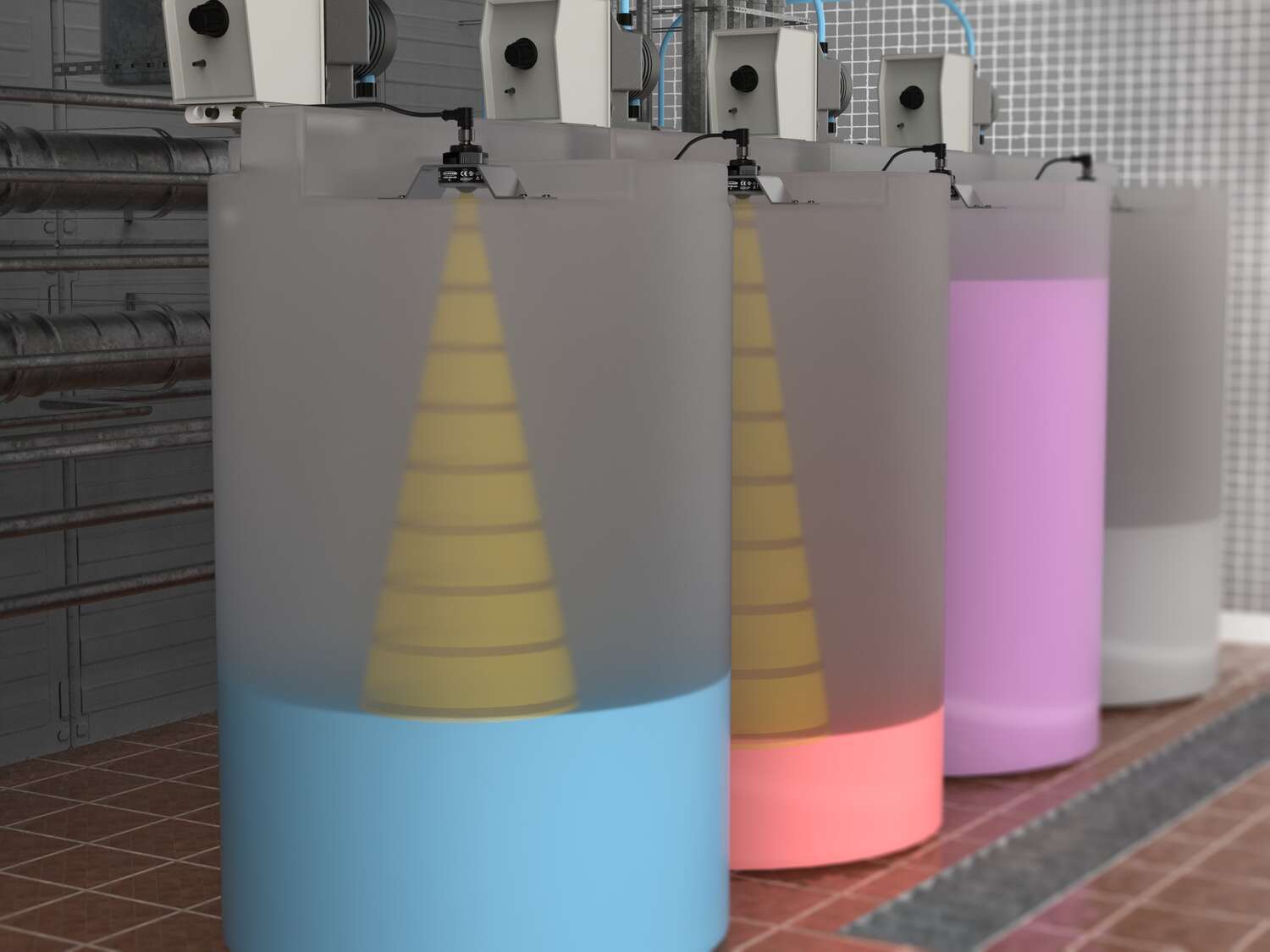
A Safety Radar Sensor is an advanced industrial sensing device that uses microwave radar technology to detect objects, people, vehicles, and moving equipment without making physical contact.
Instead of relying on cameras or visible light, the sensor continuously emits microwave signals. When these signals encounter an object, they are reflected back to the sensor. The internal processor analyzes the reflected signals to determine:
- Object presence
- Distance
- Speed
- Direction of movement
- Motion status
- Detection zone occupancy
This technology enables dependable operation even in environments where optical sensing technologies become unreliable.
Safety radar sensors are commonly installed in:
- Automated factories
- Smart warehouses
- Machine safety systems
- Industrial gates
- Loading docks
- Vehicle detection systems
- Robotics
- AGVs
- AMRs
- Material handling equipment
- Port automation
- Crane safety systems
Their ability to operate continuously in challenging industrial conditions makes them a preferred solution for Industry 4.0 applications.
Why Choose Genesis Safety Radar Sensor?
Genesis Industrial Solutions has established itself as a trusted Safety Radar Sensor manufacturer, Safety Radar Sensor supplier, and industrial automation solution provider serving customers across India. Our focus is on delivering high-quality automation products that improve workplace safety, operational efficiency, and long-term reliability.
Industrial Expertise
Our team understands the practical challenges faced by manufacturing plants, warehouses, logistics facilities, and process industries. We recommend radar sensing solutions based on application requirements rather than a one-size-fits-all approach.
Reliable Product Quality
Every radar sensor is selected to meet industrial performance expectations for demanding environments. The products are designed for continuous operation with stable detection accuracy and dependable long-term performance.
Wide Product Range
Genesis Industrial Solutions offers multiple radar sensor models suitable for:
- Machine safety
- Industrial automation
- Vehicle detection
- Presence sensing
- Collision avoidance
- Smart warehouses
- Robotics
- Industrial doors
- Automated logistics
Technical Support
Selecting the correct radar sensor requires understanding factors such as sensing range, mounting position, target size, environmental conditions, and control system compatibility. Our technical experts assist customers in choosing the most appropriate solution for their application.
Fast Delivery Across India
With an efficient supply network, Genesis Industrial Solutions ensures timely delivery to customers across major industrial regions in India, minimizing project delays and supporting urgent automation requirements.
Competitive Pricing
We strive to provide cost-effective radar sensing solutions without compromising on quality, making advanced industrial automation technology accessible to businesses of all sizes.
Easy System Integration
Our radar sensors are designed for straightforward integration with PLCs, industrial controllers, machine automation systems, and Industry 4.0 applications, reducing installation time and simplifying commissioning.
Key Features of Safety Radar Sensor
Our Industrial Radar Sensors are engineered to deliver exceptional performance across diverse industrial environments. Key features include:
- Advanced FMCW radar-based detection technology
- Reliable contactless object detection
- Long sensing distance for wide-area coverage
- High detection accuracy
- Stable operation in demanding industrial environments
- Excellent immunity to dust, dirt, and airborne particles
- Reliable performance in fog and mist
- Effective operation during rain and outdoor conditions
- Resistant to smoke and steam interference
- High vibration tolerance for industrial machinery
- Suitable for both indoor and outdoor installations
- Industrial-grade rugged housing
- Fast response time for dynamic applications
- Consistent object tracking and presence detection
- Low maintenance requirements
- Easy installation and alignment
- Simple configuration for various applications
- Energy-efficient operation
- Long service life with durable components
- Compact design for space-constrained installations
- Easy integration with PLC, HMI, SCADA, and industrial controllers
- Supports machine safety and automation systems
- Reliable detection regardless of lighting conditions
- Reduced false detections compared to optical sensors
- Ideal for harsh industrial environments
- Suitable for continuous 24/7 operation
Available Safety Radar Sensor Models
Genesis Industrial Solutions offers multiple radar sensor models to meet the diverse needs of industrial automation, machine safety, and intelligent object detection.
Model |
Description |
Best Applications |
| Q90R | Compact industrial radar sensor designed for reliable short- to medium-range object detection in space-constrained installations. | Conveyor systems, machine guarding, packaging lines, industrial doors, presence detection. |
| Q130R | High-performance radar sensor offering enhanced sensing range and dependable detection in demanding industrial environments. | Vehicle detection, warehouse automation, logistics centers, AGVs, loading docks. |
| T30RW | Versatile T30R Series Radar Sensor designed for industrial automation, object tracking, and motion detection with excellent environmental resistance. | Factory automation, robotics, material handling, machine safety, automated production lines. |
| QT50R | Advanced radar sensor optimized for accurate presence and motion detection with stable performance under harsh operating conditions. | Forklift detection, industrial gates, warehouse aisles, automated storage systems, collision avoidance. |
| K50R | Compact radar sensor with reliable object sensing capabilities for smart industrial automation applications. | Robotics, assembly lines, conveyor monitoring, packaging equipment, manufacturing cells. |
| Q240R | Long-range industrial radar sensor engineered for large-area monitoring and heavy-duty industrial environments. | Cranes, mining equipment, ports, steel plants, vehicle monitoring, outdoor industrial automation. |
Each model is selected based on sensing distance, installation requirements, environmental conditions, target size, and application-specific performance needs. Our experts can help identify the most suitable radar sensor for your project.
Working Principle of Safety Radar Sensor
Industrial radar sensors operate using Frequency Modulated Continuous Wave (FMCW) radar technology, a highly reliable sensing method widely used in industrial automation and safety applications.
FMCW Radar Technology
The sensor continuously transmits low-power microwave signals while simultaneously receiving reflected signals from surrounding objects. By comparing the transmitted and received frequencies, the sensor accurately calculates the distance, speed, and movement of detected objects.
This enables real-time monitoring of dynamic industrial environments with high precision.
Microwave Radar Detection
Unlike optical sensing systems, microwave radar is unaffected by ambient lighting, shadows, or darkness. This makes it highly suitable for 24/7 industrial operation, both indoors and outdoors.
Reflection Principle
When microwave signals encounter an object such as a vehicle, pallet, robot, or person, part of the signal is reflected back to the radar sensor. The sensor analyzes these reflections to determine:
- Distance to the object
- Relative speed
- Direction of movement
- Object presence
- Detection zone occupancy
Motion Detection
Radar technology continuously monitors moving targets, enabling accurate tracking of forklifts, AGVs, AMRs, cranes, conveyors, and other mobile equipment. This supports collision avoidance and improves operational safety.
Presence Detection
Unlike motion-only sensors, modern radar sensors can reliably detect stationary or slow-moving objects within defined detection zones, making them suitable for safety monitoring, access control, and industrial automation.
Object Tracking
Advanced signal processing enables radar sensors to distinguish multiple moving objects simultaneously, providing accurate tracking in busy industrial environments such as logistics hubs, warehouses, and production facilities.
Reliable Detection in All Lighting Conditions
Because radar sensing does not rely on visible light, it performs consistently in:
- Complete darkness
- Bright sunlight
- Dust-filled production areas
- Heavy fog
- Smoke
- Steam
- Rain
- Snow
- Outdoor industrial environments
This dependable performance helps improve machine safety, reduce false alarms, and ensure uninterrupted industrial operations.
Technical Specifications of Radar Sonsor
The following specifications represent typical industrial radar sensor capabilities. Actual specifications may vary depending on the selected model.
Specification |
Details |
| Detection Technology | FMCW Microwave Radar |
| Operating Voltage | 10–30 VDC / 12–24 VDC (Model Dependent) |
| Sensing Range | Up to 40 m (Model Dependent) |
| Output Type | PNP, NPN, Relay, IO-Link, Digital Output (Model Dependent) |
| Housing Material | Industrial-Grade Polycarbonate / Die-Cast Metal |
| Protection Class | Class III |
| Operating Temperature | -40°C to +65°C (Model Dependent) |
| Response Time | High-Speed Millisecond Response |
| Mounting Options | Bracket, Surface, Adjustable Mount |
| Operating Frequency | 24 GHz / 60 GHz (Model Dependent) |
| Communication Interface | IO-Link / Digital Output / PLC Compatible |
| Protection Rating | IP65, IP67, or Higher (Model Dependent) |
| Environmental Resistance | Dust, Fog, Rain, Smoke, Steam, Sunlight, Vibration |
| Integration | PLC, HMI, SCADA, Industrial Controllers, Factory Automation Systems |
Applications of Safety Radar Sensor
Industrial automation is becoming increasingly intelligent, connected, and safety-focused. A Safety Radar Sensor plays a vital role in protecting personnel, preventing collisions, monitoring equipment, and improving operational efficiency across numerous industrial sectors. Thanks to advanced radar technology, these sensors continue to deliver dependable performance even in dusty factories, outdoor installations, warehouses, and harsh process industries where conventional optical sensors may struggle.
Below are some of the most common industrial applications where Industrial Radar Sensors provide significant value.
Factory Automation
Modern factories rely on automated production systems that require precise and continuous object detection. A Radar Sensor enables reliable monitoring of production equipment, moving machinery, and operator zones while maintaining high detection accuracy regardless of environmental conditions.
Typical applications include:
- Automated assembly lines
- Production monitoring
- Machine guarding
- Safety zones
- Material transfer systems
- Automated inspection stations
- Smart manufacturing facilities
Radar technology helps manufacturers reduce downtime while improving worker safety and overall productivity.
Packaging Machines
Packaging environments often generate dust, plastic particles, vibration, and varying lighting conditions. Traditional optical sensors may require frequent cleaning, whereas Machine Safety Radar Sensors continue operating with minimal maintenance.
Applications include:
- Carton detection
- Product positioning
- Conveyor synchronization
- Package accumulation monitoring
- End-of-line packaging systems
- Stretch wrapping machines
- Palletizing systems
Reliable detection minimizes production interruptions and improves packaging efficiency.
Conveyor Systems
Conveyors are widely used throughout manufacturing, logistics, mining, food processing, and warehousing. Radar sensors provide dependable monitoring of moving products and equipment while reducing false detections caused by dust or environmental contamination.
Common conveyor applications include:
- Object detection
- Conveyor zone monitoring
- Material flow control
- Jam detection
- Transfer point monitoring
- Collision prevention
- Product accumulation control
Continuous monitoring ensures smoother material handling operations.
AGV (Automated Guided Vehicles)
Automated Guided Vehicles have become essential in smart factories and warehouses. A Radar Sensor for AGV improves navigation and safety by detecting obstacles, vehicles, pallets, and personnel within the travel path.
Radar technology enables:
- Forward obstacle detection
- Side protection
- Safe navigation
- Speed control
- Collision avoidance
- Path monitoring
- Dynamic environment detection
These capabilities contribute to safer autonomous transportation within industrial facilities.
AMR (Autonomous Mobile Robots)
Unlike AGVs, AMRs navigate dynamically and require real-time environmental awareness. A Radar Sensor for AMR provides dependable object detection even when visibility is reduced due to dust, steam, or poor lighting.
Applications include:
- Autonomous navigation
- Human detection
- Warehouse movement
- Obstacle avoidance
- Route optimization
- Safe collaborative operation
Radar technology enhances both safety and operational efficiency for intelligent mobile robots.
Forklift Detection
Forklifts are involved in numerous workplace accidents each year. Installing Forklift Detection Sensors helps reduce collision risks in warehouses, manufacturing plants, and logistics centers.
Radar sensors can monitor:
- Blind intersections
- Loading zones
- Pedestrian crossings
- High-traffic warehouse aisles
- Dock areas
- Material transfer points
By providing early detection of approaching vehicles, radar systems help create safer working environments.
Warehouse Automation
Modern warehouses increasingly depend on intelligent automation systems. A Radar Sensor for Warehouse applications improves inventory movement, vehicle detection, and personnel safety.
Applications include:
- Automated picking systems
- Storage monitoring
- Pallet detection
- Conveyor automation
- Inventory movement
- Warehouse traffic management
- Smart logistics systems
Reliable sensing supports uninterrupted warehouse operations around the clock.
Automated Storage and Retrieval Systems (AS/RS)
Automated storage systems require accurate object detection to maximize efficiency and prevent mechanical damage.
Radar sensors assist with:
- Shuttle positioning
- Rack monitoring
- Pallet detection
- Lift positioning
- Storage confirmation
- Automated retrieval
The result is improved storage accuracy and reduced system downtime.
Machine Safety
Protecting personnel around hazardous machinery is one of the primary functions of industrial radar sensing technology.
A Machine Safety Radar Sensor can be integrated into:
- Robotic work cells
- Automated presses
- CNC machinery
- Welding stations
- Cutting machines
- Heavy industrial equipment
Radar-based monitoring helps detect human presence within predefined safety zones, supporting safer machine operation when used as part of an appropriate machine safety system.
Loading Dock Monitoring
Loading docks experience constant movement of forklifts, trucks, pallets, and personnel.
Radar sensors improve safety by monitoring:
- Vehicle approach
- Dock occupancy
- Trailer positioning
- Loading activity
- Pedestrian movement
This reduces accident risks while improving loading efficiency.
Robotics
Industrial robots operate at high speed and require dependable sensing for collaborative automation.
Radar sensors support:
- Robot cell monitoring
- Human detection
- Workspace monitoring
- Collision avoidance
- Object positioning
- Automated material handling
Reliable object detection improves robotic system performance while enhancing workplace safety.
Crane Safety
Overhead cranes and gantry cranes operate in demanding industrial environments where visibility is often limited.
Radar sensors assist with:
- Anti-collision systems
- Crane positioning
- Load monitoring
- Travel path detection
- Obstacle monitoring
These applications are particularly valuable in ports, steel plants, warehouses, and heavy manufacturing facilities.
Industrial Gates and Automatic Doors
Radar sensors are increasingly used to automate industrial doors and access points.
Applications include:
- Vehicle detection
- Entry monitoring
- Exit monitoring
- Door activation
- Safety zone monitoring
- Traffic management
Unlike optical sensors, radar technology performs reliably during rain, fog, or direct sunlight.
Parking and Vehicle Detection Systems
Industrial facilities require dependable vehicle detection for security and traffic management.
Radar sensors provide:
- Vehicle presence detection
- Entry control
- Parking guidance
- Barrier control
- Traffic monitoring
- Fleet management
They are widely used in factories, logistics parks, airports, and commercial facilities.
Mining Industry
Mining environments expose sensors to extreme dust, vibration, moisture, and temperature fluctuations.
Industrial radar sensors are suitable for:
- Haul truck detection
- Conveyor monitoring
- Crusher protection
- Equipment safety
- Collision avoidance
- Heavy machinery monitoring
Their robust design supports reliable operation in challenging mining conditions.
Ports and Container Terminals
Ports require precise monitoring of large moving equipment.
Radar sensors improve:
- Crane movement
- Container handling
- Vehicle detection
- Equipment safety
- Dock automation
- Logistics operations
Reliable long-range sensing enhances both productivity and operational safety.
Steel Plants
Steel manufacturing presents some of the harshest industrial environments due to heat, dust, steam, and vibration.
Radar sensors are commonly used for:
- Coil handling
- Material transfer
- Crane monitoring
- Conveyor systems
- Rolling mills
- Heavy equipment safety
Their resistance to environmental interference makes them well suited for these demanding applications.
Food and Beverage Industry
Food processing facilities require hygienic, dependable sensing solutions that continue operating despite washdowns, steam, and moisture.
Applications include:
- Packaging automation
- Conveyor monitoring
- Bottle detection
- Pallet movement
- Warehouse logistics
- Production line automation
Radar sensors help maintain consistent production while reducing maintenance requirements.
Pharmaceutical Industry
Pharmaceutical manufacturers demand precise automation and uninterrupted production.
Radar sensing supports:
- Automated packaging
- Cleanroom logistics
- Material handling
- AGV navigation
- Process automation
- Warehouse management
Reliable non-contact detection helps maintain operational efficiency.
Automotive Manufacturing
Automotive plants rely extensively on industrial automation.
Radar sensors are used for:
- Robotic welding cells
- Assembly lines
- Paint shop automation
- Conveyor systems
- AGVs
- Safety monitoring
- Material movement
Their ability to perform reliably in harsh production environments makes them an ideal choice.
Cement Plants
Dust levels in cement plants are extremely high, making radar technology particularly valuable.
Typical applications include:
- Conveyor monitoring
- Vehicle detection
- Crusher protection
- Material handling
- Storage monitoring
- Loading systems
Radar maintains dependable detection where optical sensors may require frequent cleaning.
Logistics and Material Handling
Distribution centers require accurate sensing to support high-throughput operations.
Applications include:
- Parcel sorting
- Conveyor control
- Vehicle monitoring
- Dock automation
- Warehouse traffic management
- Material transfer systems
Reliable radar sensing helps improve productivity while supporting safer operations.
Industries We Serve
Genesis Industrial Solutions supplies Industrial Automation Sensors for a broad range of industries, delivering dependable sensing solutions for challenging industrial environments.
- Manufacturing
- Automotive
- Food & Beverage
- Pharmaceutical
- Warehousing
- Logistics & Distribution
- Steel & Metal Processing
- Power Generation
- Mining & Minerals
- Textile
- Packaging
- Electronics Manufacturing
- Chemical Processing
- Paper & Pulp
- Cement Industry
- Industrial Automation & Smart Factories
Our application specialists help customers select the right radar sensor based on their process, operating environment, sensing range, and automation requirements.
Advantages of Radar Sensors Over Photoelectric Sensors
Feature |
Safety Radar Sensor |
Photoelectric Sensor |
| Detection Technology | Microwave Radar | Optical Light Beam |
| Dust Resistance | Excellent | Performance may decrease in heavy dust |
| Fog Resistance | Excellent | Can be affected |
| Rain Performance | Reliable | May experience reduced accuracy |
| Steam Resistance | Excellent | Steam can interfere with detection |
| Smoke Resistance | Reliable | Smoke may block optical beams |
| Direct Sunlight | Minimal impact | Bright sunlight may affect some models |
| Long Detection Distance | Excellent | Depends on sensor type and target |
| Maintenance | Low maintenance | Lens cleaning may be required |
| False Detection | Reduced in harsh environments | More susceptible in contaminated environments |
| Outdoor Performance | Highly reliable | Performance depends on environmental conditions |
| Contactless Detection | Yes | Yes |
| Operation in Darkness | Excellent | Generally reliable but application dependent |
| Harsh Industrial Environments | Highly suitable | May require additional protection |
Radar technology offers a significant advantage in applications where environmental contamination or changing weather conditions can affect optical sensing performance.
Why Buy Safety Radar Sensors from Genesis Industrial Solutions?
Choosing the right automation partner is just as important as selecting the right sensor. Genesis Industrial Solutions combines technical expertise with dependable products and responsive customer support to help industries implement effective radar sensing solutions.
Trusted Safety Radar Sensor Supplier in India
We provide high-quality industrial radar sensing solutions for manufacturers, OEMs, system integrators, and automation professionals across India.
Technical Application Support
Our experienced engineers assist customers with:
- Product selection
- Sensor positioning
- Detection zone planning
- PLC integration
- Automation system compatibility
- Installation guidance
Genuine Industrial Products
We supply reliable radar sensors designed for industrial environments where long-term performance and durability are essential.
Fast Dispatch and PAN India Delivery
An efficient supply network enables prompt delivery to industrial hubs across the country, helping customers keep projects on schedule.
Competitive Pricing
We focus on delivering value by offering cost-effective radar sensing solutions backed by technical expertise and dependable service.
Expert Industrial Automation Knowledge
With extensive experience in industrial automation, machine safety, and process control, Genesis Industrial Solutions helps customers choose the most suitable sensing technology for their specific applications.
Customer-Focused Solutions
Whether your requirement involves a single replacement sensor or a large-scale automation project, our team provides practical guidance tailored to your operational needs.
Safety Radar Sensor Price
The Safety Radar Sensor price depends on several technical and commercial factors. Since different applications require different sensing capabilities, pricing varies according to the selected model and project requirements.
Factors that influence the Safety Radar Sensor price include:
- Selected model (Q90R, Q130R, T30RW, QT50R, K50R, or Q240R)
- Required sensing range
- Detection area and field of view
- Output type and communication interface
- Environmental protection rating
- Mounting accessories
- Quantity ordered
- OEM or project-specific requirements
- Integration with existing automation systems
For the most suitable solution and a competitive quotation, customers are encouraged to contact Genesis Industrial Solutions with their application details. Our technical team can recommend the appropriate radar sensor model based on your operational requirements, helping you achieve reliable performance and long-term value.
FAQs about Safety Radar Sensor
What is a Safety Radar Sensor?
A Safety Radar Sensor is a contactless industrial sensing device that uses microwave radar technology to detect the presence, movement, distance, and speed of objects, vehicles, and people. It is widely used in machine safety, warehouse automation, AGVs, AMRs, cranes, and industrial automation systems.
How does a radar sensor work?
A radar sensor continuously transmits microwave signals and receives the reflected signals from nearby objects. By analyzing the frequency and timing of the reflected waves, the sensor calculates object distance, speed, and movement direction.
What is the difference between radar and ultrasonic sensors?
Radar sensors use electromagnetic microwave signals, while ultrasonic sensors use sound waves. Radar sensors generally offer better performance in dust, fog, steam, rain, and outdoor environments, making them more suitable for harsh industrial applications.
Can radar sensors work in dusty environments?
Yes. One of the biggest advantages of Industrial Radar Sensors is their excellent resistance to dust and airborne particles. They continue operating reliably in cement plants, mining operations, steel plants, and other dusty industrial environments.
Can radar sensors detect through smoke and fog?
Yes. Radar technology is largely unaffected by smoke, fog, mist, and steam, making it ideal for applications where optical sensors may experience reduced performance.
What industries use Safety Radar Sensors?
Industries that commonly use radar sensors include manufacturing, automotive, food processing, pharmaceuticals, warehousing, logistics, mining, ports, steel plants, cement plants, power generation, and material handling.
Which radar sensor is suitable for AGVs?
For AGV applications, the Q130R and QT50R models are commonly recommended because they provide reliable obstacle detection, collision avoidance, and stable performance in dynamic warehouse environments.
Which model belongs to the T30R Series Radar Sensor range?
The T30RW is part of the T30R Series Radar Sensor range and is suitable for factory automation, robotics, conveyor systems, and general industrial object detection.
What is the sensing range of these radar sensors?
The sensing range depends on the model. Compact models such as Q90R are suitable for shorter ranges, while Q240R is designed for long-range industrial monitoring applications.
Can radar sensors be used outdoors?
Yes. These radar sensors are designed for both indoor and outdoor use and are resistant to rain, sunlight, dust, vibration, and temperature variations.
Do radar sensors work in complete darkness?
Yes. Radar sensors do not rely on visible light, so they operate reliably in complete darkness as well as in bright sunlight.
How do I choose the right Safety Radar Sensor?
Selection depends on several factors, including sensing range, target size, mounting location, environmental conditions, output type, and the specific automation or safety application. Genesis Industrial Solutions can assist with proper model selection.
What is the difference between a Radar Presence Sensor and a Motion Detection Radar?
A Radar Presence Sensor can detect stationary or slow-moving objects within a defined zone, while a Motion Detection Radar is optimized for detecting movement and tracking moving targets.
Can radar sensors be connected to a PLC?
Yes. Most industrial radar sensors support digital outputs and are designed for easy integration with PLCs, HMIs, SCADA systems, and other industrial controllers.
What is the price of a Safety Radar Sensor?
The Safety Radar Sensor price depends on the model, sensing range, communication interface, environmental protection rating, and quantity required. Contact Genesis Industrial Solutions for a customized quotation.
Who is a reliable Safety Radar Sensor supplier in India?
Genesis Industrial Solutions is a trusted Safety Radar Sensor supplier in India, offering technical support, genuine industrial products, competitive pricing, and PAN India delivery.
What models are available from Genesis Industrial Solutions?
Available models include Q90R, Q130R, T30RW, QT50R, K50R, and Q240R, each designed for different sensing ranges and industrial applications.
Can radar sensors be used for collision avoidance?
Yes. Radar sensors are widely used for collision avoidance in AGVs, AMRs, forklifts, cranes, and automated material handling systems.
Are these sensors suitable for warehouse automation?
Absolutely. Radar sensors are highly effective for pallet detection, vehicle monitoring, aisle safety, automated storage systems, and intelligent warehouse traffic management.
How can I request a quotation?
You can request a quotation by contacting Genesis Industrial Solutions through the website, email, or phone and sharing your application details, required sensing range, and quantity.
Contact Genesis Industrial Solutions for Safety Radar Sensor
Looking for a reliable Safety Radar Sensor manufacturer and supplier in India? Genesis Industrial Solutions offers high-performance Industrial Radar Sensors for machine safety, warehouse automation, AGVs, AMRs, collision avoidance, vehicle detection, and harsh industrial environments.
Our automation experts can help you select the right model—Q90R, Q130R, T30RW, QT50R, K50R, or Q240R—based on your application requirements.
Contact us for:
- Product selection assistance
- Technical consultation
- Bulk and OEM orders
- System integration support
- Distributor enquiries
- Best Safety Radar Sensor price
- PAN India delivery
R. Suresh Kumar –
We integrated the Safety Radar Sensor (T30RW) from Genesis Industrial Solutions into our warehouse automation system for forklift and AGV detection. The sensor delivers consistent and accurate performance, even in dusty and low-visibility conditions. Installation was simple, and the Genesis technical team provided excellent support throughout the integration process. The product quality is outstanding, response time is quick, and it has significantly improved safety around our loading docks. We are impressed with the reliability, fast delivery, and professional service. I would highly recommend Genesis Industrial Solutions for industrial radar sensing applications.