
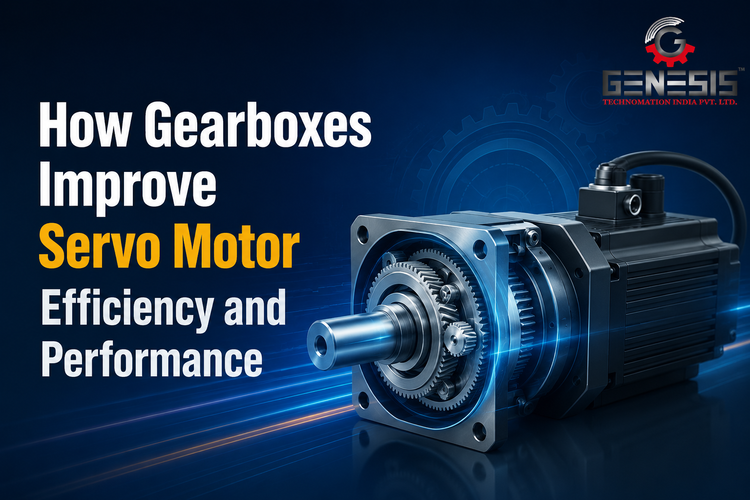
In modern industrial automation, precision, speed, torque control, and repeatability are no longer optional features. They are essential requirements for manufacturers aiming to remain competitive in sectors such as packaging, robotics, CNC machinery, pharmaceuticals, printing, automotive production, textile manufacturing, food processing, semiconductor production, and material handling systems. At the center of these advanced automation systems lies one of the most critical motion-control combinations in engineering: the servo motor and gearbox assembly.
A servo motor alone is highly capable, delivering exceptional positional accuracy, fast response times, and closed-loop control. However, many industrial applications demand more torque, improved load management, reduced inertia mismatch, enhanced efficiency, and optimized mechanical output than a standalone servo motor can provide. This is where a high-quality gearbox for servo motor becomes indispensable.
Gearboxes are not merely accessories attached to servo motors. They are performance multipliers. A properly selected gearbox can dramatically improve servo system efficiency, stabilize machine operations, increase torque output, reduce motor stress, enhance precision, and extend the life of the entire automation system.
For industries relying on advanced automation, understanding how gearboxes improve servo motor performance is essential for designing reliable and energy-efficient machinery.
Understanding Servo Motors in Industrial Automation
A servo motor is a highly specialized rotary actuator designed for precise motion control. Unlike conventional AC or DC motors, servo motors operate with a feedback system that continuously monitors position, speed, and torque. This closed-loop mechanism allows extremely accurate motion control.
Servo motors are widely used in applications requiring:
- Precise positioning
- High-speed motion
- Controlled acceleration and deceleration
- Dynamic load handling
- Repeatable movement cycles
- Synchronization with automated processes
Industries commonly using servo systems include:
- Robotics
- CNC machining
- Packaging machinery
- Printing equipment
- Conveyor automation
- Pick-and-place systems
- Pharmaceutical machinery
- Textile machinery
- Semiconductor equipment
- Automated assembly lines
While servo motors are efficient and accurate, their direct output characteristics are not always ideal for every application. Many machines require higher torque at lower speeds, improved load handling, or optimized inertia ratios. Direct motor coupling often creates operational limitations.
This challenge is solved by integrating a gearbox with the servo motor.
What is a Gearbox for Servo Motors?
A servo motor gearbox is a mechanical transmission device installed between the servo motor and the driven load. Its primary function is to modify torque and speed characteristics while maintaining high positioning accuracy.
The gearbox reduces motor speed and proportionally increases torque output. It also helps match motor inertia with load inertia, improving dynamic system response.
Servo gearboxes are engineered differently from conventional industrial gear reducers because servo systems require:
- Extremely low backlash
- High torsional rigidity
- Smooth acceleration
- Precision positioning
- High efficiency
- Minimal vibration
- Fast response time
Servo gearboxes are specially designed to maintain accuracy during rapid directional changes and continuous motion cycles.
Why Servo Motors Need Gearboxes
Many industrial applications involve heavy loads or require high torque at low operating speeds. If a servo motor is directly connected to such loads without a gearbox, several problems may occur:
- Excessive motor current consumption
- Motor overheating
- Reduced efficiency
- Poor positioning stability
- Increased wear
- Limited torque capability
- Inertia mismatch
- Reduced machine lifespan
A gearbox resolves these issues by optimizing the relationship between speed and torque.
The gearbox allows the servo motor to operate within its ideal RPM range while delivering the required torque to the application.
This leads to:
- Better efficiency
- Lower energy consumption
- Improved precision
- Enhanced load control
- Extended motor life
- Higher machine productivity
Fundamental Principle of Gear Reduction
The basic working principle of a gearbox involves speed reduction and torque multiplication.
When motor speed decreases through gear reduction, output torque increases proportionally.
The relationship can be understood as:
Tout=Tin×Gear Ratio×ηT_{out}=T_{in}\times Gear\ Ratio\times \etaTout=Tin×Gear Ratio×η
Where:
- ToutT_{out}Tout = Output torque
- TinT_{in}Tin = Input torque
- Gear Ratio = Reduction ratio
- η\etaη = Gearbox efficiency
Similarly, output speed decreases according to:
Nout=NinGear RatioN_{out}=\frac{N_{in}}{Gear\ Ratio}Nout=Gear RatioNin
Where:
- NoutN_{out}Nout = Output speed
- NinN_{in}Nin = Motor speed
This fundamental principle is why gearboxes are essential in automation systems requiring controlled motion and high torque.
Major Ways Gearboxes Improve Servo Motor Efficiency
1. Torque Multiplication
One of the biggest advantages of adding a gearbox to a servo motor is torque amplification.
Servo motors typically operate efficiently at high rotational speeds. However, many industrial applications require low-speed, high-torque output.
Examples include:
- Heavy conveyor systems
- Rotary indexing tables
- Industrial robots
- Packaging sealers
- Automated presses
- Material lifting systems
Without a gearbox, achieving high torque would require using a significantly larger and more expensive servo motor.
A gearbox allows a smaller servo motor to generate much higher usable output torque.
Example
Suppose a servo motor produces:
- 5 Nm torque
- 3000 RPM speed
Using a 10:1 gearbox:
- Output speed becomes 300 RPM
- Output torque theoretically becomes 50 Nm (minus efficiency losses)
This enables compact motor selection while still achieving high mechanical force.
2. Improved Inertia Matching
Inertia matching is one of the most critical aspects of servo system performance.
Servo motors perform best when motor inertia and load inertia remain within an acceptable ratio.
If load inertia is too high compared to motor inertia, problems occur:
- Oscillation
- Overshooting
- Slow response
- Instability
- Vibration
- Increased tuning complexity
A gearbox effectively reduces reflected load inertia seen by the motor.
The reflected inertia formula is:
Jreflected=Jload(Gear Ratio)2J_{reflected}=\frac{J_{load}}{(Gear\ Ratio)^2}Jreflected=(Gear Ratio)2Jload
This means higher gear ratios dramatically reduce the inertia reflected back to the servo motor.
Benefits include:
- Faster acceleration
- Better stability
- Improved positioning
- Smoother operation
- Easier servo tuning
- Reduced servo hunting
This is especially important in robotics, CNC systems, and high-speed automation.
3. Enhanced Positioning Accuracy
Servo systems are designed for precision motion control. However, accuracy depends not only on the servo motor but also on the mechanical transmission system.
High-quality servo gearboxes are engineered with:
- Low backlash
- High rigidity
- Precision gear machining
- Tight tolerances
Backlash refers to the small amount of free movement between gear teeth.
Excessive backlash causes:
- Positioning errors
- Lost motion
- Reduced repeatability
- Inaccurate cuts
- Poor robotic movement
Precision planetary gearboxes often feature backlash values as low as:
- 1 arc minute
- 3 arc minutes
- 5 arc minutes
This enables exceptional positional accuracy in applications such as:
- CNC machining
- Laser cutting
- Pick-and-place robots
- Semiconductor manufacturing
- Printing registration systems
4. Better Energy Efficiency
Industrial energy costs continue to rise globally. Automation systems must therefore maximize efficiency while minimizing power consumption.
A properly selected gearbox improves energy efficiency by:
- Allowing the motor to operate near optimal RPM
- Reducing current draw
- Minimizing overload conditions
- Improving torque transfer
- Lowering thermal stress
Servo motors are generally most efficient at higher speeds. Without a gearbox, the motor may operate inefficiently at low RPM while attempting to deliver high torque.
A gearbox allows the motor to remain within its high-efficiency operating zone.
This reduces:
- Power consumption
- Heat generation
- Energy waste
- Motor stress
Over time, this significantly reduces operational costs.
Types of Gearboxes Used with Servo Motors
Selecting the proper gearbox type is crucial for achieving optimal servo system performance.
Planetary Gearboxes
Planetary gearboxes are the most commonly used gearboxes for servo applications.
They consist of:
- Sun gear
- Planet gears
- Ring gear
- Carrier assembly
Advantages
- High torque density
- Compact size
- Low backlash
- High efficiency
- Excellent rigidity
- Smooth operation
- High load capacity
Applications
- Robotics
- CNC machines
- Packaging systems
- Printing machinery
- Automation systems
Planetary gearboxes are preferred because they offer exceptional balance between precision, efficiency, and durability.
Helical Gearboxes
Helical gearboxes use angled gear teeth that provide smoother engagement compared to spur gears.
Advantages
- Quiet operation
- High efficiency
- Smooth power transmission
- High torque capability
Applications
- Conveyor systems
- Material handling
- Industrial machinery
Right-Angle Gearboxes
These gearboxes change rotational direction by 90 degrees.
Advantages
- Space-saving installation
- Flexible machine design
- Compact layouts
Applications
- Packaging equipment
- Robotics
- Tight installation spaces
Harmonic Drive Gearboxes
Harmonic drives are ultra-precision gear systems used in highly accurate applications.
Advantages
- Near-zero backlash
- Extremely high precision
- Compact structure
Applications
- Surgical robots
- Semiconductor systems
- Aerospace automation
- Precision robotics
How Gearboxes Improve Servo Motor Performance in Different Industries
Robotics Industry
Robots require:
- Precise positioning
- High torque
- Compact motion systems
- Fast acceleration
- Smooth movement
Gearboxes improve robotic performance by:
- Increasing torque
- Reducing motor size
- Enhancing precision
- Improving payload capacity
Planetary and harmonic gearboxes are widely used in robotic joints and articulated arms.
CNC Machinery
CNC machines require:
- Micron-level positioning
- Stable cutting force
- Smooth interpolation
- High rigidity
Servo gearboxes improve:
- Axis stability
- Surface finish quality
- Machining precision
- Acceleration performance
Low-backlash planetary gearboxes are commonly used in CNC axes.
Packaging Machinery
Packaging machines require:
- Fast cyclic movement
- High synchronization
- Precise indexing
- Continuous operation
Gearboxes improve:
- Motion consistency
- Speed control
- Product alignment
- Operational efficiency
Printing Industry
Printing systems demand:
- Registration accuracy
- Synchronized motion
- Smooth speed variation
Servo gearboxes help maintain:
- Print alignment
- Color registration
- Roll tension control
Material Handling Systems
Conveyors and lifting systems often require high torque at low speeds.
Gearboxes allow:
- Heavy load movement
- Reduced motor stress
- Improved operational stability
Key Technical Parameters in Servo Gearboxes
Choosing the right gearbox requires understanding several critical parameters.
Gear Ratio
The gear ratio determines speed reduction and torque multiplication.
Common ratios include:
- 3:1
- 5:1
- 10:1
- 20:1
- 50:1
- 100:1
Selecting the wrong ratio can negatively affect system performance.
Backlash
Backlash is crucial in precision applications.
Lower backlash means:
- Better accuracy
- Improved repeatability
- Reduced positional error
Efficiency
Gearbox efficiency affects energy consumption and heat generation.
Typical efficiencies:
- Planetary gearboxes: 95%–98%
- Helical gearboxes: 94%–97%
- Worm gearboxes: 50%–90%
Higher efficiency reduces power loss.
Torsional Rigidity
Rigidity determines resistance to twisting under load.
High rigidity improves:
- Precision
- Dynamic response
- Stability
Load Capacity
Gearboxes must withstand:
- Radial loads
- Axial loads
- Shock loads
- Continuous torque
Improper sizing can cause premature failure.
Importance of Low Backlash in Servo Systems
Backlash is one of the most important characteristics in servo applications.
Even tiny positional deviations can create serious issues in:
- Robotics
- CNC systems
- Semiconductor machinery
- Printing equipment
Low-backlash gearboxes improve:
- Positional accuracy
- Motion smoothness
- Repeatability
- Servo responsiveness
Modern precision planetary gearboxes use advanced manufacturing techniques to minimize backlash while maintaining durability.
How Gearboxes Reduce Motor Stress
Without a gearbox, servo motors handling heavy loads experience:
- High current demand
- Thermal overload
- Rapid wear
- Mechanical strain
A gearbox reduces stress by:
- Multiplying torque mechanically
- Allowing lower motor current
- Reducing acceleration load
- Improving inertia matching
This leads to:
- Longer motor life
- Lower maintenance costs
- Higher reliability
Thermal Benefits of Servo Gearboxes
Heat is one of the biggest enemies of servo motor performance.
Excessive temperature causes:
- Insulation breakdown
- Bearing wear
- Reduced efficiency
- Premature failure
Gearboxes help reduce motor heating because the motor no longer needs to generate extreme torque directly.
Benefits include:
- Lower winding temperature
- Improved cooling efficiency
- Stable long-term operation
- Reduced downtime
Compact Machine Design Advantages
Using a gearbox often allows engineers to select smaller servo motors.
This creates several advantages:
- Reduced machine size
- Lower weight
- Compact automation layouts
- Reduced panel requirements
- Easier installation
Modern factories increasingly demand compact equipment due to space optimization requirements.
Gearboxes play a major role in achieving smaller machine footprints.
Servo Gearbox Efficiency vs Direct Drive Systems
Direct-drive systems eliminate mechanical transmission components. While they offer certain advantages, they are not always practical.
Direct Drive Advantages
- Zero backlash
- Fewer components
- Simplified mechanics
Direct Drive Limitations
- Larger motors required
- Higher cost
- Increased inertia
- Reduced torque density
- Space limitations
Servo gearboxes often provide a better balance between:
- Cost
- Performance
- Torque
- Compactness
- Efficiency
For most industrial applications, geared servo systems remain the preferred choice.
Common Gearbox Problems and Solutions
Excessive Backlash
Causes
- Gear wear
- Poor manufacturing
- Improper installation
Solutions
- Use precision gearboxes
- Perform regular maintenance
- Ensure correct alignment
Overheating
Causes
- Overloading
- Insufficient lubrication
- Incorrect gear ratio
Solutions
- Proper sizing
- Correct lubrication
- Load analysis
Noise and Vibration
Causes
- Misalignment
- Bearing damage
- Poor gear quality
Solutions
- Precision installation
- Quality gearboxes
- Regular inspection
Proper Gearbox Selection for Servo Motors
Selecting the correct gearbox requires engineering analysis.
Important considerations include:
Application Requirements
Understand:
- Required torque
- Speed range
- Duty cycle
- Load type
- Environmental conditions
Motor Compatibility
The gearbox must match:
- Motor flange
- Shaft dimensions
- Torque capacity
- Speed ratings
Precision Requirements
Applications requiring high accuracy need:
- Low backlash
- High rigidity
- Precision gears
Environmental Conditions
Consider:
- Dust
- Moisture
- Temperature
- Washdown environments
- Corrosive conditions
Maintenance Practices for Servo Gearboxes
Proper maintenance significantly increases gearbox lifespan.
Lubrication
Use manufacturer-recommended lubricants.
Proper lubrication:
- Reduces friction
- Minimizes wear
- Controls temperature
Alignment Checks
Misalignment causes:
- Bearing damage
- Vibration
- Noise
- Reduced efficiency
Periodic Inspection
Inspect regularly for:
- Oil leakage
- Abnormal sound
- Vibration
- Temperature increase
Future Trends in Servo Gearbox Technology
Industrial automation continues evolving rapidly.
Future gearbox developments include:
Smart Gearboxes
Integrated sensors monitor:
- Temperature
- Vibration
- Load
- Lubrication condition
This supports predictive maintenance.
Lightweight Materials
Advanced materials improve:
- Efficiency
- Torque density
- Durability
Ultra-Low Backlash Systems
Precision manufacturing continues reducing backlash for:
- Robotics
- Semiconductor equipment
- Medical automation
High-Efficiency Designs
Modern gear geometry improves:
- Power transfer
- Noise reduction
- Heat management
Why Industrial Automation Companies Prefer Precision Servo Gearboxes
Automation companies prioritize:
- Reliability
- Precision
- Efficiency
- Long-term durability
Servo gearboxes directly impact machine productivity and operational stability.
High-quality gearboxes reduce:
- Downtime
- Maintenance costs
- Energy consumption
- System instability
This makes them essential components in modern automated machinery.
Why Choosing the Right Automation Partner Matters
Selecting the right gearbox is not only about product specifications. Engineering expertise is equally important.
Improper gearbox selection can lead to:
- Servo instability
- Poor accuracy
- Increased wear
- Machine failure
- High maintenance costs
This is why industries prefer working with experienced automation solution providers that understand motion-control engineering deeply.
Genesis Technomation India Private Limited
For industries seeking reliable automation solutions and high-performance gearboxes for servo motors, Genesis Technomation India Private Limited offers professional industrial automation support backed by technical expertise and application-focused engineering.
Their automation solutions support industries requiring:
- Precision motion control
- Servo automation systems
- Industrial gearbox integration
- Motion synchronization
- High-performance machine automation
A properly selected servo gearbox from an experienced automation company can dramatically improve machine efficiency, productivity, and long-term operational reliability.
Real-World Example of Gearbox Benefits in Automation
Consider a packaging machine operating continuously in a production facility.
Without Gearbox
- Servo motor directly drives heavy indexing load
- High current consumption
- Motor overheating
- Reduced acceleration
- Frequent maintenance
With Precision Planetary Gearbox
- Reduced reflected inertia
- Increased torque output
- Faster indexing cycles
- Lower motor temperature
- Improved positioning accuracy
- Reduced power consumption
The result is:
- Higher production speed
- Better product quality
- Lower downtime
- Increased profitability
This example demonstrates why gearboxes are critical in industrial automation systems.
Gearbox Efficiency and ROI
Although precision servo gearboxes involve initial investment, they deliver substantial long-term returns.
Financial Benefits
Reduced Energy Costs
Efficient power transfer lowers electricity consumption.
Lower Maintenance Costs
Reduced motor stress minimizes breakdowns.
Increased Productivity
Improved machine speed and accuracy boost production output.
Longer Equipment Life
Reduced wear extends component lifespan.
The long-term return on investment often outweighs the initial gearbox cost many times over.
Difference Between Standard Gearboxes and Servo Gearboxes
Not all gearboxes are suitable for servo applications.
Standard Industrial Gearboxes
Typically designed for:
- General power transmission
- Lower precision applications
- Slower response systems
Servo Gearboxes
Specifically engineered for:
- High dynamic response
- Low backlash
- Precision positioning
- Rapid acceleration
- Continuous reversals
Using ordinary gear reducers in servo systems often results in:
- Poor accuracy
- Instability
- Premature wear
- Reduced machine performance
This is why servo applications require dedicated precision gearboxes.
Importance of Gearbox Quality
Gearbox quality directly affects machine reliability.
High-quality gearboxes feature:
- Precision-machined gears
- Advanced bearings
- High-grade materials
- Superior lubrication systems
- Tight manufacturing tolerances
Cheap or poorly manufactured gearboxes can create:
- Excessive backlash
- Noise
- Vibration
- Early failure
- Servo instability
Industrial automation systems demand precision-engineered motion components for reliable operation.
How Gearboxes Improve Dynamic Response
Dynamic response refers to how quickly and accurately a servo system reacts to motion commands.
Gearboxes improve dynamic performance by:
- Reducing inertia mismatch
- Enhancing torque availability
- Improving acceleration
- Stabilizing control loops
This is especially important in high-speed automation applications requiring rapid motion changes.
Noise Reduction Benefits
Modern servo gearboxes are designed for quiet operation.
Advanced gear tooth geometry reduces:
- Mechanical vibration
- Resonance
- Operational noise
Quiet machinery improves:
- Workplace conditions
- Operator comfort
- Machine smoothness
Conclusion
Servo motors are among the most advanced motion-control technologies in industrial automation. However, their true performance potential is fully realized only when paired with the correct gearbox.
Precision servo gearboxes improve:
- Torque output
- Energy efficiency
- Positioning accuracy
- Inertia matching
- Dynamic response
- System reliability
- Operational stability
They reduce:
- Motor stress
- Heat generation
- Energy consumption
- Maintenance costs
- Machine downtime
From robotics and CNC machinery to packaging systems and industrial automation lines, gearboxes remain indispensable components for achieving superior servo system performance.
As industrial automation continues advancing toward higher precision, smarter factories, and greater energy efficiency, the importance of properly engineered servo gearbox systems will only continue growing.
Businesses investing in high-quality servo gearboxes gain substantial advantages in productivity, operational reliability, and long-term profitability.
For industries seeking dependable automation solutions, motion-control expertise, and high-performance gearbox integration, Genesis Technomation India Private Limited provides professional support for advanced industrial automation requirements and servo-driven applications.
FAQs About How Gearboxes Improve Servo Motor Efficiency and Performance
What is a gearbox in a servo motor system?
A gearbox is a mechanical power transmission device connected between a servo motor and the load. It reduces motor speed while increasing torque output, helping improve efficiency, precision, and overall machine performance.
Why are gearboxes important for servo motors?
Gearboxes help servo motors deliver higher torque at lower speeds without overloading the motor. They also improve inertia matching, positioning accuracy, and energy efficiency in industrial automation applications.
How does a gearbox increase servo motor torque?
A gearbox multiplies the torque generated by the servo motor through gear reduction. When output speed decreases, torque increases proportionally depending on the gear ratio and gearbox efficiency.
What is the best gearbox type for servo motors?
Planetary gearboxes are widely considered the best option for servo motors because they offer:
- Low backlash
- High efficiency
- Compact design
- High torque density
- Excellent positioning accuracy
They are commonly used in robotics, CNC machines, and packaging automation.
What is backlash in a servo gearbox?
Backlash is the small amount of free movement between gear teeth during directional changes. Lower backlash improves precision, repeatability, and positioning accuracy in servo systems.
Why is low backlash important in automation systems?
Low backlash is essential for applications requiring high precision, such as:
- CNC machinery
- Robotics
- Semiconductor equipment
- Printing systems
- Laser cutting machines
Excessive backlash can cause positioning errors and unstable motion control.
Can a gearbox improve servo motor efficiency?
Yes. A properly selected gearbox allows the servo motor to operate within its optimal RPM range, reducing current consumption, improving torque transfer, and lowering heat generation. This increases overall system efficiency.
How do gearboxes reduce motor stress?
Gearboxes reduce the load directly seen by the servo motor by mechanically multiplying torque. This lowers motor current demand, minimizes overheating, and extends motor lifespan.
What industries commonly use servo motor gearboxes?
Servo gearboxes are widely used in:
- Industrial automation
- Robotics
- Packaging machinery
- CNC machines
- Textile equipment
- Printing machines
- Pharmaceutical systems
- Material handling equipment
What is inertia matching in servo systems?
Inertia matching refers to balancing motor inertia with load inertia for stable and responsive motion control. Gearboxes help reduce reflected load inertia, improving acceleration and servo stability.
How do gearboxes improve positioning accuracy?
Precision gearboxes with low backlash and high torsional rigidity improve positional control, repeatability, and motion consistency in servo-driven systems.
What gear ratio should be used for a servo motor?
The ideal gear ratio depends on:
- Required torque
- Desired speed
- Load inertia
- Application type
- Duty cycle
Common gear ratios include 3:1, 5:1, 10:1, 20:1, and 50:1.
Are planetary gearboxes better than worm gearboxes for servo applications?
Yes. Planetary gearboxes are generally better for servo systems because they provide:
- Higher efficiency
- Lower backlash
- Better precision
- Faster response
- Higher rigidity
Worm gearboxes are typically used in lower-precision applications.
Can servo motors run without gearboxes?
Yes, servo motors can run without gearboxes in direct-drive applications. However, many industrial systems require gearboxes to achieve higher torque, better efficiency, and improved motion control.
How do gearboxes improve energy savings?
Gearboxes reduce the need for oversized motors and allow servo motors to operate efficiently at higher RPM ranges. This lowers electricity consumption and improves overall machine energy efficiency.
What happens if the wrong gearbox is selected?
Improper gearbox selection can lead to:
- Poor accuracy
- Excessive vibration
- Overheating
- Reduced efficiency
- Premature wear
- Servo instability
- Increased maintenance costs
How long does a servo gearbox last?
A high-quality servo gearbox can last many years when properly maintained. Lifespan depends on:
- Load conditions
- Operating environment
- Lubrication quality
- Installation accuracy
- Maintenance practices
What maintenance does a servo gearbox require?
Regular maintenance includes:
- Lubrication checks
- Alignment inspection
- Temperature monitoring
- Vibration analysis
- Leak inspection
Proper maintenance increases reliability and service life.
How do gearboxes improve robotic systems?
Gearboxes help robots achieve:
- Higher payload capacity
- Smooth movement
- Accurate positioning
- Compact joint design
- Better torque performance
Harmonic and planetary gearboxes are commonly used in robotics.
Where can industries purchase reliable gearboxes for servo motors?
Industries looking for professional automation support and high-performance servo gearbox solutions can consider Genesis Technomation India Private Limited for industrial automation and motion-control applications.
Related Posts