
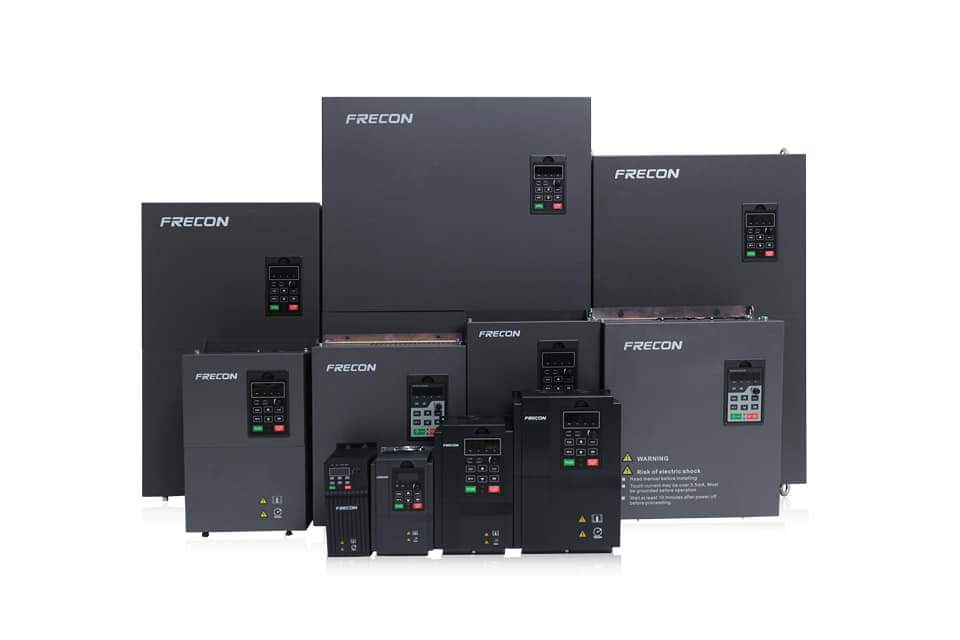
Description
VFD Manufacturers and Suppliers in India
A VFD (Variable Frequency Drive) is an essential motor-control device used to regulate the speed, torque and operating performance of AC motors. Genesis Technomation India Private Limited provides industrial automation solutions and VFD options for manufacturers, OEMs, machine builders, maintenance teams and industrial users across India.
A Variable Frequency Drive controls an AC motor primarily by changing the frequency and voltage supplied to the motor. Instead of operating a motor continuously at a fixed speed, the drive allows the operating speed to be adjusted according to the process requirement. This makes VFD technology useful for conveyors, pumps, fans, blowers, compressors, packaging machines, textile equipment, material-handling systems and many other automated machines.
Modern AC drives combine power electronics and control algorithms to provide controlled starting, stopping, acceleration, deceleration and motor-speed regulation. Depending on the drive and application, additional functions can support torque control, feedback-based control, process regulation and automation-system integration.
For industrial buyers, selecting the correct drive is not simply a matter of matching motor horsepower. Motor rated current, supply voltage, load characteristics, required speed range, starting torque, overload requirements, braking requirements and the installation environment should all be considered before selecting a VFD.
What Is a VFD (Variable Frequency Drive)?
A Variable Frequency Drive, commonly called a VFD, is an electronic power-conversion device that controls an AC motor by producing a controlled output with adjustable frequency and voltage.
The fundamental concept is straightforward:
Change the frequency → change the motor’s operating speed.
For an AC induction motor, synchronous speed is related to supply frequency and the number of motor poles. In simplified form:
Synchronous speed = 120 × frequency / number of poles
Because a VFD can change the frequency delivered to the motor, it can change the motor’s operating speed. The drive also adjusts voltage appropriately to maintain suitable motor flux and operating performance across the intended speed range.
A typical VFD converts incoming AC power to DC through a rectifier, maintains the energy in a DC-link or DC-bus section, and then uses an inverter to create a controlled AC output. PWM switching using semiconductor devices such as IGBTs allows the inverter to synthesize the required motor waveform.
This operating principle makes the VFD much more than a simple motor starter. It can become an important part of the machine’s motor speed control, process control and industrial automation architecture.
Why Frequency Controls AC Motor Speed
The rotational speed of an AC induction motor is strongly related to the frequency of its electrical supply. If a motor designed for a particular operating frequency is supplied with a lower frequency, its operating speed can be reduced. Increasing the frequency can increase speed within the motor and drive’s permissible operating range.
A VFD therefore provides a practical electronic method of controlling motor speed without relying on mechanical speed-changing arrangements.
The relationship is not completely independent of motor slip, load and control method. An induction motor’s actual shaft speed is normally slightly below synchronous speed under load. Advanced drive control can compensate for changing load conditions and provide improved speed and torque regulation.
VFDs in Industrial Automation
In an automated machine, the drive may receive a speed reference from a keypad, analog signal, PLC, HMI, communication network or another control system, depending on the drive’s available functions.
This allows the motor to respond to changing production requirements.
For example, a conveyor may need different speeds for different products. A pump may need to adjust flow according to process demand. A fan may require variable airflow rather than continuous full-speed operation.
A VFD provides the electrical control layer needed for these variable-speed applications.
How Does a Variable Frequency Drive Work?
A typical VFD can be understood through seven main stages.
1. AC Power Input
The drive receives electrical power from the available AC supply. The exact input arrangement depends on the particular VFD model and electrical system.
Before selecting a drive, the incoming supply should be confirmed, including voltage, phase configuration, frequency and available electrical capacity.
2. Rectifier Section
The incoming AC is converted into DC using the rectifier stage.
The rectifier is the first major power-conversion section of a conventional VFD. It converts the fixed-frequency AC supply into DC so that the drive can subsequently generate a controlled AC output.
3. DC Bus
The rectified DC is transferred to the DC-link or DC-bus section.
Capacitors and associated circuitry smooth and stabilize the DC energy used by the inverter. The DC bus acts as the intermediate electrical stage between the input rectifier and output inverter.
4. Inverter Section
The inverter converts the DC bus energy into a controlled AC output.
This is where the drive creates the variable-frequency output required by the motor.
5. IGBT Switching
Modern low-voltage drives commonly use high-speed semiconductor switching devices, including IGBTs, in the inverter stage.
The devices switch according to the drive’s control strategy. Through PWM, the drive controls the effective voltage and frequency presented to the motor.
The switching or carrier frequency is an important drive parameter because it influences output waveform characteristics, acoustic noise and switching losses.
6. Variable-Frequency AC Output
The inverter produces an AC output whose frequency and voltage can be controlled.
Instead of simply supplying the motor with fixed mains frequency, the VFD can establish a programmed acceleration profile, operating frequency and deceleration profile.
7. Motor Speed and Torque Control
The final result is controlled motor operation.
Depending on the drive technology, control may use scalar V/f control, sensorless vector control, closed-loop feedback or other control strategies. The appropriate method depends on the motor, load and required performance.
For applications requiring precise torque or speed behavior, the drive and motor must be selected and configured as a complete system rather than treating the VFD as an isolated component.
Main Components of a VFD
| Component | Function |
| Rectifier | Converts incoming AC power into DC power. |
| DC Bus | Provides the intermediate DC link between the rectifier and inverter. |
| Capacitors | Smooth and stabilize the DC-link voltage and store electrical energy. |
| IGBT/Inverter | Converts DC into controlled AC output using high-speed switching. |
| Control Circuit | Processes commands, feedback and programmed parameters to control the power stage. |
| Cooling System | Removes heat generated by power electronics during operation. |
| Keypad/Display | Provides local parameter setting, monitoring and fault information where supported. |
| Protection Circuit | Monitors operating conditions and can protect the drive and motor against conditions such as overcurrent, overvoltage and overheating, depending on model and configuration. |
VFD Product Range / Available Models
Genesis Technomation India Private Limited offers the following VFD models listed in the supplied product information:
| VFD Series / Model | Type | Motor/Application Suitability | Key Features | Specification |
| FR150A-2S-0.4B-H | VFD | To be confirmed based on application | Model available | Contact Genesis for verified specifications |
| FR150A-2S-0.7BH | VFD | To be confirmed based on application | Model available | Contact Genesis for verified specifications |
| FR150A-2S-1.5BH | VFD | To be confirmed based on application | Model available | Contact Genesis for verified specifications |
| FR500A-4T-4.0G | VFD | To be confirmed based on application | Model available | Contact Genesis for verified specifications |
| FR500A-4T-011G | VFD | To be confirmed based on application | Model available | Contact Genesis for verified specifications |
| FR500A-4T-015G | VFD | To be confirmed based on application | Model available | Contact Genesis for verified specifications |
| FR500A-4T-5.5G | VFD | To be confirmed based on application | Model available | Contact Genesis for verified specifications |
| FR500A-4T-7.5G | VFD | To be confirmed based on application | Model available | Contact Genesis for verified specifications |
| FR500D-4T-5.5B | VFD | To be confirmed based on application | Model available | Contact Genesis for verified specifications |
The model numbers above are taken directly from the supplied product brief; no electrical ratings or feature sets have been inferred from the model codes.
Need help choosing a model? Contact Genesis Technomation with your motor nameplate details and application requirements to obtain the appropriate model recommendation, current technical specifications and quotation.
Technical Specifications of VFD
| Model | Power Capacity (KVA) | Rated Input Current (A) | Rated Output Current (Heavy Load) (A) | Rated Output Current (Light Load) (A) | Adaptive Motor (kW) | Adaptive Motor (HP) |
|---|---|---|---|---|---|---|
| FR150A-2S-0.2B-H | 0.5 | 4.9 | 1.6 | 2.5 | 0.25 | 0.25 |
| FR150A-2S-0.4B-H | 1 | 6.5 | 2.5 | 3.5 | 0.37 | 0.5 |
| FR150A-2S-0.7B-H | 1.5 | 9.3 | 4.2 | 4.6 | 0.75 | 1 |
| FR150A-2S-1.5B-H | 3 | 15.7 | 7.5 | 8.5 | 1.5 | 2 |
| FR150A-2S-2.2B-H | 4 | 24 | 9.5 | 10.5 | 2.2 | 3 |
| FR150A-4T-0.7B-H | 1.5 | 3.4 | 2.5 | 4.6 | 0.75 | 1 |
| FR150A-4T-1.5B-H | 3 | 5.8 | 4.2 | 4.6 | 1.5 | 2 |
| FR150A-4T-2.2B-H | 4 | 5.8 | 6.5 | 6.5 | 2.2 | 3 |
| FR150A-4T-4.0B-H | 6 | 11 | 9.5 | 10.5 | 4.0 | 5 |
| FR150A-4T-5.5B-H | 8.9 | 14.6 | 13 | 17 | 5.5 | 7.5 |
| FR150A-4T-7.5B-H | 11 | 20.5 | 17 | 20 | 7.5 | 10 |
| FR150A-4T-011B-H | 17 | 26 | 25 | 32 | 11 | 15 |
| FR150A-4T-015B-H | 21 | 35 | 32 | 37 | 15 | 20 |
| FR150A-4T-018B-H | 24 | 38.5 | 37 | 41 | 18.5 | 25 |
| FR150A-4T-022B-H | 30 | 46.5 | 45 | 49 | 22 | 30 |
| FR150A-4T-030B-H | 40 | 62 | 60 | 75 | 30 | 40 |
| FR150A-4T-037B-H | 57 | 76 | 75 | 82 | 37 | 50 |
| FR150A-4T-045-H | 69 | 92 | 91 | 112 | 45 | 60 |
| FR150A-4T-055-H | 85 | 113 | 112 | 134 | 55 | 75 |
| FR150A-4T-075-H | 114 | 157 | 150 | 168 | 75 | 100 |
| FR150A-4T-090-H | 134 | 186 | 176 | 210 | 90 | 125 |
| FR150A-4T-110-H | 160 | 220 | 210 | 240 | 110 | 150 |
| FR150A-4T-132-H | 192 | 260 | 253 | 312 | 132 | 175 |
| FR150A-4T-160-H | 231 | 310 | 304 | 340 | 160 | 210 |
Inverter Model Specifications
| Model No. | Power Capacity (kVA) | Rated Input Current (A) | Rated Output Current (A) | Applicable Motor (kW) | Applicable Motor (HP) |
|---|---|---|---|---|---|
| FR500A-4T-0.7G/1.5PB-H | 1.5 | 3.4 | 2.5 | 0.75 | 1 |
| FR500A-4T-1.5G/2.2PB-H | 3 | 5.0 | 4.2 | 1.5 | 2 |
| FR500A-4T-2.2G/4.0PB-H | 4 | 5.8 | 5.5 | 2.2 | 3 |
| FR500A-4T-4.0G/5.5PB-H | 6 | 11 | 9.5 | 3/4 | 5 |
| FR500A-4T-5.5G/7.5PB-H | 8.9 | 14.6 | 13 | 5.5 | 7.5 |
| FR500A-4T-7.5G/011PB-H | 11 | 20.5 | 17 | 7.5 | 10 |
| FR500A-4T-011G/015PB-H | 17 | 26 | 25 | 11 | 15 |
| FR500A-4T-015G/018PB-H | 21 | 35 | 32 | 15 | 20 |
| FR500A-4T-018G/022PB-H | 24 | 38.5 | 37 | 18.5 | 25 |
| FR500A-4T-022G/030PB-H | 30 | 46.5 | 45 | 22 | 30 |
| FR500A-4T-030G/037PB-H | 40 | 62 | 60 | 30 | 40 |
| FR500A-4T-037G/045PB-H | 57 | 76 | 75 | 37 | 50 |
| FR500A-4T-045G/055PB-H | 69 | 92 | 91 | 45 | 60 |
| FR500A-4T-055G/075PB(B)-H | 85 | 113 | 112 | 55 | 70 |
| FR500A-4T-075G/090PB(B)-H | 114 | 157 | 150 | 75 | 100 |
| FR500A-4T-090G/110PB(B)-H | 134 | 186 | 176 | 90 | 125 |
| FR500A-4T-110G/132P-H | 160 | 220 | 203 | 110 | 150 |
| FR500A-4T-132G/160P-H | 192 | 260 | 253 | 132 | 160 |
| FR500A-4T-160G/185P-H | 231 | 310 | 304 | 160 | 210 |
| FR500A-4T-185G/200P-H | 240 | 355 | 355 | 185 | 250 |
| FR500A-4T-200G/220P-H | 280 | 382 | 377 | 200 | 260 |
| FR500A-4T-220G/250P-H | 280 | 430 | 426 | 220 | 300 |
| FR500A-4T-260G/280P-H | 355 | 475 | 470 | 250 | 340 |
| FR500A-4T-280G/315P-H | 396 | 535 | 520 | 280 | 370 |
| FR500A-4T-315G/355P-H | 445 | 610 | 605 | 315 | 420 |
| FR500A-4T-355G/400P-H | 510 | 690 | 650 | 355 | 450 |
| FR500A-4T-400G/450P-H | 565 | 765 | 725 | 400 | 500 |
| FR500A-4T-450G/500P-H | 623 | 865 | 800 | 450 | 560 |
| FR500A-4T-500G/560P-H | 670 | 870 | 860 | 500 | 600 |
| FR500A-4T-560G/630P-H | 770 | 960 | 990 | 560 | 750 |
Key Features of VFDs
Depending on the specific model and configuration, VFD technology can provide several useful motor-control functions:
- Variable motor speed control
- Adjustable frequency output
- Controlled acceleration and deceleration
- Motor torque control
- Smooth motor starting
- Reduced mechanical shock
- Programmable acceleration/deceleration time
- Motor protection functions
- Overcurrent protection
- Overvoltage and undervoltage protection
- Overload monitoring/protection
- Process control flexibility
- Industrial automation integration
- Compact electronic motor-control architecture
The availability and exact implementation of these functions vary by VFD model. Therefore, the product datasheet should always be checked before specifying a particular feature for a machine.
Benefits of Using a Variable Frequency Drive
Improved Motor Speed Control
A VFD allows the motor to operate at the speed required by the process rather than being limited to a single fixed operating point.
This is particularly valuable where machine output, flow, conveyor speed or production conditions change during operation.
Smooth Starting and Stopping
Instead of applying full electrical conditions immediately to a stationary motor, the drive can use a programmed acceleration ramp.
Likewise, a controlled deceleration ramp can be used to slow the motor according to the application requirements.
This can reduce sudden mechanical loading on couplings, belts, gearboxes and driven machinery.
Reduced Starting Current
A properly configured VFD can provide a controlled motor start and generally avoid the same type of direct full-voltage starting condition associated with a conventional DOL starter.
The actual current profile depends on the motor, drive control method, acceleration settings and load.
Energy Savings in Suitable Applications
Energy savings are highly application-dependent. They can be particularly attractive in variable-torque applications such as fans and pumps, where reducing speed can substantially reduce the power required by the driven system.
The important point is that a VFD does not automatically guarantee a particular percentage of energy savings. The result depends on the motor, load profile, process requirements, operating hours and control strategy.
Reduced Mechanical Stress
Controlled acceleration and deceleration can reduce mechanical shock during starting and stopping.
This can be useful for conveyors, material-handling equipment and machinery with belts, couplings, shafts or other mechanical transmission components.
Better Process Control
A drive can make motor speed an adjustable process variable.
This can improve production consistency where motor speed directly influences throughput, material handling, fluid flow, airflow or another process parameter.
VFD Applications
VFDs are used across a broad range of industrial equipment because many processes do not require motors to operate continuously at one fixed speed.
Conveyors
A VFD can adjust conveyor speed to match production requirements. Controlled acceleration can also help reduce sudden mechanical loading on conveyor systems.
Pumps
Variable-speed control allows pump operation to be matched more closely to changing process requirements. In suitable variable-torque systems, reducing pump speed can also reduce energy consumption.
Fans and Blowers
Fans and blowers frequently benefit from variable-speed operation because airflow requirements can change. Rather than continuously operating at maximum speed, the drive can adjust motor speed according to demand.
Compressors
VFDs can be used where compressor capacity needs to respond to changing demand. The suitability depends on compressor design, control requirements and the drive/motor combination.
Packaging Machinery
Packaging equipment often requires controlled motor speed during different production stages. A VFD can provide adjustable speed and controlled acceleration/deceleration for appropriate AC motor-driven mechanisms.
Textile Machinery
Textile processes may require consistent and adjustable motor speed. VFDs can provide the speed-control capability needed for many textile machines.
Material Handling
Hoists, conveyors and other material-handling systems may require controlled starting, stopping and speed adjustment. Proper drive selection is important where high starting torque or braking performance is required.
Machine Tools and Manufacturing Machinery
VFDs can regulate spindle or auxiliary motor speed in suitable machines. The required control performance should be evaluated carefully, particularly for applications demanding high dynamic response or precise speed regulation.
Printing Machinery
Printing processes can require controlled motor speed to maintain consistent material handling and machine operation.
Pharmaceutical and Food Processing Machinery
Many pharmaceutical and food-processing machines use pumps, conveyors, mixers, fans and other motor-driven equipment. VFDs can provide adjustable motor operation for suitable equipment.
HVAC Systems
VFDs can regulate fans and pumps according to system requirements. Variable-speed operation is particularly useful where airflow or fluid flow demand changes.
Industries Using VFDs
VFD technology is applicable across numerous industrial sectors, including:
- Manufacturing
- Packaging
- Textile
- Pharmaceutical
- Food processing
- Automotive
- Machine tools
- Material handling
- HVAC
- Water and wastewater
- Process industries
- Industrial automation
The correct VFD should always be selected according to the actual motor, driven load and operating conditions rather than industry name alone.
Advantages of Choosing a VFD for Motor Control
| Without VFD | With VFD |
| Fixed-speed operation | Adjustable motor speed |
| Direct starting may produce higher starting current | Controlled starting profile |
| Higher mechanical starting stress may occur | Smooth acceleration can reduce mechanical shock |
| Limited speed adjustment | Flexible speed control |
| Motor may run at a fixed speed even when process demand changes | Speed can be matched to process requirements |
| Process speed changes may require mechanical or other control methods | Electronic speed adjustment |
This comparison is general. Actual performance depends on the motor, drive, load and complete machine design.
VFD Selection Guide
Choosing the correct VFD requires more than matching the motor’s kW or horsepower.
The drive should be selected around the motor current, load characteristics, electrical supply and application requirements. Industry drive-selection guidance also emphasizes application, dimensioning and support considerations rather than treating the drive as an isolated product.
1. Motor Power Rating
Start with the motor’s rated power, but do not use power alone to determine the drive size.
2. Motor Rated Current
Motor full-load current is a critical selection parameter. Compare the motor nameplate current with the VFD’s applicable output-current rating.
3. Input Voltage
Confirm the electrical supply available at the installation location.
4. Single-Phase vs Three-Phase Supply
Determine whether the available input supply is single-phase or three-phase and select a compatible drive.
5. Output Voltage
The VFD output must be compatible with the motor and the selected drive’s operating range.
6. Motor Type
Confirm the motor technology. Conventional VFDs are commonly associated with three-phase induction motors, while some drives support additional motor types. Motor compatibility must be confirmed from the manufacturer’s documentation.
7. Load Type
Identify whether the load is a fan, pump, conveyor, compressor, extruder, hoist, machine tool or another type of mechanical load.
8. Constant Torque vs Variable Torque
Fans and pumps often represent variable-torque applications, while conveyors and many machine loads may require constant-torque characteristics.
The distinction affects drive sizing and control requirements.
9. Required Speed Range
Determine the minimum and maximum operating speeds.
Running a motor continuously at very low speed can affect cooling and torque capability, so the motor and drive combination must be evaluated for the intended speed range.
10. Starting Torque
High-inertia or demanding loads may require substantial starting torque. This can influence the appropriate drive capacity and control method.
11. Acceleration and Deceleration
Determine how quickly the motor must accelerate and stop.
12. Overload Requirements
Consider whether the machine requires increased overload capacity during starting or transient operation.
13. Braking Requirements
Applications with high inertia, rapid stopping or overhauling loads may require specific braking arrangements.
14. Environmental Conditions
Consider ambient temperature, dust, humidity, altitude, ventilation and installation location.
15. Enclosure and Protection
The required enclosure or protection arrangement depends on where the VFD will be installed and the environmental conditions.
16. Control Method
Depending on the application, V/f control may be adequate, while more demanding applications may require vector or feedback-based control.
17. Communication Requirements
If the drive must communicate with a PLC, HMI, SCADA system or plant network, check the communication interfaces and protocols supported by the selected model.
18. Installation Conditions
Consider panel dimensions, cable routing, grounding, ventilation and electrical installation requirements.
19. Panel and Cooling Requirements
VFDs generate heat during operation. Adequate thermal management is essential for reliable operation.
20. Required Protection
Review the required motor and drive protection functions before finalizing the specification.
Important: A VFD should be selected using the motor nameplate, load characteristics and actual application conditions. If you are unsure which drive is appropriate, provide Genesis with the motor details and application information for selection assistance.
VFD Price in India
The VFD Price in India varies according to the drive’s electrical rating, series, functionality and application requirements.
There is no technically meaningful single price for a VFD without knowing the required specification.
Factors that can influence VFD Price in India include:
- Power rating
- Motor capacity
- Input/output configuration
- VFD series
- Control features
- Application requirements
- Overload capability
- Communication requirements
- Protection functions
- Quantity
- Installation requirements
- Technical support requirements
For procurement teams, comparing VFD price alone can result in an unsuitable selection. The correct approach is to compare the required electrical and application specifications first and then evaluate the commercial offer.
Contact Genesis Technomation India Private Limited for the latest VFD price, model availability, technical specifications and application-based selection.
VFD Manufacturer in India
When searching for a VFD manufacturer in India, buyers should distinguish between an original manufacturer, authorized distributor, supplier and industrial automation solution provider.
Genesis Technomation India Private Limited provides industrial automation solutions and VFD options for industrial users. The company can assist customers with product selection based on motor and application requirements.
Genesis can support requirements involving:
- VFD product selection
- Application-oriented recommendations
- Industrial motor-control requirements
- Technical product information
- OEM and machine-builder requirements
- Industrial automation integration
- Product enquiry and quotation support
The exact manufacturing or distribution status of a particular VFD model should be confirmed with Genesis before procurement. This approach ensures that product claims remain accurate and that buyers receive the appropriate commercial and technical information.
VFD Supplier in India
As a VFD supplier in India, Genesis Technomation can help industrial customers identify an appropriate drive based on the motor, load and machine requirements.
For an accurate recommendation, customers should ideally provide:
- Motor manufacturer and model
- Motor power
- Motor rated voltage
- Motor rated current
- Motor frequency
- Motor RPM
- Application/load type
- Required operating speed
- Starting and stopping requirements
- Braking requirements
- Available input supply
- Required automation or communication interface
This information gives the supplier a much better basis for selecting a suitable VFD drive than motor power alone.
Genesis is based in Ahmedabad, Gujarat, and serves industrial automation requirements in the Indian market.
Why Choose Genesis Technomation for VFD?
Selecting a VFD is an engineering decision as much as a purchasing decision. An incorrectly sized or poorly matched drive can affect motor performance, reliability and the overall machine.
Genesis Technomation can be considered for VFD requirements where customers need:
Industrial Automation Expertise
VFDs often operate as part of a larger automation system. Understanding the relationship between the drive, motor, PLC, HMI, sensors and machine control strategy is important when specifying a solution.
Technical Product Knowledge
A drive should be matched to the electrical supply, motor and application. Genesis can assist customers in identifying the information required for model selection.
Application Support
Different applications place different demands on a drive. A pump, conveyor, fan and high-inertia machine should not automatically be treated as the same type of load.
Multiple VFD Models
The Genesis product range includes the FR150A, FR500A and FR500D model families listed on the supplied product information.
Model Selection Assistance
Customers can provide motor nameplate and application details to obtain guidance on the appropriate model and required technical specifications.
Industrial Customer Support
Genesis can support industrial buyers, OEMs, machine builders and automation users with product enquiries and application-oriented requirements.
Integrated Automation Requirements
Where a VFD forms part of a broader automation project, it may need to work alongside PLCs, HMIs, servo systems, stepper systems, sensors and control panels.
For related automation requirements, consider exploring Genesis’s industrial automation product portfolio, including PLC, HMI, Servo Motor, Servo Drive, Stepper Motor, Stepper Driver, Sensors and Control Panels where relevant to the machine architecture.
VFD vs Soft Starter
A VFD and soft starter both provide controlled motor starting, but their primary capabilities are different.
| Parameter | VFD | Soft Starter |
| Motor speed control | Yes, continuous variable-speed control during operation | Generally no continuous speed control |
| Starting current control | Controlled through drive operation | Controlled by regulating motor starting voltage |
| Continuous speed adjustment | Yes | No |
| Acceleration/deceleration | Programmable speed ramps | Controlled starting/stopping ramp, depending on model |
| Energy-saving potential | Can provide savings in suitable variable-speed applications | Primarily a starting/stopping device; energy savings are not its main purpose |
| Typical applications | Pumps, fans, conveyors, machines, process equipment | Applications where reduced starting stress is required without continuous speed control |
A VFD is generally the more appropriate choice when the process needs ongoing speed adjustment. A soft starter can be suitable when the main requirement is controlled motor starting and stopping rather than variable-speed operation.
VFD vs Direct-On-Line (DOL) Starter
| Parameter | VFD | DOL Starter |
| Starting current | Controlled starting current profile | High inrush current can occur during direct starting |
| Speed control | Variable speed | Fixed according to motor and supply frequency |
| Starting method | Electronic controlled acceleration | Directly connects motor to supply |
| Motor stress | Smooth acceleration can reduce mechanical shock | Direct starting can produce greater mechanical stress |
| Process control | Adjustable speed and control functions | Limited to start/stop operation |
| Application suitability | Variable-speed and controlled motor applications | Suitable where fixed-speed direct starting is acceptable |
A DOL starter can be a simple and economical choice for suitable fixed-speed applications. A VFD becomes more valuable when speed, acceleration, process control or energy optimization is part of the requirement.
Common VFD Problems and Troubleshooting
VFD faults should be investigated systematically. The exact fault code and recommended corrective action depend on the particular drive model.
Overcurrent Trips
Possible causes:
- Excessive mechanical load
- Short circuit or motor-side fault
- Incorrect motor parameters
- Very rapid acceleration
- Motor or cable problems
General checks: Review the drive fault code, motor condition, acceleration settings, motor parameters and electrical installation.
Overvoltage Trips
Possible causes:
- Excessive regenerative energy
- Rapid deceleration
- High incoming supply voltage
- Inadequate braking arrangement for the application
General checks: Review the DC-bus fault information, deceleration settings, supply conditions and braking requirements.
Undervoltage
Possible causes:
- Low incoming supply voltage
- Supply interruption
- Loose electrical connections
- Electrical system instability
General checks: Qualified personnel should verify the supply and connections according to the manufacturer’s procedures.
Overheating
Possible causes:
- Poor ventilation
- Excessive ambient temperature
- Blocked cooling path
- Excessive loading
- Contaminated cooling surfaces
General checks: Inspect ventilation, panel cooling, ambient conditions and loading.
Motor Overload
Possible causes:
- Excessive mechanical load
- Incorrect motor parameters
- Motor operating outside the intended conditions
- Inadequate drive sizing
General checks: Compare actual motor current with nameplate information and verify the drive configuration.
Excessive Acceleration Time
If the machine takes too long to reach the desired speed, review the acceleration profile, load inertia and torque requirements.
Excessive Deceleration Time
A high-inertia load may require careful deceleration management. Rapid stopping can increase regenerative energy and cause DC-bus overvoltage.
Motor Not Starting
Check the drive’s run command source, frequency reference, active fault status, motor parameters, interlocks and control wiring.
Unexpected Motor Speed
Verify the speed reference, minimum/maximum frequency settings, control mode and external command source.
Communication Faults
Check communication wiring, addressing, communication parameters, network configuration and PLC/HMI settings according to the relevant drive documentation.
Safety note: VFDs contain hazardous electrical energy, including potentially charged DC-bus capacitors. Installation, commissioning, parameter configuration and electrical troubleshooting should be performed by appropriately qualified personnel following the applicable safety procedures and manufacturer’s instructions.
VFD Installation and Maintenance
Correct installation has a major influence on drive reliability.
Correct Electrical Sizing
Verify the VFD, motor and electrical supply ratings before installation.
Proper Grounding
Use the grounding arrangement specified by the drive manufacturer and applicable electrical standards.
Adequate Ventilation
Ensure sufficient airflow around the VFD and inside the control panel.
Correct Cable Selection
Use suitable motor and control cables and follow the manufacturer’s recommendations for cable routing and installation.
Proper Motor/VFD Matching
Confirm that the motor is suitable for VFD operation and that its electrical characteristics are compatible with the selected drive.
Panel Cooling
Control-panel temperature should remain within the drive manufacturer’s specified operating range.
Dust and Contamination Control
Dust and contaminants can restrict cooling and affect electronic equipment. Maintain an appropriate enclosure and cleaning schedule for the environment.
Periodic Inspection
Inspect the installation periodically for abnormal temperature, contamination, loose connections and other signs of deterioration.
Monitor Operating Temperature
Excessive heat can reduce the expected life of electronic components. Monitor the installation environment and cooling performance.
Follow the Manufacturer’s Manual
Installation, wiring, parameter configuration and maintenance procedures should always follow the documentation applicable to the specific VFD model.
Frequently Asked Questions About VFD
What is a VFD?
A VFD, or Variable Frequency Drive, is an electronic motor-control device that regulates an AC motor by controlling the frequency and voltage supplied to it. It can provide variable speed, controlled acceleration and deceleration, and other motor-control functions depending on the model.
What is a Variable Frequency Drive used for?
A Variable Frequency Drive is used to control AC motor speed and torque in applications such as conveyors, pumps, fans, blowers, compressors, packaging machines and industrial automation systems.
How does a VFD control motor speed?
A VFD converts incoming AC power to DC and then uses an inverter to produce controlled AC output. By adjusting output frequency and voltage, the drive controls the motor’s operating speed and electrical operating conditions.
What is the difference between VFD and AC drive?
In industrial motor-control terminology, VFD and AC drive are often used to describe the same general type of technology: a drive that controls an AC motor using variable frequency and voltage. Terminology can vary between manufacturers and applications.
How do I select the right VFD?
Start with the motor nameplate and application. Check motor current, power, voltage, supply phase, motor type, load type, speed range, starting torque, overload requirements, braking requirements, environmental conditions and control requirements.
What affects VFD price in India?
VFD Price in India depends on factors such as power rating, series, input configuration, motor capacity, control functions, communication requirements, protection features, quantity and application requirements.
Can a VFD save energy?
Yes, a VFD can reduce energy consumption in suitable variable-speed applications, particularly where motor speed can be reduced according to load demand. However, actual savings depend on the application and operating profile rather than the VFD alone.
Can a VFD control motor torque?
Yes. VFDs can control motor torque, although the available torque-control performance depends on the drive’s control method, motor type, configuration and application.
What is the difference between VFD and soft starter?
A soft starter primarily controls motor starting and stopping. A VFD can provide continuous variable-speed operation as well as controlled starting and stopping. Therefore, a VFD is generally selected when the machine needs speed control during normal operation.
What is the difference between VFD and DOL starter?
A DOL starter connects a motor directly to the supply during starting, while a VFD provides controlled electrical output to accelerate the motor. A DOL starter is appropriate for many fixed-speed applications, whereas a VFD is useful when variable speed and controlled operation are required.
What information is required to select a VFD?
Useful information includes motor power, rated voltage, rated current, frequency, RPM, motor type, load type, required speed range, acceleration/deceleration requirements, available supply and any braking or communication requirements.
Where can I buy a VFD in India?
Industrial buyers can contact Genesis Technomation India Private Limited for VFD model information, application-based selection, technical specifications and quotation support.
How can I get a VFD price?
Send the required motor and application details to Genesis Technomation. The team can help identify the relevant model and provide the latest applicable VFD price and availability information.
What VFD is suitable for industrial applications?
There is no single VFD that is suitable for every industrial application. The correct selection depends on motor current, load type, speed range, starting torque, overload requirements, braking, electrical supply and control requirements.
Does Genesis provide VFD selection support?
Genesis Technomation can assist customers with VFD selection requirements by considering motor information, application conditions and control requirements. Customers should provide the motor nameplate and application details for a more accurate recommendation.
Get the Right VFD for Your Application
Choosing the right VFD can make a significant difference to motor control, machine operation and process flexibility. Whether you need a VFD for a conveyor, pump, fan, packaging machine, textile machine, manufacturing system or another industrial application, the drive should be selected according to the actual motor and load requirements.
Genesis Technomation India Private Limited can assist with:
- VFD selection
- VFD price enquiries
- Product specifications
- Model availability
- Application-based recommendations
- Technical assistance
- Industrial automation requirements
- OEM and machine-builder requirements
Looking for a VFD supplier in India? Contact Genesis Technomation India Private Limited with your motor nameplate details and application requirements to discuss the appropriate VFD solution.
Visit the Genesis VFD product page for product enquiries and further information.
Amit Jogi –
We purchased a VFD from Genesis Technomation for our industrial motor-control application, and overall, we had a good experience. The product selection process was smooth, and the Genesis team helped us understand which model would be appropriate for our motor and application requirements.
The VFD provides stable motor speed control and smooth acceleration and deceleration. It has helped us operate the motor more efficiently and gives us better control over our machine during production.
What we appreciated most was the technical support during model selection. The team was responsive to our questions and provided the information we needed before making the purchase.